 ASPNetWorld
The Mac build is x86 64-bit, so you'll need an Intel machine running macOS 10.13 or later to get the city gates open. Apple Silicon Macs aren't officially supported, though Rosetta 2 may well handle it without complaint — the developer hasn't flagged any issues, but your mileage might vary.
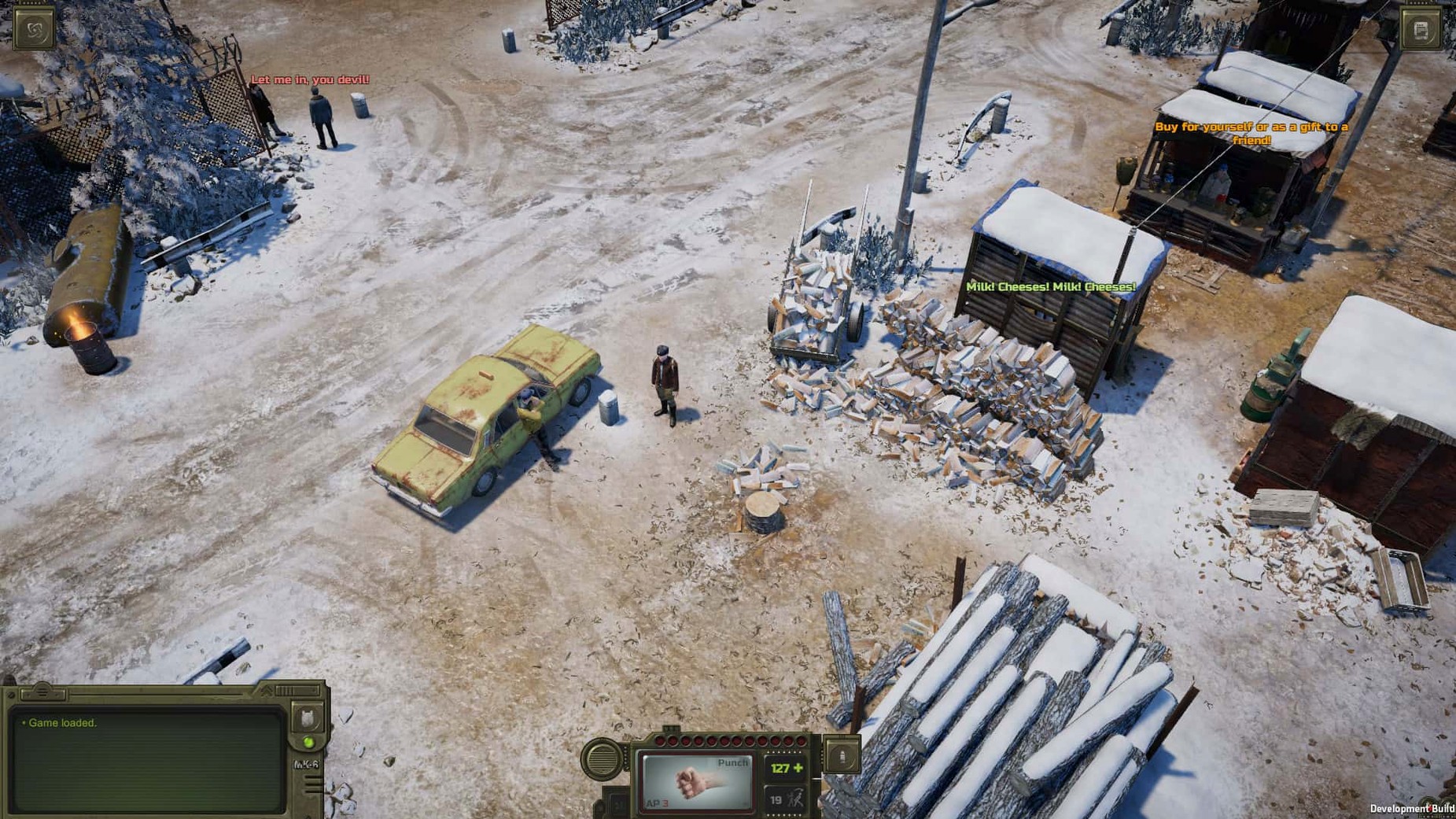
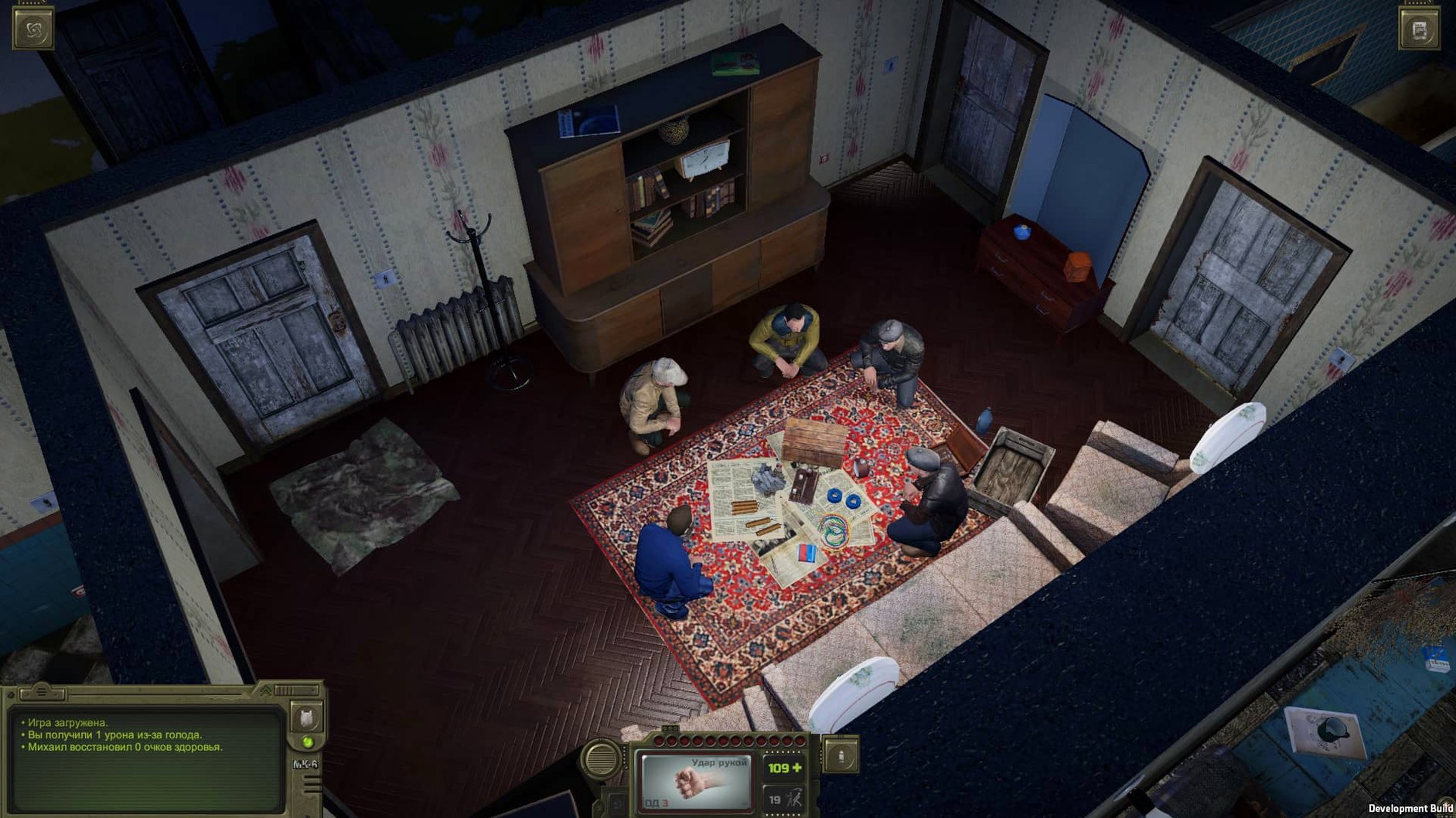
Trudograd is a stand-alone story expansion that picks up the thread from the original ATOM RPG. You don't need the first game installed, but if you have a save file tucked away, you can import your old character — scars, reputation, questionable life choices and all — and watch the consequences ripple through the new story. The setting is a single, sprawling Soviet city after the bombs, divided into distinct inhabited districts rather than a scatter of map markers. It's dense, urban, and feels properly lived-in, with the kind of detailed environmental storytelling that rewards poking through every abandoned tram and communal apartment block.
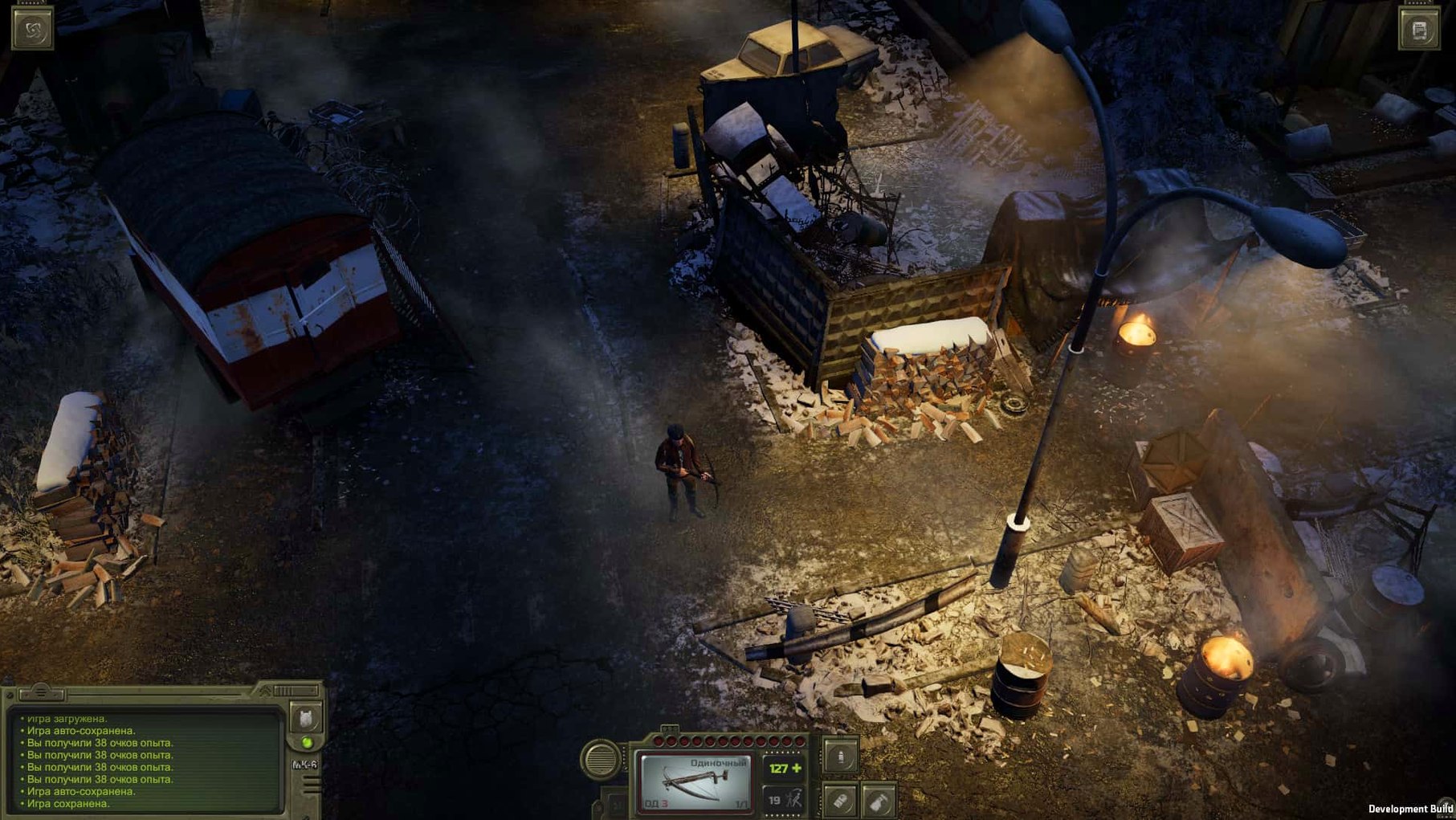
Combat is strictly turn-based, built on an action-point system that will feel immediately familiar if you've ever lost an afternoon to early Fallout or Wasteland. Positioning matters, cover matters, and a poorly chosen burst of automatic fire can ruin your whole afternoon. Outside of fights, the character system gives you plenty of room to shape a survivor who feels like yours. Multiple development paths branch through unique abilities, traits, and skills, so the grizzled sniper and the silver-tongued negotiator will experience Trudograd in genuinely different ways.
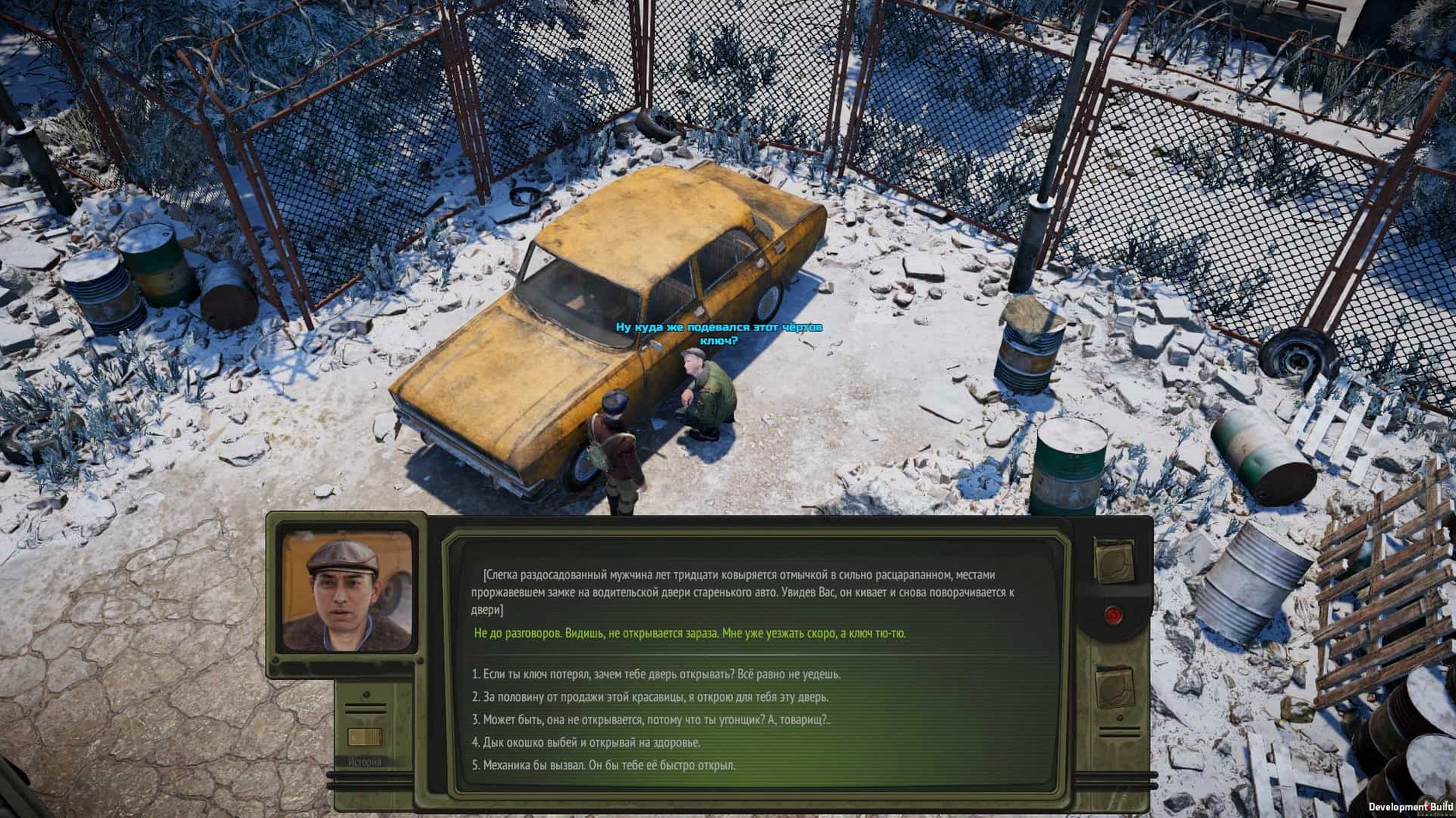
The city is stuffed with characters who have their own portraits, personalities, and dialogue trees — these aren't quest dispensers with a single line of bark. You'll meet schemers, idealists, and broken souls, all voiced in Russian or English depending on your ear. The writing carries that particular post-Soviet melancholy the team at AtomTeam does so well: grim, occasionally absurd, and capable of catching you off guard with a moment of genuine warmth before the next disaster unfolds.
One of the quiet pleasures of Trudograd is how the urban setting rewrites the usual post-apocalyptic rhythm. You're not trudging across a blasted heath between points of interest — you're navigating alleyways, checking rooftops, and gradually piecing together which district connects to which. A street market might be doing brisk trade in salvaged batteries in the morning, then become a death trap by nightfall depending on whose deal you've inadvertently scuppered. The city breathes around you, and your decisions nudge its pulse up or down.
Quests rarely settle for a single obvious resolution. A dispute between two struggling communities might be resolved with diplomacy, a well-placed lie, or simply by removing one party from the equation entirely — and the outcome ripples outward, altering which stalls stay open and who glares at you from a doorway three hours later. The game doesn't always signpost these consequences, which makes a second playthrough genuinely surprising rather than a box-ticking exercise.
Importing an old ATOM RPG save remains the most textured way to start. Your prior reputation as a hero, a pragmatist, or a borderline bandit colours how Trudograd's factions receive you from the opening scenes. That said, starting fresh is perfectly viable — the game provides enough backstory cues to orient a newcomer, and the early hours establish your place in the city's pecking order without assuming you memorised the original's every twist.
How the latest versions shaped the experience
Version 1.056, which landed in September 2021, represents a mature state of the build — well past the post-launch patching flurry and into the comfort zone where the load-order screen sits calmly and the crash-to-desktop gremlins have largely been exorcised. While the developer hasn't published granular patch notes for this specific release, the cumulative effect of the updates leading to it is tangible. Combat responsiveness tightened up noticeably: the slight lag that once accompanied area-of-effect calculations on older Intel Macs is gone, making grenade placement feel less like a hopeful suggestion. Dialogue scripting, always a strength, benefited from fixes that unknotted a few quest sequences where characters could become inexplicably mute or loop the wrong line — problems that had the community scratching its head in the earlier builds.
The inventory and trading interfaces also saw the hand of a patient optimiser. Item sorting stopped fighting against the player, and the barter screen now remembers your last transaction position instead of vaulting back to the top of a merchant's list every time you haggle over a tin of irradiated meat. These are small mercies, but in a game where you'll spend an awful lot of time shifting loot around, they accumulate into a smoother, less abrasive rhythm.
Stacking Trudograd against its peers
If you're coming from the original ATOM RPG, Trudograd feels like a concentrated dose of its stronger instincts. The first game sprawled across a wasteland map with all the ambition of classic Fallout; Trudograd tightens the focus to one dense, moody city and lets the writing and faction interplay do the heavy lifting. The character system has more room to flex, and the urban density means fewer filler encounters between the good bits.
Compared to Wasteland 3, the difference is partly scale and partly tone. Wasteland 3 runs a squad-based tactical operation with a broader scope and a shinier production budget, but its American apocalypse plays as blackly comic theatre. Trudograd's Soviet ruin is more intimate and melancholic — less wisecracking, more vodka-stained fatalism — and the solo-character focus makes every skill check feel personal rather than distributed across a team.
UnderRail shares the turn-based, single-character, deeply odd post-apocalypse DNA, but leans harder into its metro-system setting and a baroque crafting economy. Where UnderRail's difficulty curve can feel actively hostile to the uninitiated, Trudograd extends a hand — still tough, still unfor
- macOS 10.13 or later
- Intel Mac (x86 64-bit)
Questions from the class 0
Sign in or join the class to ask a question.
Nobody has asked anything yet. If you have used it on a real job, say what the file did.
Also on the Games shelf
The whole Games shelf Assassin’s Creed Brotherhood
Drops you into a dense Renaissance Rome to dismantle the Borgia family with a network of apprentices.
Assassin’s Creed Brotherhood
Drops you into a dense Renaissance Rome to dismantle the Borgia family with a network of apprentices.
 Assassin's Creed Shadows
Lets you stalk feudal Japan as a patient shinobi who exploits shadows and shifting guard patterns.
Assassin's Creed Shadows
Lets you stalk feudal Japan as a patient shinobi who exploits shadows and shifting guard patterns.
 Asphalt 8: Airborne+
Throws you into a frictionless arcade racer full of barrel rolls, nitro boosts, and airborne stunts.
Asphalt 8: Airborne+
Throws you into a frictionless arcade racer full of barrel rolls, nitro boosts, and airborne stunts.
 Baldur's Gate: Enhanced Edition
Runs a faithful digital version of the Advanced Dungeons & Dragons ruleset behind a classic fantasy epic.
Baldur's Gate: Enhanced Edition
Runs a faithful digital version of the Advanced Dungeons & Dragons ruleset behind a classic fantasy epic.
 Batman: Arkham City - Game of the Year Edition
Unleashes Batman across a sprawling, rain-soaked section of Gotham with his full combat and traversal moveset.
Batman: Arkham City - Game of the Year Edition
Unleashes Batman across a sprawling, rain-soaked section of Gotham with his full combat and traversal moveset.
 BATTLETECH
Commands a mercenary company of giant mechs through turn-based tactical combat across the Inner Sphere.
BATTLETECH
Commands a mercenary company of giant mechs through turn-based tactical combat across the Inner Sphere.
 Big Ambitions
Lets you build a small business empire from a lemonade stand to a law firm in a living city.
Big Ambitions
Lets you build a small business empire from a lemonade stand to a law firm in a living city.
 BioShock Remastered
Drops you into an underwater city where moral choices and genetic powers shape a dark story.
BioShock Remastered
Drops you into an underwater city where moral choices and genetic powers shape a dark story.