 ASPNetWorld

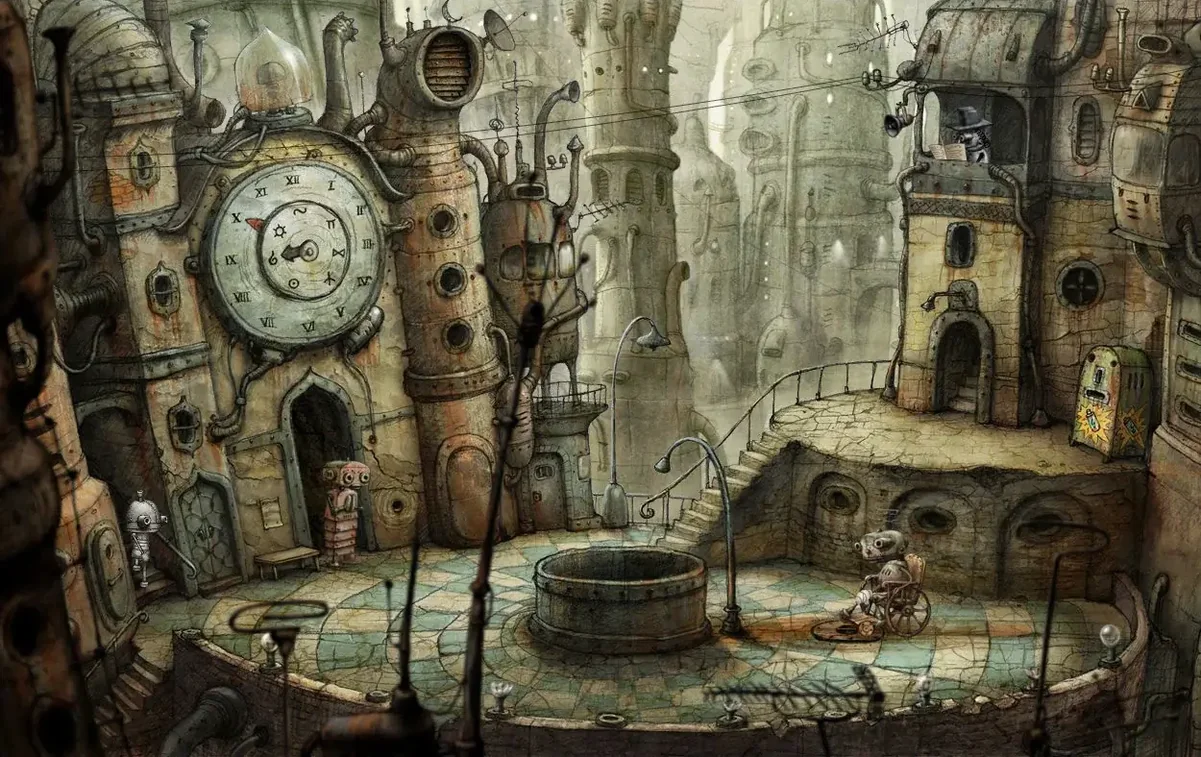
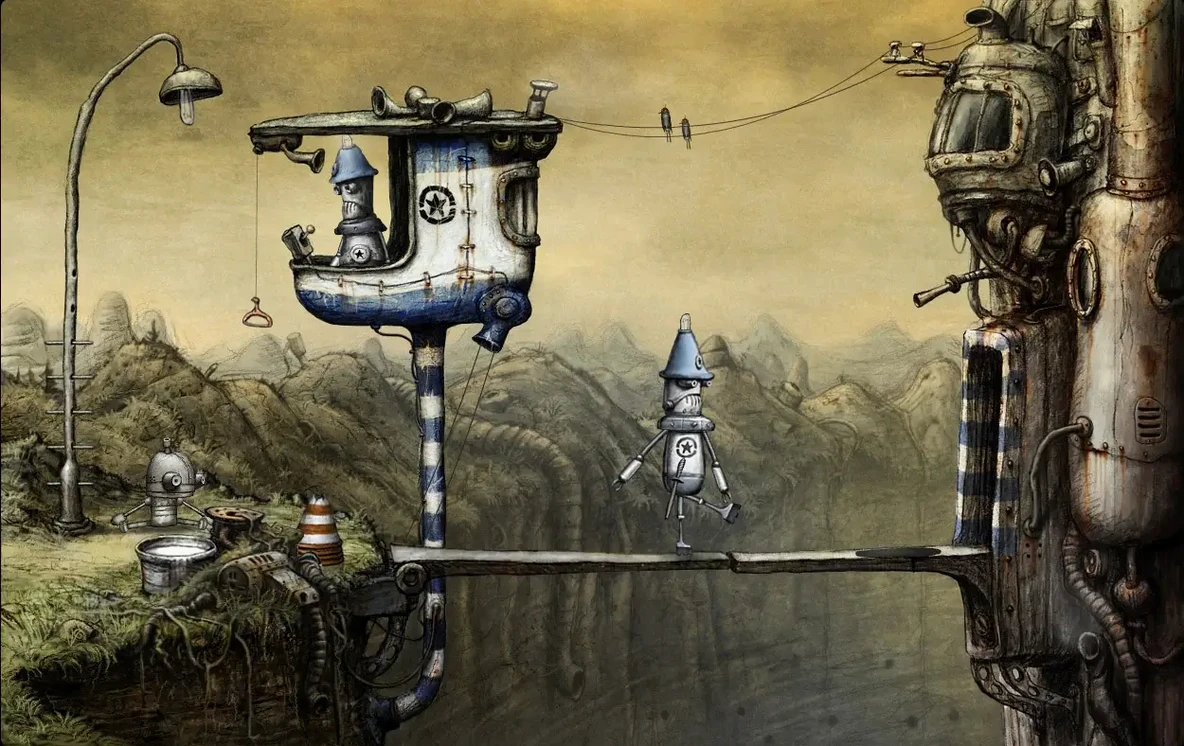
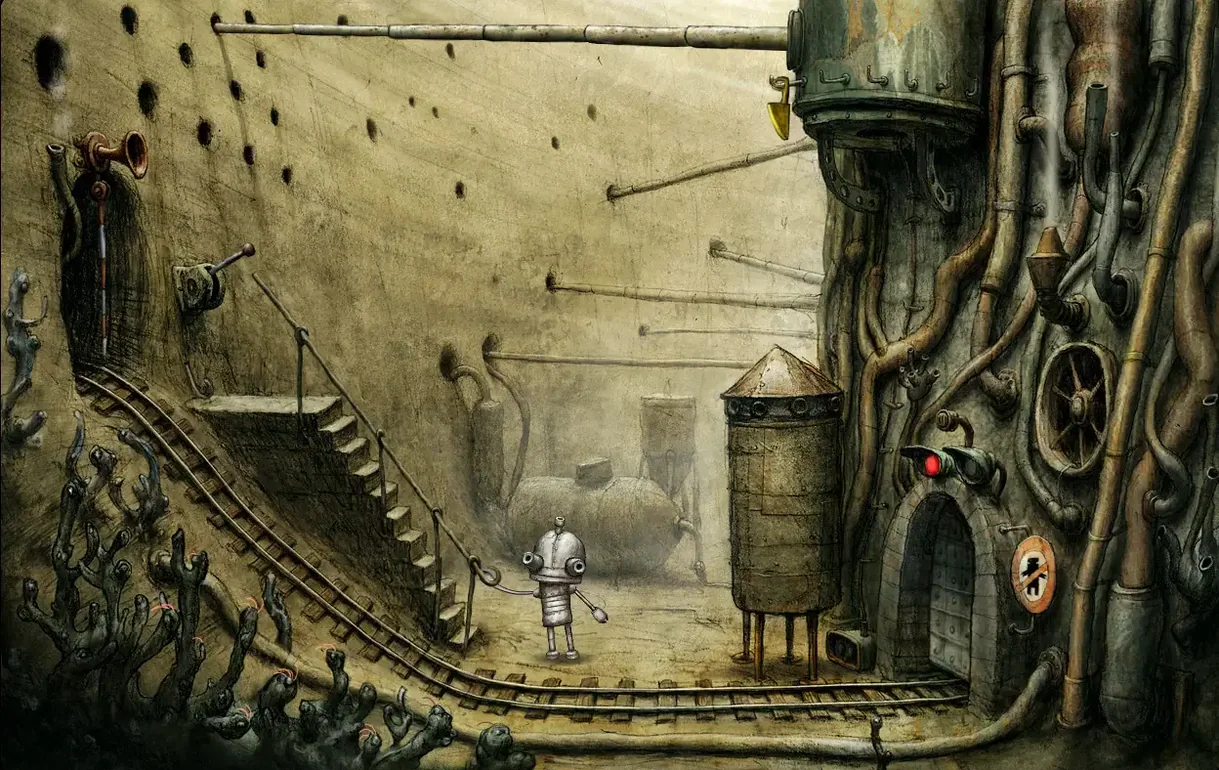

The soundtrack – an unusual weave of chamber strings and burbling electronics – was the first thing that stayed with me after the credits rolled. PC Gamer gave it their best music award for 2009, and it’s easy to hear why: Tomáš Dvořák’s score treats silence like a texture, letting notes hang in the dusty air of Machinarium’s scrapyards and towers. This Collector’s Edition bundles that full score alongside the game itself, a point‑and‑click puzzle about a little robot trying to find his way home.
A silent robot’s exile on a scrap heap begins a hand‑drawn city adventure
Machinarium is Amanita Design’s first full‑length adventure, originally released in October 2009. You guide a small, wide‑eyed robot who has been dumped on a rubbish heap outside his city. There’s no spoken dialogue – characters communicate through animated thought‑bubbles – so the story reads clearly in any of the fourteen supported languages, from Czech and Japanese to Turkish and Brazilian Portuguese. The Collector’s Edition gathers the main game, the soundtrack, and a handful of extras into one package; think of it as the definitive shelf version for people who still like owning things.
Two modes, one mood
Alongside the main story, the extras let you dip into the art book or just listen to the music on its own. The game itself sticks to a classic formula: explore hand‑drawn backgrounds, collect odd objects that rattle in your inventory, and solve logic puzzles that often involve rewiring circuits or coaxing reluctant machinery. On our Intel Mac mini it ran smoothly under macOS Tahoe – you mount the downloaded disk image, run the standard installer, and point it at your Applications folder. Version 4041.a.v2 is the build I tested, and everything felt as steady as a clockwork automaton.
Sprinting past screens hides the distant visual clues the game wants you to find
Point-and-click veterans can get overconfident and charge through the first few screens without really looking. In Machinarium, the most common beginner mistake is treating it as a screen-by-screen sprint. The game rewards lingering — a tiny detail on a distant wall panel might be the clue you need three puzzles later. Another classic slip is ignoring the robot’s height. Your protagonist is short, so walkways and ledges that look like background decoration are often perfectly usable paths. If you’re stuck, try making the robot simply *reach up* near anything that looks like a handhold.
Players also misjudge the inventory. Items often combine, but the game never spells this out with a tutorial prompt. Dragging one item onto another inside the little satchel can reveal a tool you didn’t know you had. Lastly, don’t hammer the hint button on your first pass: the built-in walkthrough is tiered, showing only the general goal first. Reading straight to the solution robs you of that small, warm glow the game is built around.
A full puzzle: freeing the band’s prisoner
Let me walk you through one of the mid-game sequences — the arcade room where the Black Cap Brotherhood have locked up a friend. The mood in this section is pure tension, softened by the absurd sight of three thugs crowded around a game cabinet. Your aim is to distract them and grab the keys hanging from a belt loop.
Start by listening — the arcade machine’s speaker crackles with a repetitive chiptune. That’s not just atmosphere; it’s the puzzle’s heartbeat. Head back to the square and collect the loose speaker wire coiled near the broken vending machine. Return to the arcade and use the wire on the cabinet’s amplifier jack. The noise becomes unbearable, and the largest thug lumbers over to kick the machine. While his back is turned, reach up and snatch the keys. The animation is small — just a few pixels of silver — but the timing depends entirely on reading the thug’s movement cycle. Too early, and your hand swipes empty air. Too late, and he’s already sitting back down.
Once the cell door clicks open, the rescued robot scribbles a symbol on the wall; photograph it with your mind (or your phone, I won’t judge). That symbol is the combination for the locked panel three rooms away, and the game never stores it for you. This chain — audio clue, environment manipulation, careful timing, and a memory test — is Machinarium in miniature.
What the Collector’s Edition quietly improved
Version 4041.a.v2 isn’t a loud remaster, which is exactly what makes it comfortable to revisit. The most tangible change for everyday play is the full-screen scaling on modern displays. The original 2009 release forced a letterboxed window on larger monitors; this build stretches the hand-drawn art without softening the ink lines, so the game feels native on a 2024 screen. The bundled soundtrack also now plays as plain audio files rather than an in-game menu, making it easy to drop into a music library.
Under the hood, the x86 64-bit executable means you aren’t wrestling with Rosetta. On our Intel Mac mini running macOS Tahoe, the cursor never lagged, even during the fancier sequences with layered parallax and smoke particles. Amanita also tidied the save system — previously a slightly cryptic numbered slot affair — so resuming from exactly where you left off is now a two-click affair. For a game that relies on mood and rhythm, these small refinements keep the spell intact.
- macOS (exact version not specified; tested on macOS Tahoe)
- Intel 64‑bit processor
Questions from the class 0
Sign in or join the class to ask a question.
Nobody has asked anything yet. If you have used it on a real job, say what the file did.
Also on the Games shelf
The whole Games shelf Mafia III
Ports a gritty organised-crime drama to the Mac with faithful controls.
Mafia III
Ports a gritty organised-crime drama to the Mac with faithful controls.
 Master of Piece
Builds a deck of units and places them before each roguelite battle begins.
Master of Piece
Builds a deck of units and places them before each roguelite battle begins.
 LIMBO
Challenges you to guide a boy through a perilous monochrome world in search of his sister.
LIMBO
Challenges you to guide a boy through a perilous monochrome world in search of his sister.
 Library Of Ruina
Turns deck-building combat into a tactical puzzle by revealing every enemy move in advance.
Library Of Ruina
Turns deck-building combat into a tactical puzzle by revealing every enemy move in advance.
 Metro 2033 Redux
Sends you through the claustrophobic tunnels under Moscow, short on ammo.
Metro 2033 Redux
Sends you through the claustrophobic tunnels under Moscow, short on ammo.
 Legacy of Kain: Blood Omen 2
Tells a gothic tale of vampiric revenge through third-person action and puzzle-solving.
Legacy of Kain: Blood Omen 2
Tells a gothic tale of vampiric revenge through third-person action and puzzle-solving.
 Metro Exodus
Takes you across Russia by train, keeping weapons and supplies alive.
Metro Exodus
Takes you across Russia by train, keeping weapons and supplies alive.
 Middle-earth: Shadow of Mordor
Pits you against orcs who remember every fight and rise through the ranks.
Middle-earth: Shadow of Mordor
Pits you against orcs who remember every fight and rise through the ranks.