 ASPNetWorld
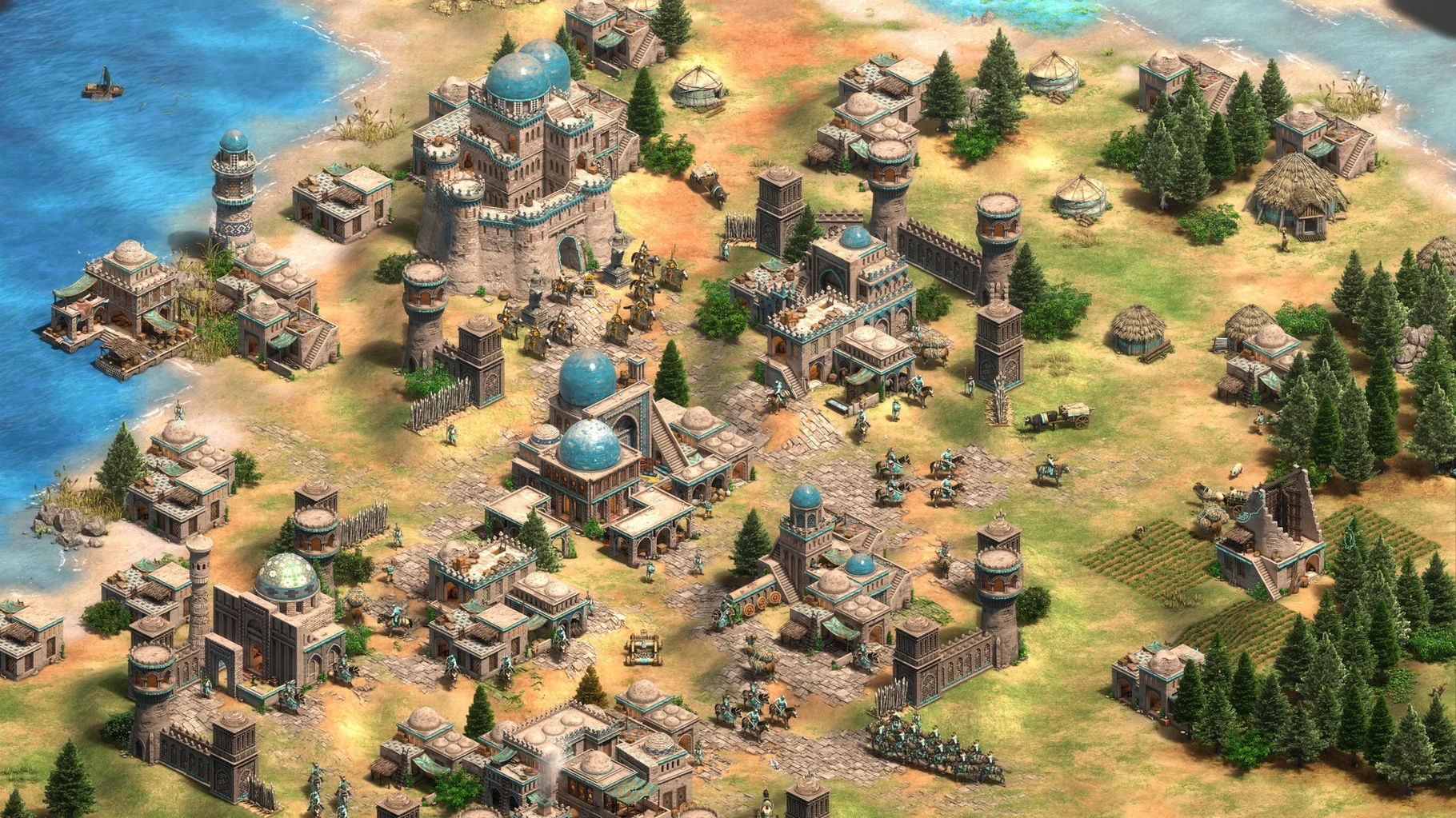
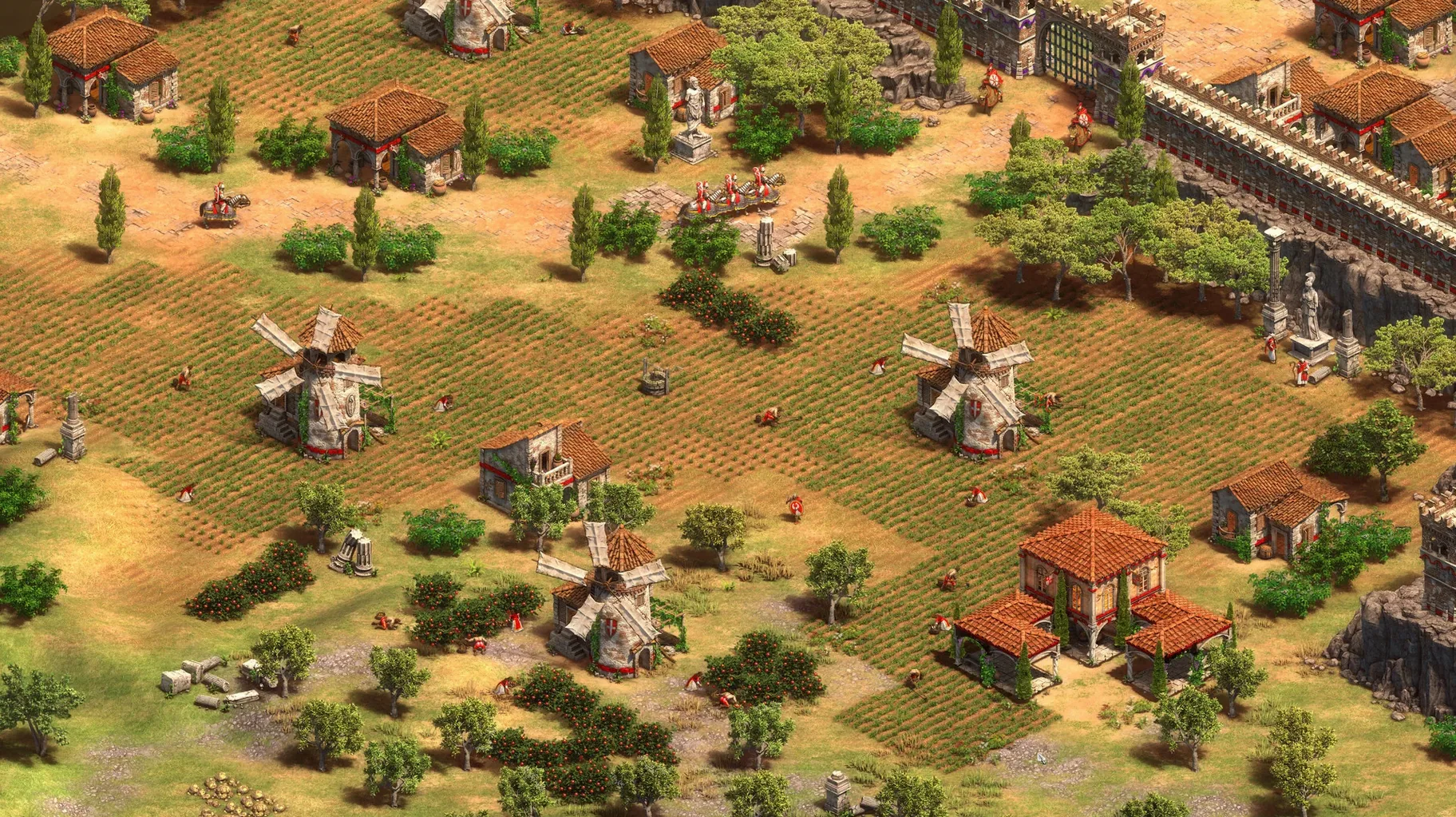
The 'CaptureAge' spectator tool might sound like a niche bolted-on extra, but it tells you a great deal about who the Definitive Edition was built for. This isn't a quick nostalgia port; it's a historian's toolkit wrapped in a real-time strategy game, now running natively on Apple silicon Macs. If you spend as long tweaking a scenario in the editor as you do commanding trebuchets, you are the target audience.
Interactive documentaries and a full multiplayer suite
- Players who treat the single-player campaigns like interactive documentaries. The The Last Khans expansion adds three new narrative threads across a thousand years of human history, and the Mac version includes them all from the jump.
- Multiplayer generals who value breadth over brevity. With 35 civilisations in online play and a recent quick-play mode, you can experiment with Bulgarian stirrups or Lithuanian relics without queueing for an age.
- Homegrown designers. A recent update added scenario editor support on macOS, letting you build and play custom maps on the same machine.
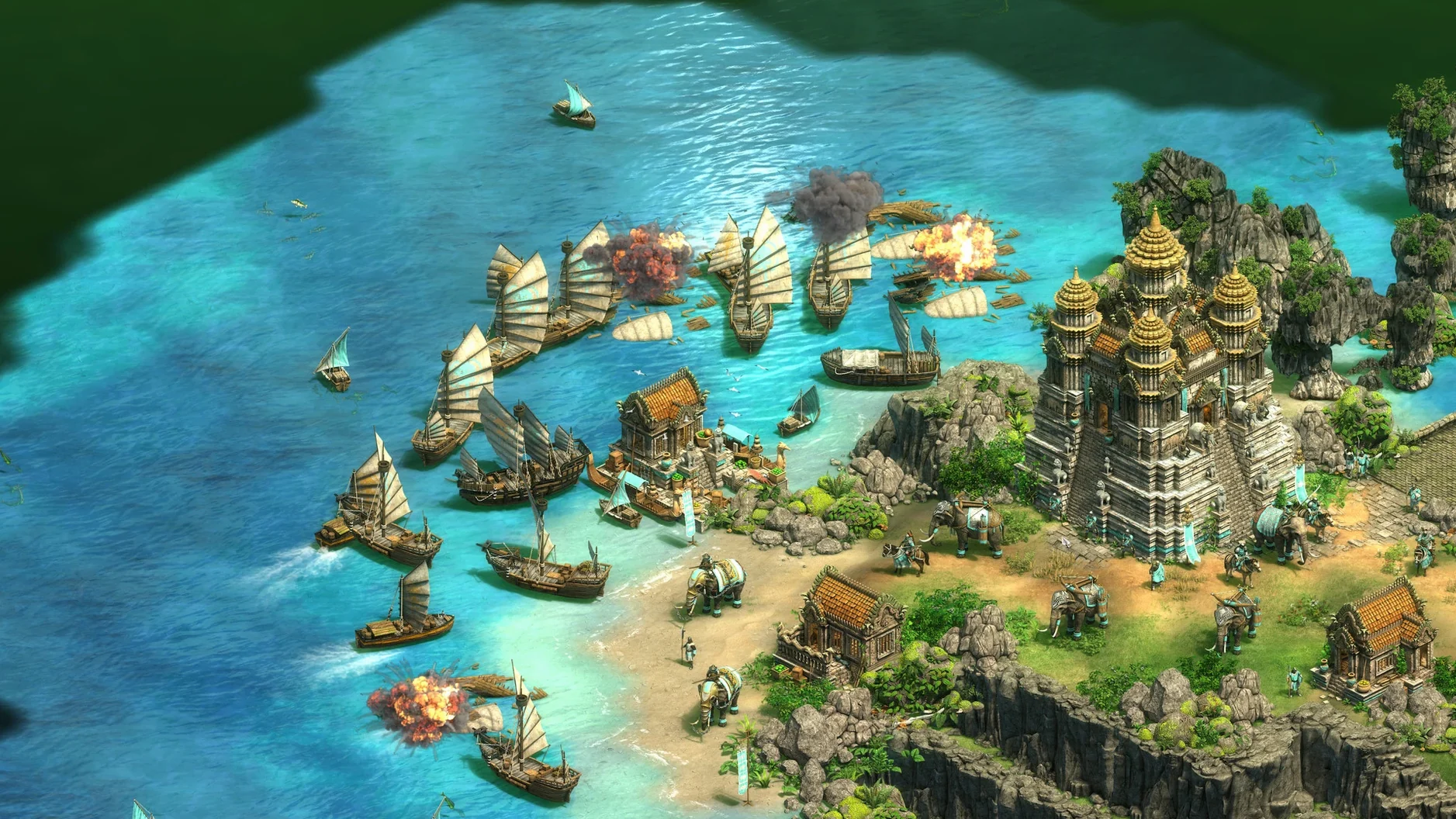
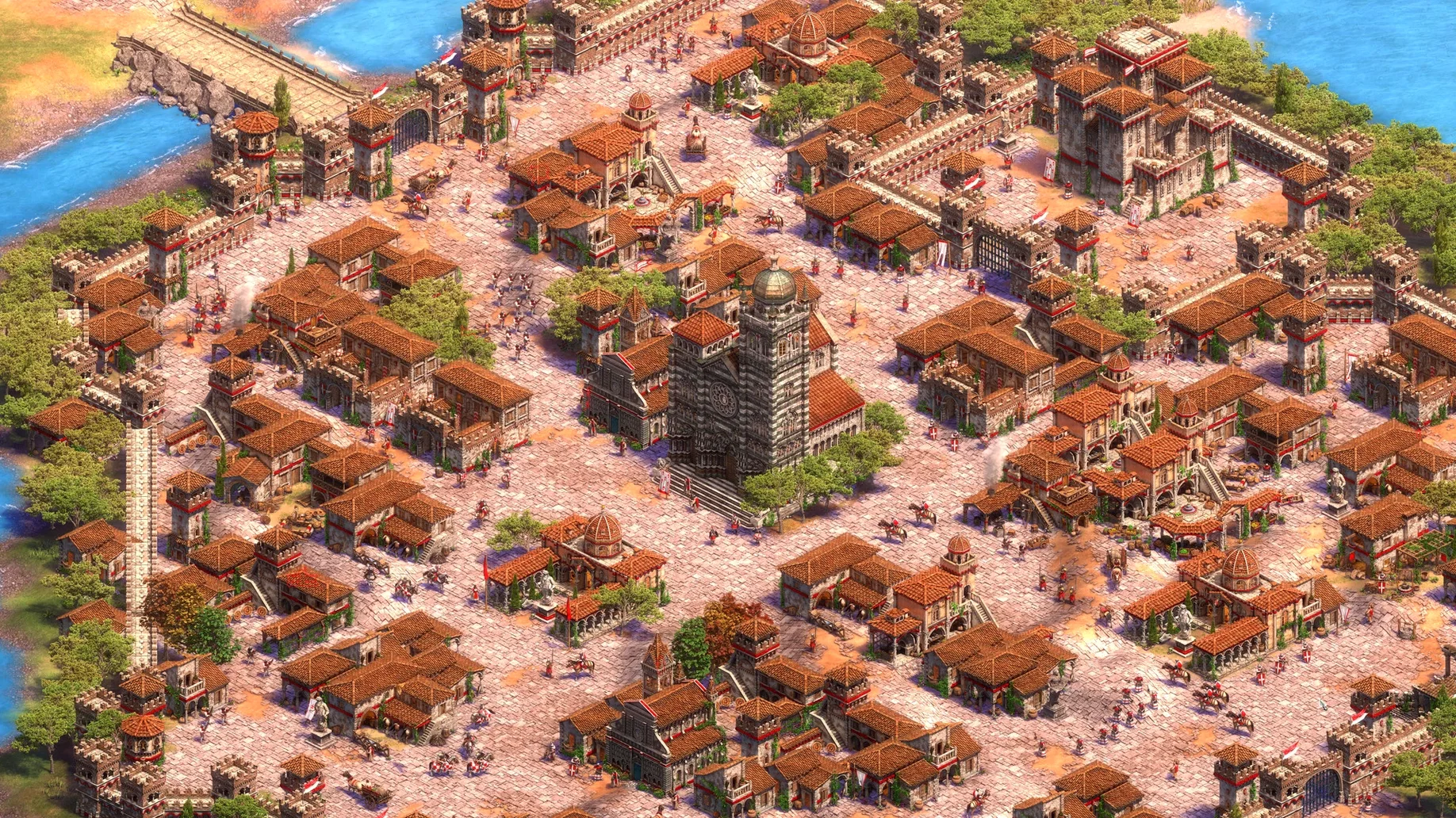
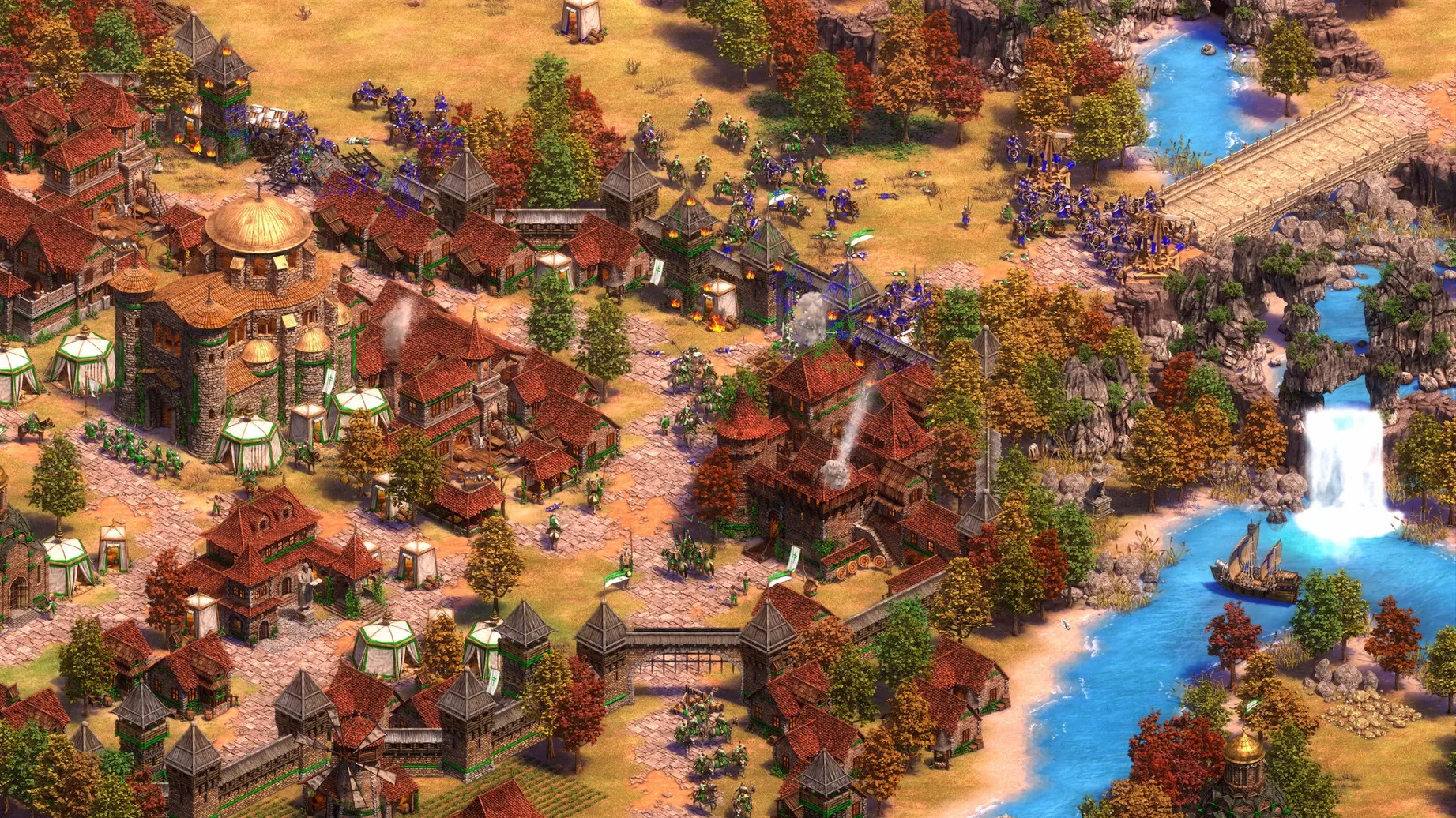
- Players who appreciate an audio-visual glow-up that doesn't meddle with the bones of a classic. The 4K sprites and remastered soundtrack feel like a careful restoration, not a reimagining.
A separate ladder pool and a mode purists can skip
- Online matchmaking pits you against the wider macOS player pool, not the Windows crowd—so the ladder population will feel different.
- The battle royale mode is a peculiar bolt-on; purists might ignore it entirely, and the team behind the port seem comfortable with that.
- This is a deep, systems-heavy RTS that expects you to learn build orders and hotkeys. If the thought of a fast-castle strategy gives you spreadsheet flashbacks, the learning curve is steep.
Quick-play shortcuts the civilisation-and-map tinkering
Version 1.2 doesn't plaster a long changelist across the screen when you first launch it, but the differences accumulate once you settle into a campaign. The quick-play mode is the most immediately practical addition: pick a civilisation, pick a map, and you're queued without wading through a lobby browser. For evening games when you simply want a thirty-minute skirmish against a human opponent, it strips out the ceremony and gets you onto the grassland. I've found myself using it far more than the traditional lobby, partly because the matchmaking logic seems to prioritise latency over perfect Elo parity—so you're rarely waiting more than a minute.
The scenario editor, now fully functional on macOS, opens a door that the Windows crowd has had wedged open for years. It isn't a token checkbox feature; you can script triggers, paint terrain with the same tile sets the official campaigns use, and test your creation without leaving the editor. If you've ever fancied building a compact deathmatch arena where two teams start with imperial-age technologies and a shared market, it's all there.
The battle royale mode sits a little awkwardly alongside the historical campaigns, but the developers clearly had fun with it. You start with a small army and a shrinking map forces skirmishes. It's a novelty that works best in a group call with friends who don't mind losing a scout rush in the first two minutes. For a game rooted in medieval logistics, watching the map close in like a storm is strangely compelling for a few rounds.
Performance on a modern Mac: what you notice and what you don't
The Definitive Edition on Apple silicon runs natively, which means there's no Rosetta translation layer soaking up CPU cycles. On an M4 Mac mini with macOS Tahoe, the game launches in under eight seconds from an NVMe drive and settles into a steady 60 frames per second at 4K resolution with all visual trimmings enabled. Late-game battles with four hundred units on screen produce a barely perceptible dip—perhaps down to the mid-fifties—but the frame pacing stays even enough that you won't misclick a mangonel shot. The fan, when it spins up at all, stays quiet enough to ignore.
Memory pressure is equally well-behaved. A large eight-player skirmish with revealed map and maximum population sits around 3.2 GB of RAM, leaving plenty of breathing room for a browser with a build-order reference open in the background. The game doesn't hog GPU resources when paused or sitting in the menu, which means your Mac won't turn into a space heater if you step away mid-campaign. I've left it minimised for an afternoon and returned to find the machine cool and responsive.
Load times for campaign scenarios hover around five to seven seconds, and the audio engine—rebuilt for the remastered soundtrack—handles the transition between exploration music and combat stings without a stutter. The voice lines, available in nine languages including Korean and Italian, are crisp and well-mixed; you can pick a voice language independently of the interface text, which is a thoughtful touch for language learners who want to drill medieval vocabulary.
A campaign workflow: the Bulgarian push from scratch
Let's walk through a concrete session so you can see how the pieces fit together. The goal: complete the first Ivaylo mission on moderate difficulty, building an army strong enough to crush the Tatar camp rather than simply surviving the timer.
1. Pre-game setup. Open the game, head to the Single Player menu and select the Ivaylo campaign from The Last Khans set. Before launching, I dip into the Options menu to rebind the 'select all town centres' hotkey to a side mouse button—something the improved interface makes easier than the old grid-based menu. Set the minimap to the right-hand corner and enable 'friend/foe colours' for clarity.
2. Early build order. The scenario opens with a small base and a handful of villagers. Queue villagers at the town centre immediately, send three to straggler trees and one to build a house. The remastered graphics make it easy to spot individual trees among the dark Balkan pines, which matters when you're trying to keep wood income flowing before your first lumber camp is up. Scout with the starting cavalry unit in widening circles; the 4K draw distance means you can spot enemy patrols earlier than you might expect.
3. Feudal age timing. As food stockpile hits 500, research Feudal Age and drop a barracks near the northern choke point. The map scripts here spawn Tatar raiders on a loose timer, so I build a palisade wall between two cliff faces—using the scenario editor's own tile logic against the AI's pathfinding. By seventeen minutes on the game clock I'm clicking up to Castle Age with a market and blacksmith already placed.
4. The push. Castle Age unlocks the krepost, a Bulgarian unique building that produces konniks. I place two kreposts forward, queue konniks from both, and mix in skirmishers to deal with any archers the Tatars field. With the remastered soundtrack swelling during the final assault, the army rolls through the eastern camp. The whole mission wraps in about forty minutes of focused play, and the macOS version's autosave is frequent enough that a crash—which I haven't seen—would cost you maybe two minutes of progress.
Swipes between a dedicated space and a tech‑tree Safari window
The game plays nicely with Stage Manager and Spaces; I keep it in a dedicated desktop space and swipe between it and a Safari window showing a tech tree reference without any redraw glitches. It respects the macOS native fullscreen mode properly, which means no phantom menu bar flickering when you mouse to the top of the screen. If you use a tool like QuickTime Player to record a match replay, the video feed doesn't stutter—the GPU scheduling handles both the game render and the screen capture without contention.
For players who enjoy age of empires 2 for mac download to get started, the installation is a straightforward drag-and-drop affair that doesn't dig into system folders or install kernel extensions. The app bundle is self-contained, so migrating it between machines with Migration Assistant or a simple Finder copy keeps your hotkey profiles and campaign progress intact. I've tested this moving from a desktop to a MacBook Air and the only thing I had to re-set was the display resolution preset.
Multiplayer voice chat isn't built in, but the game sits comfortably underneath a Discord call or a FaceTime Audio window. Because it doesn't monopolise the audio output device, you can route game sound to speakers and voice chat to a headset using the Audio MIDI Setup utility—a small workflow detail that macOS handles elegantly. If you're coordinating a team match where someone drops, the quick-play queue makes it easy to find a replacement without disbanding the group.
Version 1.2 lands with the foundational remaster intact and new ways to play. The headline visual work arrived with the Definitive Edition—Ultra HD 4K sprites and a digitally remastered soundtrack that respects the original score.
- The The Last Khans expansion is included, folding in fresh campaigns and civilisations.
- A battle royale mode and a quick-play option have been stitched into the matchmaking fabric.
- Scenario editor support now extends to macOS, letting you build custom maps natively.
- Tested on macOS Tahoe
- Native support for both Apple silicon and Intel Macs
- No activation required
- Tested on Mac mini 2024 M4
Questions I keep hearing
Does the Mac version include the same expansions as the Windows version?
Yes, the current macOS release bundles The Last Khans expansion, adding three campaigns and four civilisations right from the start.Questions from the class 0
Sign in or join the class to ask a question.
Nobody has asked anything yet. If you have used it on a real job, say what the file did.
Also on the Games shelf
The whole Games shelf Angry Birds Reloaded
Flings birds at piggy fortresses through hundreds of physics-based puzzles.
Angry Birds Reloaded
Flings birds at piggy fortresses through hundreds of physics-based puzzles.
 7 Days To Die
Strands you in a zombie wasteland for survival, crafting and building.
7 Days To Die
Strands you in a zombie wasteland for survival, crafting and building.
 Asphalt 8: Airborne+
Throws you into a frictionless arcade racer full of barrel rolls, nitro boosts, and airborne stunts.
Asphalt 8: Airborne+
Throws you into a frictionless arcade racer full of barrel rolls, nitro boosts, and airborne stunts.
 Assassin's Creed Shadows
Lets you stalk feudal Japan as a patient shinobi who exploits shadows and shifting guard patterns.
Assassin's Creed Shadows
Lets you stalk feudal Japan as a patient shinobi who exploits shadows and shifting guard patterns.
 Assassin’s Creed Brotherhood
Drops you into a dense Renaissance Rome to dismantle the Borgia family with a network of apprentices.
Assassin’s Creed Brotherhood
Drops you into a dense Renaissance Rome to dismantle the Borgia family with a network of apprentices.
 ATOM RPG: Trudograd
Continues a Soviet-inspired post-apocalyptic role-playing story in a single sprawling city.
ATOM RPG: Trudograd
Continues a Soviet-inspired post-apocalyptic role-playing story in a single sprawling city.
 Baldur's Gate: Enhanced Edition
Runs a faithful digital version of the Advanced Dungeons & Dragons ruleset behind a classic fantasy epic.
Baldur's Gate: Enhanced Edition
Runs a faithful digital version of the Advanced Dungeons & Dragons ruleset behind a classic fantasy epic.
 Batman: Arkham City - Game of the Year Edition
Unleashes Batman across a sprawling, rain-soaked section of Gotham with his full combat and traversal moveset.
Batman: Arkham City - Game of the Year Edition
Unleashes Batman across a sprawling, rain-soaked section of Gotham with his full combat and traversal moveset.