 ASPNetWorld



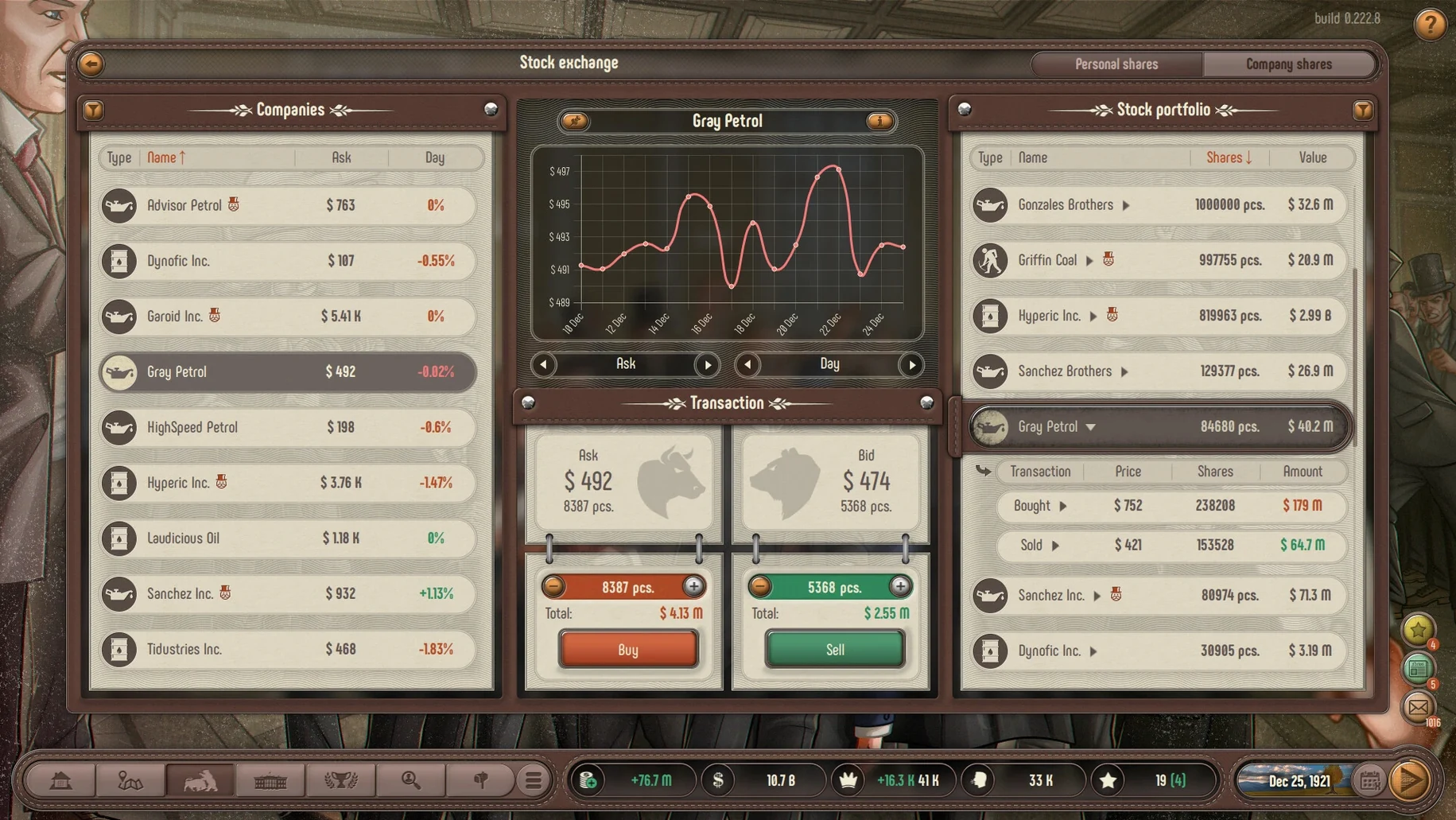
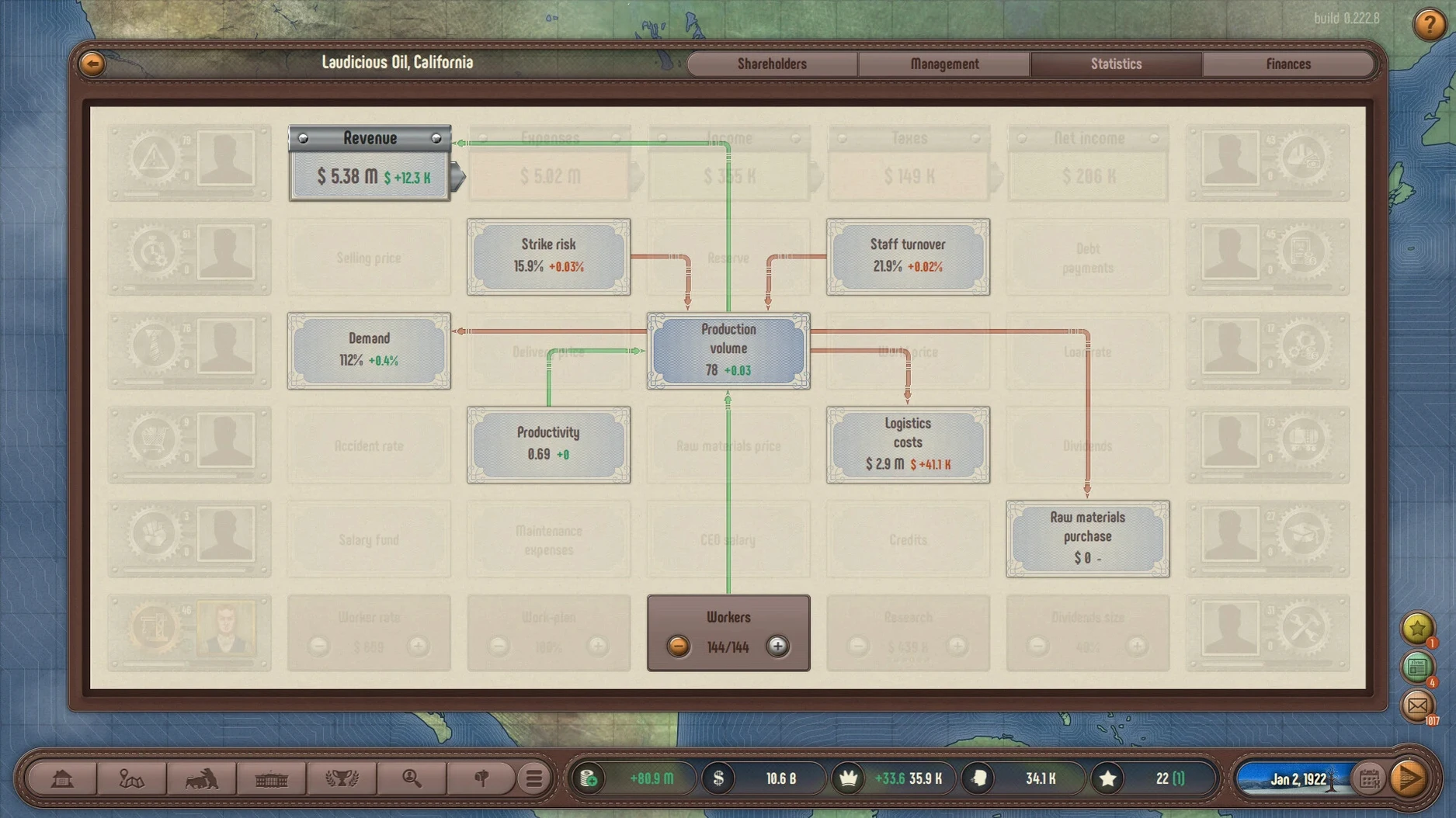
Finding a strategy game that understands money as something more than a score counter is surprisingly rare. Plutocracy sidesteps that entirely by building its whole world around the flow of capital, political favours and market panic, all set during the American Gilded Age. This article looks at how the Mac version holds up in practice.
The M1 MacBook Air handled it without a stutter
The game lists official macOS support alongside Windows and Linux, and in testing on a 2020 MacBook Air with an M1 chip running Sequoia, it ran smoothly without any obvious translation-layer stutter. Redwood hasn’t published a hard minimum requirement for the Mac, but given the hand-drawn 2D presentation and the spreadsheet-like depth underneath, you can expect comfortable performance on any Apple Silicon machine and most Intel Macs from the last several years.
Controls and the feel of the simulation
This is a mouse-and-keyboard game through and through, and it feels entirely natural on a Mac. The interface is dense with data—stock tickers, regional unemployment figures, GDP graphs—but it never demands twitch reflexes. Instead you spend your time weighing hostile takeovers, issuing bonds and quietly buying political influence across a map populated by 15,000 simulated characters, each with their own ambitions and fears. The scale is impressive: a single decision to flood a market with product can ripple out into price collapses and job losses three states away. The translation layers for running a Windows-born title on Apple Silicon are invisible here; the only thing you wrestle with is your own conscience when you realise you’ve cornered the steel market and just bankrupted a senator’s favourite nephew.
A typical session: oil, rail and a reluctant governor
Let's walk through an evening with it. You start with a modest textile mill in Pennsylvania, a small loan and a map full of opportunities you can’t yet afford. The first twenty minutes are about restraint—watching the market price of cotton dip while a rival overproduces, then buying their stock quietly through a shell company. The interface makes this feel like leafing through a financial newspaper, except you can act on every headline. By the hour mark you’ve issued bonds to fund a railway investment, which nudges freight costs down for your own factories and starves a competitor three states away. A governor you backed last session is now blocking anti-trust legislation, and the satisfaction isn’t cinematic—it’s the quiet click of a bill being shelved. You pause to buy a racehorse, mostly because the character who sold it to you now owes you a favour, and the session ends with your first trust, a steel cartel that makes you wince slightly at your own monopoly power.
You are moving money and influence, not laying roads
The biggest early stumble is treating it like a city builder. You are not laying roads or zoning districts; you are moving money and influence. New players often expand production too fast without securing supply chains or political cover, then wonder why a sudden strike halves their output and a judge they’ve never met freezes their assets. Another classic misstep: ignoring the board of directors. Handing a company to an AI director sounds like a convenience, but a poorly chosen one will run your best asset into the ground while you are distracted lobbying in Washington. And never underestimate the courts—those illegal sabotage actions are tempting, but the game remembers. A class-action lawsuit can undo months of careful monopoly-building.
It clicks hard if you lose afternoons to logistics spreadsheets
Players who enjoy unpicking systems get the richest experience here. If you’ve ever lost an afternoon to a logistics spreadsheet or read a biography of Rockefeller and thought “I could do that better,” the game clicks hard. It rewards patience and a certain cold-blooded curiosity about how markets break. History buffs will appreciate the Gilded Age flavour—the luxury items, the political families, the sense of an economy lurching into modernity—but the core audience is strategy players who prefer graphs to grenades. It’s also a quiet fit for anyone who finds management sims too cosy and wants a game where cutting wages has a knock-on effect on regional unemployment figures you can actually watch tick upwards.
- macOS version: not formally specified by the developer (tested on Sequoia)
- Architecture: runs natively on both Intel and Apple Silicon Macs
Questions from the class 0
Sign in or join the class to ask a question.
Nobody has asked anything yet. If you have used it on a real job, say what the file did.
Also on the Games shelf
The whole Games shelf Project Hospital
Diagnoses patients and designs the clinical workflows that keep a hospital running smoothly.
 Plants vs. Zombies: Replanted
 Psychonauts 2
Guides a psychic acrobat through minds in a story-driven platformer.
 Plague Inc: Evolved
Evolves a pathogen and watches it spread across a realistically modelled world map.
 Radiolight
Investigates supernatural disappearances in a 1985 park.
 Rain World
Survives as a slugcat in an indifferent, living ecosystem.
 Ravenfield
Fights large bot battles with ragdoll physics in single-player.
 Pathfinder: Kingmaker
Translates the tabletop ruleset into a party-based RPG where you pause mid-battle to plan every action.