 ASPNetWorld
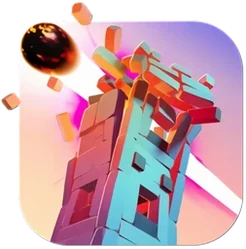
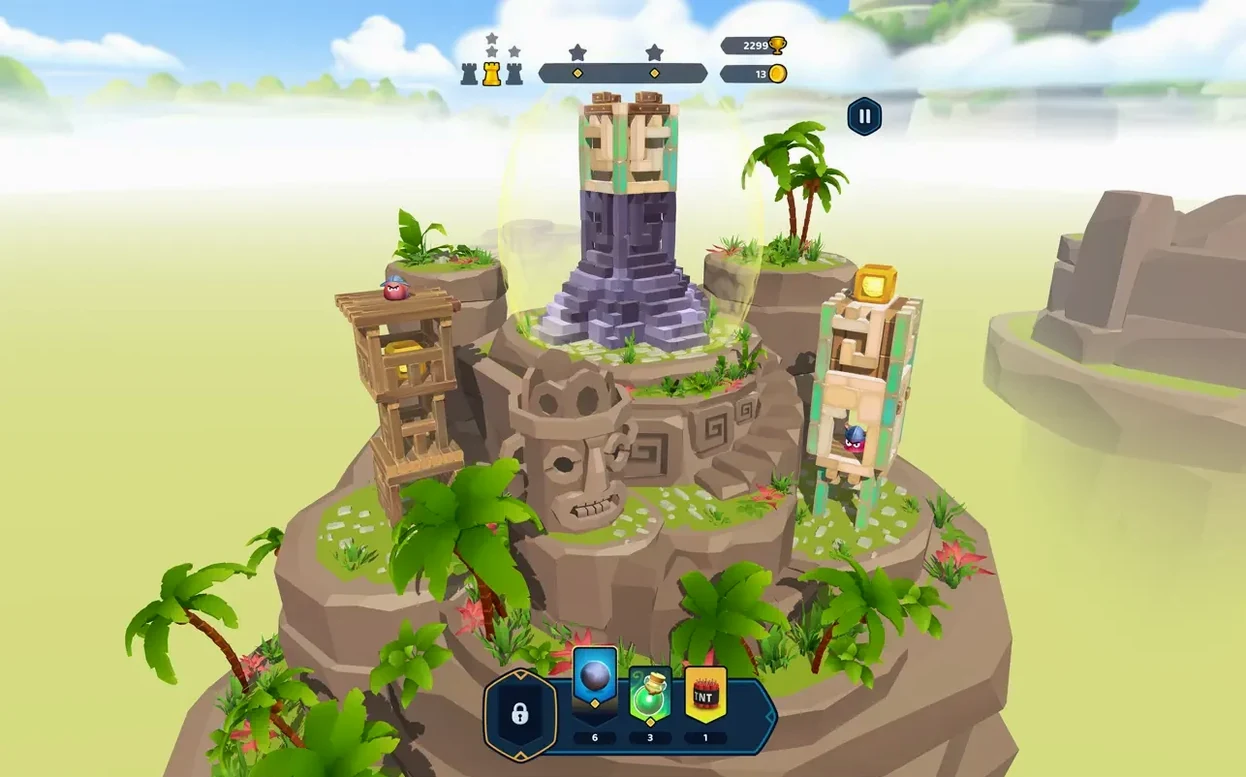
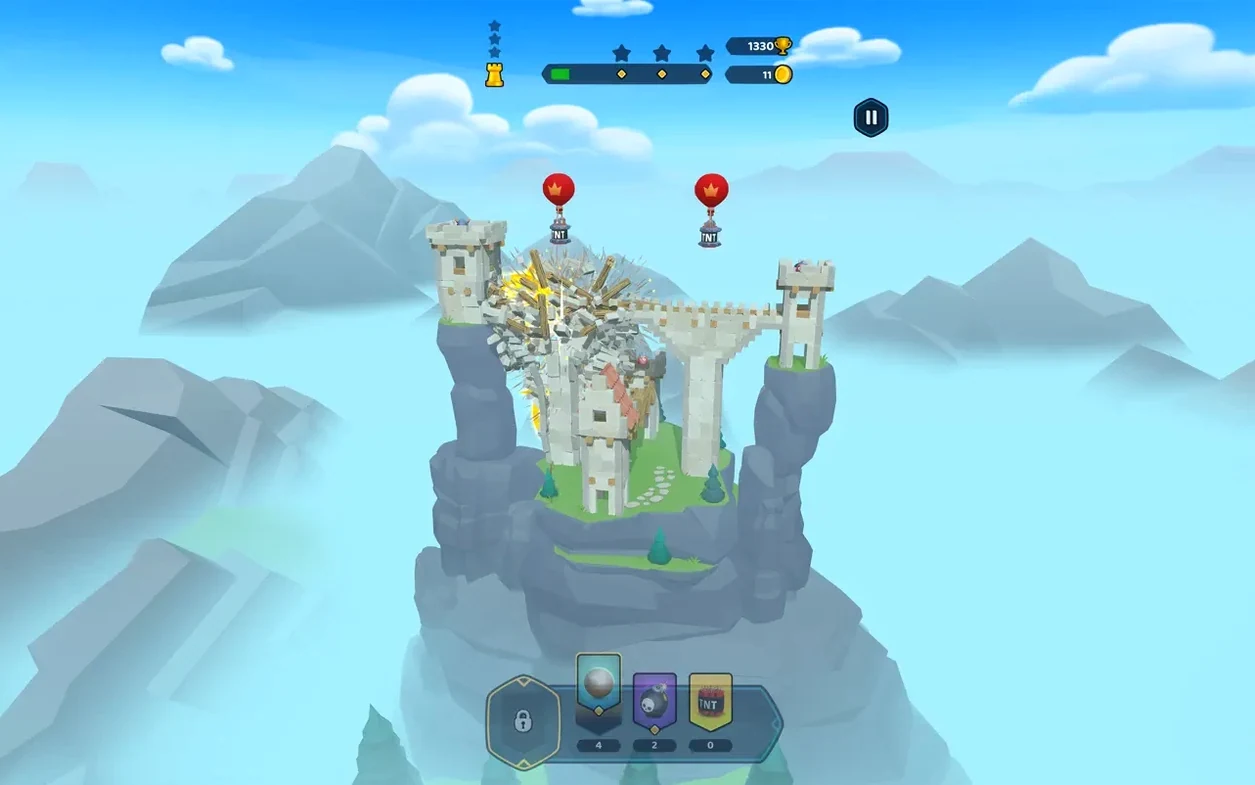
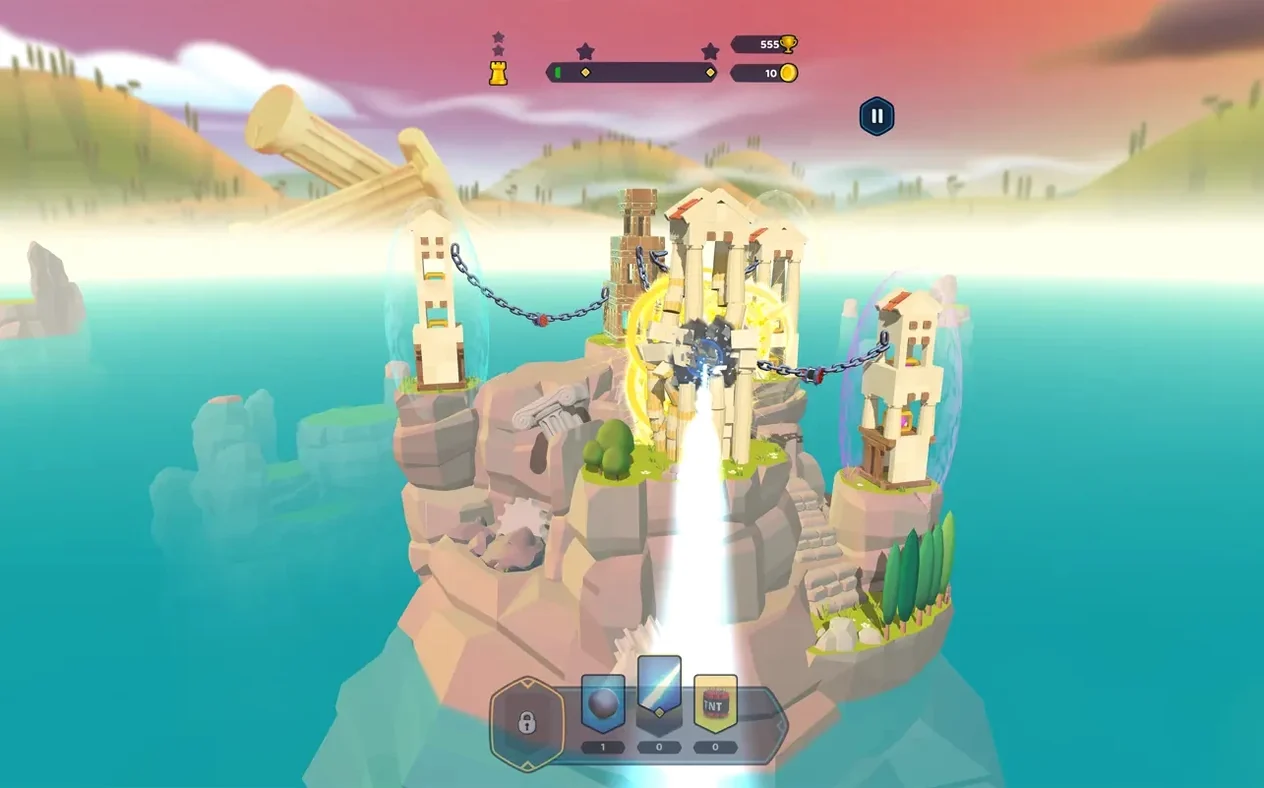
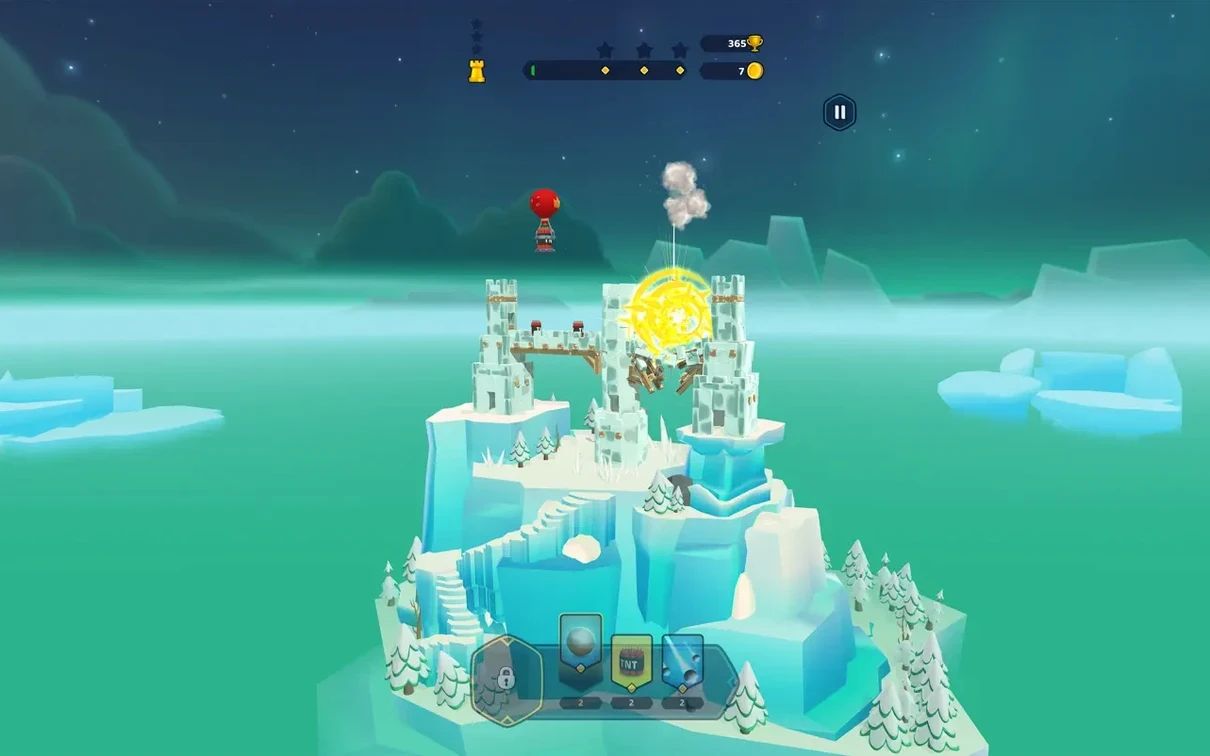
Every fortress in Castle Crumble gives you exactly three cannonballs, and it's rarely enough — but that's where the physics system becomes your real weapon. A single well-placed shot can bring down an entire stone keep if you understand how the blocks lean, crumble and transfer force through a structure. The game sends you through kingdoms inspired by ancient Rome, medieval Europe, Aztec temples and other historical settings, each with its own architectural style and weaknesses to learn.
What you'll need on a Mac
The game runs on any Mac with macOS 11.0 or later, and it supports both Intel and Apple Silicon machines natively. Performance is smooth even on older integrated graphics because the physics calculations are well-optimised — you won't see stuttering when a tower collapses into fifty individual blocks. Controls work with mouse and trackpad, letting you aim, angle and fire cannons with a satisfying drag-and-release motion. One odd quirk worth knowing: if the game freezes during the initial loading screen, just disable your internet connection temporarily and it'll launch without issue.
How the kingdoms change the game
As you progress, you unlock magical spells that sit alongside your regular explosives, giving you ways to bypass thick walls or trigger chain reactions that pure cannon fire can't manage. The soundtrack shifts in character with each kingdom, and the interface supports fourteen languages including Arabic, Korean, Russian and both traditional and simplified Chinese — handy if you're sharing the game with family. There's even an Apple Vision Pro version that Apple highlighted in 2024, so the developers clearly keep their physics engine in good shape across devices.
What version 1.23.0 brought to the table
Orbital Knight don't publish sprawling patch notes with every release, but the jump to 1.23.0 landed on 3 February 2023 and tidied up several behaviours that regular players had been muttering about. The most noticeable change is that block stacks now settle more predictably after a partial collapse — earlier versions occasionally left a single wobbling stone holding up a wall for ten seconds while the physics engine made up its mind. That's gone. The game calculates rest states faster now, so you spend less time watching rubble vibrate and more time lining up your next shot.
Under the hood, there's better handling of the magical spells in later kingdoms. Previously, casting a spell right as a cannonball hit could confuse the collision detection and leave a fortress half-destroyed but technically still standing, which meant restarting the level. That edge case has been patched. The loading screen freeze on Mac — the one where you need to kill your internet connection — is less frequent in 1.23.0, though not entirely eliminated, so keep that workaround in your back pocket.
Questions that come up before installing
Does Castle Crumble work offline? Yes, and in fact it prefers it. The game doesn't phone home for activation or verification, and the loading-freeze bug we mentioned is less likely to trigger when your Mac isn't trying to reach a server. Once installed, you can play through every kingdom without ever connecting to the internet again.
Is it a casual game or does it get properly difficult? The first kingdom eases you in gently — anyone can three-star the early Roman levels with a bit of trial and error. By the time you reach the Aztec temples, though, the architects have learned some nasty tricks. Overhanging balconies, layered stonework that absorbs shock, and fortress layouts that funnel your cannonballs into non-structural corners all force you to think several moves ahead. It's a puzzle game wearing a destruction-simulator costume.
How does the spell system actually work alongside cannons? Spells are a limited resource per level, usually one or two casts, and they do things the cannon can't — like weakening mortar across an entire wall section or briefly turning stone blocks brittle so a glancing hit propagates further. You choose when to cast, not between rounds but mid-attack, which means you can fire a cannonball, watch where it lands, and then decide whether a spell will turn a partial collapse into a total one. It's a satisfying tactical layer that stops the game feeling like a pure aiming exercise.
A short scenario: the medieval streamer's dilemma
Imagine someone running a small Twitch channel focused on physics sandboxes — the kind of player who narrates every collapse and treats a well-planned fortress takedown like a chess move. They've already worked through the ancient kingdom off-camera and now they're live, tackling a medieval castle level where the main keep sits behind two layers of outer wall. Their first cannonball takes out the gatehouse beautifully, but the inner wall barely shudders. Chat starts suggesting wild angles. Instead of guessing, they drop a weakening spell on the inner wall's foundation, then fire their second shot low and left — the whole structure folds sideways into the moat. The physics system sells the moment perfectly, blocks tumbling with real weight, and the stream gets a clip that does numbers. That's the kind of player Castle Crumble was built for: someone who wants the destruction to feel earned, not automatic. The game rewards patience and spatial thinking, and it gives you just enough tools to feel clever without handing you the solution.
- macOS 11.0 or later
- Intel or Apple Silicon processor
Questions I keep hearing
Does Castle Crumble work on Apple Silicon Macs?
Yes, it runs natively on both Apple Silicon and Intel Macs with macOS 11.0 or later.
What kind of attacks can you use in the game?
You start with cannon-based attacks and unlock magical spells as you progress through the kingdoms.
What languages does the game support?
The interface is available in fourteen languages, including English, Arabic, Japanese, French, German, Spanish, Italian, Portuguese, Russian, Turkish, Korean, Polish, and both traditional and simplified Chinese.
Questions from the class 0
Sign in or join the class to ask a question.
Nobody has asked anything yet. If you have used it on a real job, say what the file did.
Also on the Games shelf
The whole Games shelf Celeste
Guides a young climber up a treacherous mountain through hundreds of instant-respawn platforming rooms.
Celeste
Guides a young climber up a treacherous mountain through hundreds of instant-respawn platforming rooms.
 Cheap Car Repair
Tasks you with diagnosing and fixing battered cars in a post-communist workshop on a shoestring budget.
Cheap Car Repair
Tasks you with diagnosing and fixing battered cars in a post-communist workshop on a shoestring budget.
 Chilla's Art Okaeri
Traps you in an ordinary Japanese home where your mother's absence twists into a quiet nightmare.
Chilla's Art Okaeri
Traps you in an ordinary Japanese home where your mother's absence twists into a quiet nightmare.
 Cities: Skylines
Hands you a bare plot and a budget so you can zone, pipe, and police a metropolis into existence.
Cities: Skylines
Hands you a bare plot and a budget so you can zone, pipe, and police a metropolis into existence.
 Civilization V
Marches a chosen nation from a single settler to a space-age superpower on a hex-grid world.
Civilization V
Marches a chosen nation from a single settler to a space-age superpower on a hex-grid world.
 Borderlands 2
Sends you on a co-op treasure hunt across a hostile planet with a billion procedurally generated guns.
Borderlands 2
Sends you on a co-op treasure hunt across a hostile planet with a billion procedurally generated guns.
 Black Mesa
Retells the classic resonance-cascade disaster with modern visuals and rebuilt levels.
Black Mesa
Retells the classic resonance-cascade disaster with modern visuals and rebuilt levels.
 Command & Conquer: Generals
Rethinks real-time strategy missions by scripting victory conditions beyond base capture.
Command & Conquer: Generals
Rethinks real-time strategy missions by scripting victory conditions beyond base capture.