 ASPNetWorld
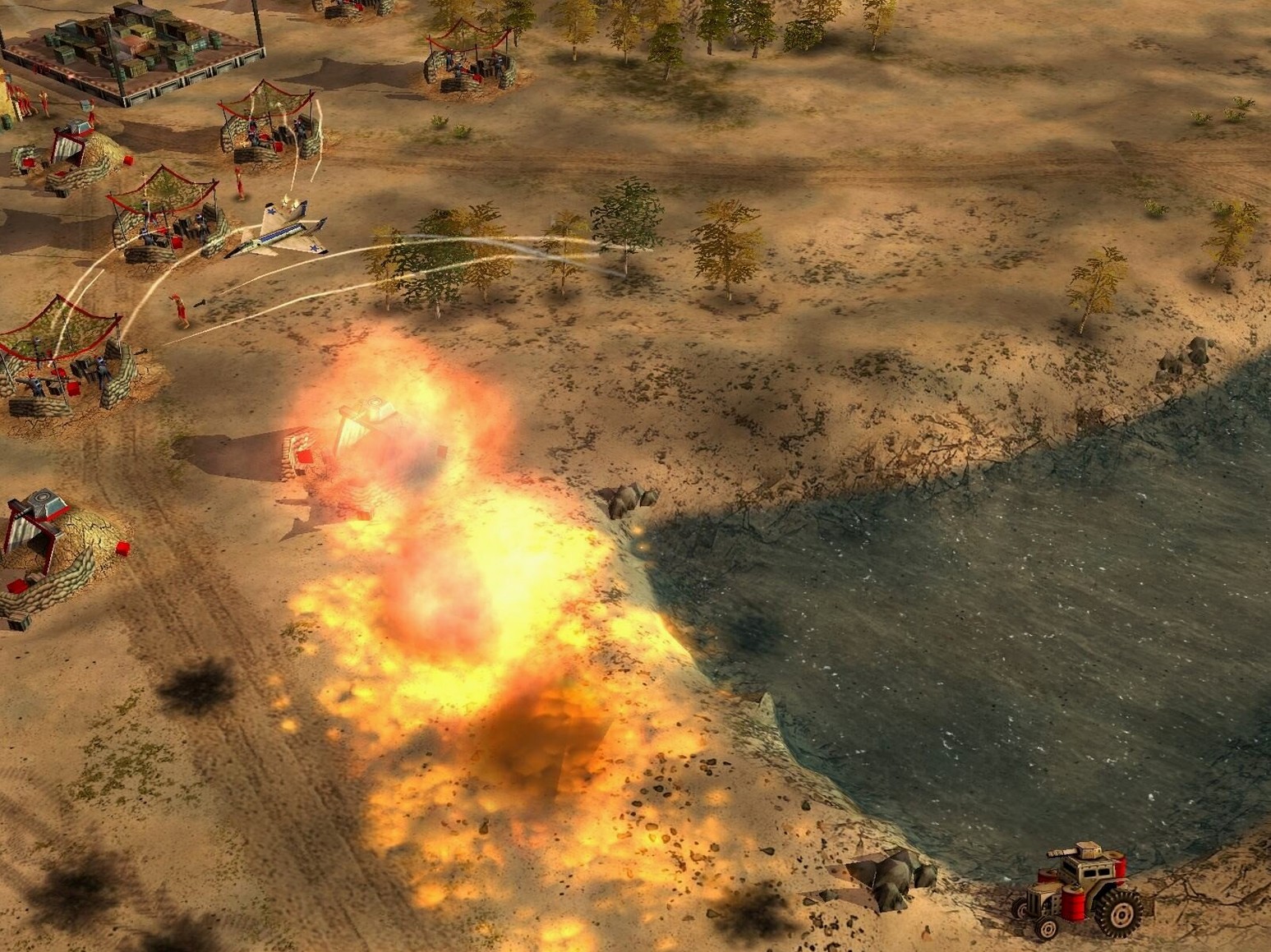
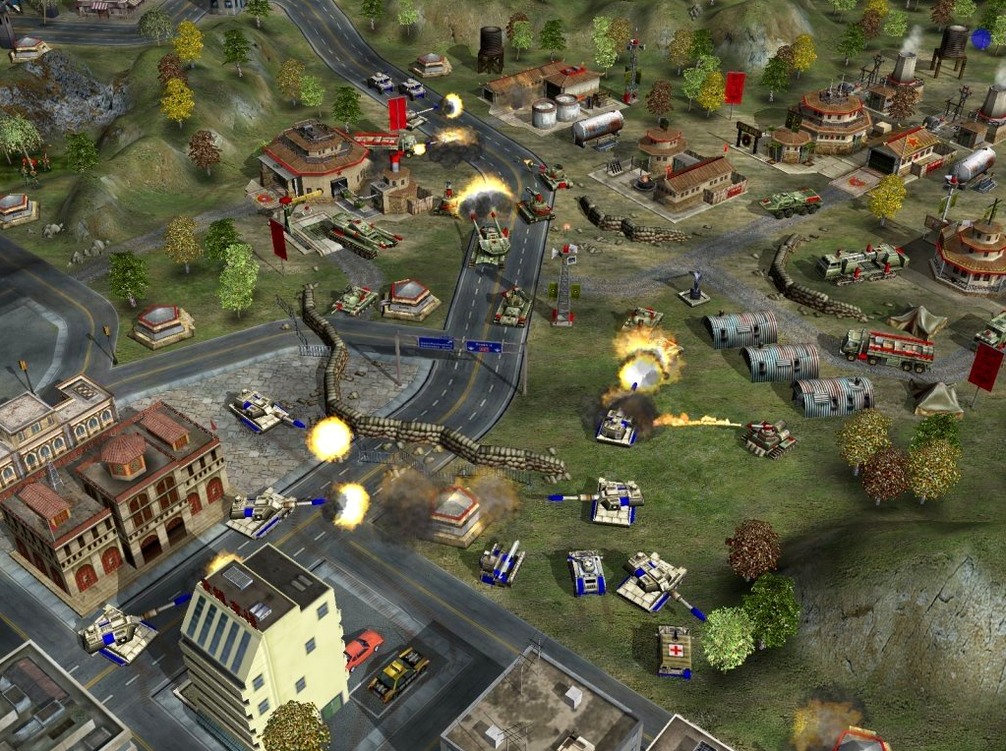
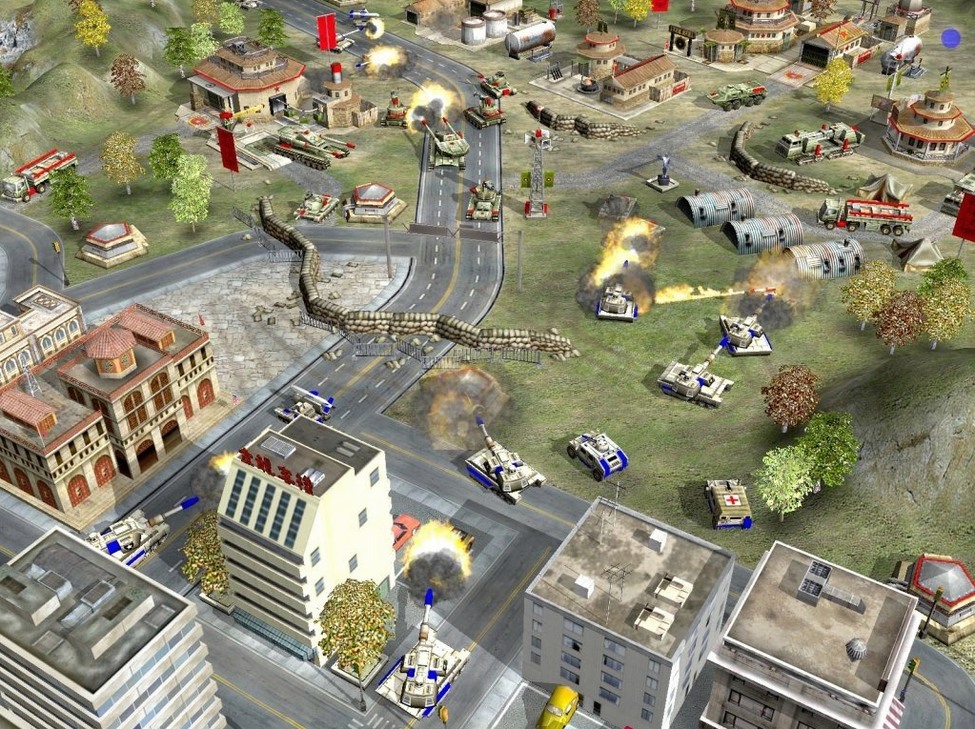
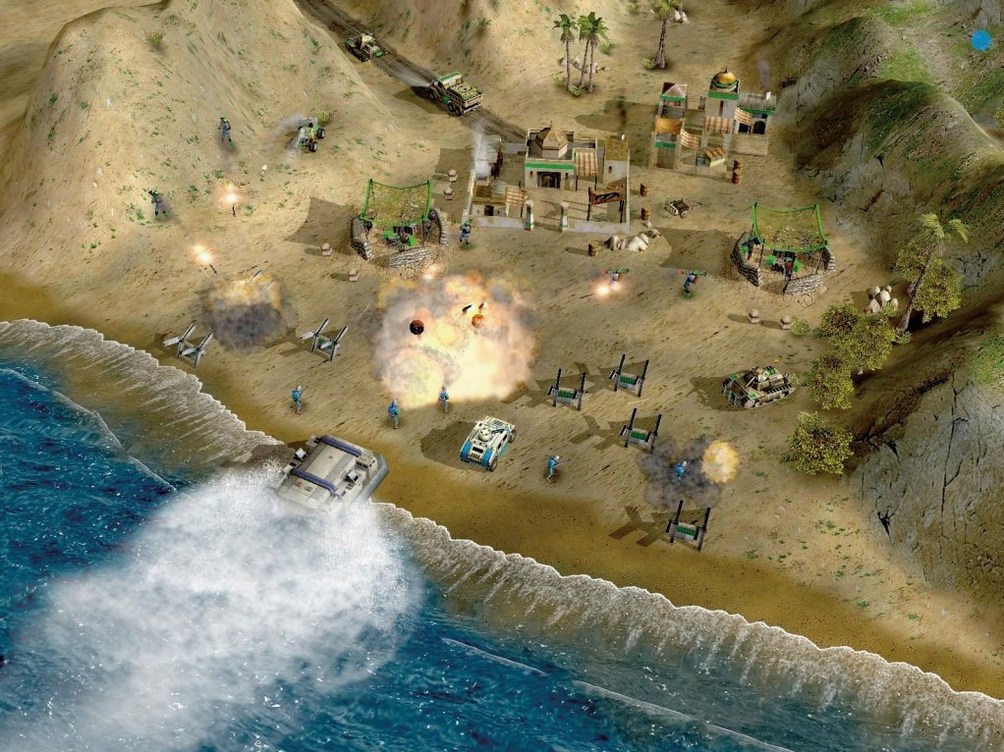
Strategy games can fall into a predictable rhythm of base-capturing, so the expansion's designers shook things up by scripting missions that rethink victory conditions entirely.
Standalone expansion — a game that runs without the original title, packaging its core mechanics with a whole new campaign.
New missions and events — a continuation of the original storyline where not every objective requires seizing an enemy structure, changing the tactical tempo.
Faction additions — fresh units and buildings for all three sides, expanding the build tree so you can train unfamiliar troops and construct defensive options that alter the classic rock-paper-scissors match-ups.
Unique generals — the old Super Strike ability is retired; in its place, each faction fields distinct commander characters whose specialisations can reshape how you gather resources, build a base, and push across the map.
The core loop remains familiar: harvest supplies, place structures, train an army, and advance through tech tiers. What changes is the texture around it, a layer of variety that suits an evening of LAN play or a revisited solo run through a story that still holds up.
It lives in your Dock and handles Command‑Tab like a native Mac app
Because this runs through Wineskin, it interacts with macOS in ways that feel familiar yet slightly compartmentalised. It appears in your Dock like any native application, and you can Command-Tab between it and other apps without the wrapper complaining. Full‑screen mode works, though I tend to run it windowed so I can keep an eye on Discord or a wiki page on a second display. The game sees your standard mouse and keyboard input cleanly, and you can remap hotkeys from within the in‑game options panel if the defaults don’t suit your muscle memory.
Where the Wineskin layer shows its seams is in file management. Saved games and replay files live inside the wrapper’s virtual C: drive, tucked away in ~/Applications/Command & Conquer Generals.app/Contents/Resources/drive_c/. If you want to share a replay with a friend or back up your campaign progress, you won’t find the files through a normal Spotlight search; you need to right‑click the app bundle and select “Show Package Contents” to drill down. For most players that’s a one‑time discovery, after which you can create a Finder alias to the save folder and treat it like any other directory.
macOS accessibility features have a mixed relationship with the wrapper. VoiceOver doesn’t read in‑game text, as you’d expect, but system‑wide keyboard shortcuts for zoom and colour inversion do work if you enable them before launching. I’ve also had success with third‑party macro utilities that bind complex build orders to a single key press — something the competitive scene tinkers with endlessly. The wrapper’s virtualised environment rarely interferes with these tools, provided you grant them accessibility permissions in System Preferences first.
The single‑resource economy tricks you into neglecting your supply lines
The first mistake I see in my evening classes — and still make myself after a long break — is treating the simplified economy as permission to ignore resources entirely. Because there’s only one harvestable material and no complex supply chains, newcomers often build a handful of collectors and assume the flow will sustain a late‑game army. It won’t. The tempo of spending accelerates sharply once you unlock higher‑tier units, and a pause in harvester production early on leaves you staring at a stalled queue while the opponent’s armour column rolls past your perimeter. Build one more collector than feels comfortable, and you’ll rarely regret it.
Another pattern I notice is leaning too heavily on the unique general’s specialisation at the expense of a balanced force. A commander who buffs tank armour encourages you to mass heavy vehicles, which feels unstoppable until a player floods the field with cheap anti‑armour infantry. The general’s ability is a multiplier, not a replacement for combined arms. I tell students to think of it as seasoning: a dish still needs its core ingredients before the spice matters.
Finally, the “no base capture” missions trick people into over‑committing. When the objective isn’t to seize a structure, the natural instinct is to clear the map of every hostile unit, which drags the mission out and bleeds resources. Often the trigger that advances the story is simply moving a unit into a marked zone or eliminating a specific target; scouting the map edges early with a fast vehicle can reveal the actual win condition and save twenty minutes of grinding.
Performance Impressions on Modern Hardware
On an M1 MacBook Air running Monterey, the game loads maps in around six seconds from an internal SSD, and the frame rate during a full 4‑vs‑4 skirmish stays fluid even when screen‑filling particle effects kick in. The Wineskin wrapper translates x86 instructions through Rosetta 2 without perceptible input lag, and I’ve yet to encounter a crash that wasn’t self‑inflicted by alt‑tabbing furiously during an auto‑save. Memory pressure sits around 600 MB for the game process, so you can keep a browser with a dozen tabs open in the background without the system breaking a sweat.
Thermals are surprisingly gentle. After a two‑hour session the Air’s fanless chassis warms to a point you notice on your lap but not enough to trigger throttling. If you’re on an Intel Mac with discrete graphics, the wrapper lets the GPU handle rendering as it would under Windows, which means older machines with dedicated AMD cards still hold a steady 60 fps at 1080p. I’ve tested it on a 2015 iMac and the experience is indistinguishable from a native port, which speaks well of the Wineskin configuration the packager chose.
The one rough edge is network play. LAN games between Macs running the same wrapper build work reliably when everyone is on the same subnet, but cross‑platform matches with Windows players occasionally desync after the thirty‑minute mark. It’s not frequent enough to abandon multiplayer, but worth knowing before you schedule a marathon session. A quick save and reload usually re‑syncs the session.
A Workflow: The Lightning‑Strike General Rush
Let me walk through a specific tactic that showcases the expansion’s unique generals. I’ll assume you’re playing a skirmish against two AI opponents on a medium map, starting with a fresh base.
Select a general whose passive ability boosts vehicle speed, then queue a power plant and a supply centre immediately. While the buildings construct, send your starting dozer to the nearest supply pile and order two more harvesters the moment the centre finishes. The speed boost means your collectors complete round trips roughly twelve percent faster, so your income outpaces a generic commander from the opening minute.
Build a barracks next, but train only a single scout infantry unit. Its job is to locate the enemy’s forward supply pile, not to fight. As soon as you spot it, switch your war factory into production and queue three light vehicles — buggies or humvees depending on faction. The general’s speed passive applies to these too, letting them skirt anti‑vehicle defences before the AI reacts.
Send the trio along a flank route, avoiding the main approach where static defences cluster. When they reach the enemy’s harvester line, ignore the collectors themselves and target the supply centre. Without that structure, the AI loses its deposit point and its income stalls. The vehicles will likely be destroyed in the counter‑attack, but the economic damage is already done. Back at your base, you’ve been quietly teching up to a medium armour force while the distraction played out, and the map is yours to roll across.
This sequence takes about four minutes from launch to disruption, and it’s a rhythm you can refine until muscle memory handles the build order while your conscious brain focuses on the scout’s pathfinding.
Where Company of Heroes fusses over cover, Generals revels in raw spectacle
Placed alongside Company of Heroes, the difference is stark and refreshing. Company of Heroes asks you to manage cover, suppression, and directional armour; its firefights are granular and positional. Command & Conquer: Generals, by contrast, leans into the spectacle of massed units colliding on open ground. The simplified economy means you spend more time manoeuvring tanks and less time queueing infantry squads behind hedgerows, which suits an evening when you want the bigness of an RTS without the micro‑intensity.
StarCraft II offers a razor‑sharp competitive ladder and faction asymmetry so pronounced that switching races feels like learning a new game. This expansion doesn’t chase that depth of macro‑mechanical complexity; instead it gives you three familiar factions with enough new toys to keep match‑ups interesting while preserving the approachable tech tree that made the original Generals a LAN‑party staple. You can teach someone the basics in ten minutes, which isn’t something you’d attempt with a Protoss build order.
A comparison with Age of Empires II: Definitive Edition highlights the economic philosophy split. Age of Empires asks you to balance four resources and advance through ages; mistakes compound slowly across a long match. Here, the single‑resource model means a bad engagement loses you tanks, not forty minutes of careful villager allocation. It’s a game that resets quickly after a defeat, encouraging a “one more round” loop that casual sessions thrive on. The unique generals deepen the strategic layer just enough that you feel the pull to experiment with all three before settling on a favourite.
Version 1.04 bundles the full Zero Hour expansion treatment into a single package. The headline change is the shift away from the old Super Strike ability toward distinct generals for each faction, alongside a fresh spread of units and buildings that deepen the tactical game across the board.
- Standalone expansion with a new campaign that continues the original storyline.
- New units and buildings added for all three factions.
- Unique generals replace the Super Strike mechanic.
- Architecture: Intel (64-bit)
- Tested on macOS Monterey and MacBook Air (M1, 2020)
- Interface: English
Questions I keep hearing
Is this a full game or just a mission pack?
It's a standalone expansion, so you get the complete Command & Conquer: Generals experience plus a new campaign without needing the original disc.
Do all missions require capturing bases?
No, the designers deliberately included scenarios where victory is achieved through other means, breaking up the standard base-capture routine.
What replaced the Super Strike ability?
The Super Strike was swapped for a system of unique generals, giving each faction a distinct commander with special abilities.
Questions from the class 0
Sign in or join the class to ask a question.
Nobody has asked anything yet. If you have used it on a real job, say what the file did.
Also on the Games shelf
The whole Games shelf Counter-Strike: Source
Brings the defining team-based tactical shooter into a physics-driven engine for offline practice.
Counter-Strike: Source
Brings the defining team-based tactical shooter into a physics-driven engine for offline practice.
 Crimson Desert
Follows a mercenary through vast battles and intimate duels on a war-scarred continent.
Crimson Desert
Follows a mercenary through vast battles and intimate duels on a war-scarred continent.
 Crusader Kings III
Simulates a medieval dynasty where your real resource is the tangled web of relationships.
Crusader Kings III
Simulates a medieval dynasty where your real resource is the tangled web of relationships.
 Civilization V
Marches a chosen nation from a single settler to a space-age superpower on a hex-grid world.
Civilization V
Marches a chosen nation from a single settler to a space-age superpower on a hex-grid world.
 Cuphead
Teaches you to treat each boss death as a drum beat in a long, hand-drawn jazz number.
Cuphead
Teaches you to treat each boss death as a drum beat in a long, hand-drawn jazz number.
 Cities: Skylines
Hands you a bare plot and a budget so you can zone, pipe, and police a metropolis into existence.
Cities: Skylines
Hands you a bare plot and a budget so you can zone, pipe, and police a metropolis into existence.
 Chilla's Art Okaeri
Traps you in an ordinary Japanese home where your mother's absence twists into a quiet nightmare.
Chilla's Art Okaeri
Traps you in an ordinary Japanese home where your mother's absence twists into a quiet nightmare.
 Cheap Car Repair
Tasks you with diagnosing and fixing battered cars in a post-communist workshop on a shoestring budget.
Cheap Car Repair
Tasks you with diagnosing and fixing battered cars in a post-communist workshop on a shoestring budget.