 ASPNetWorld
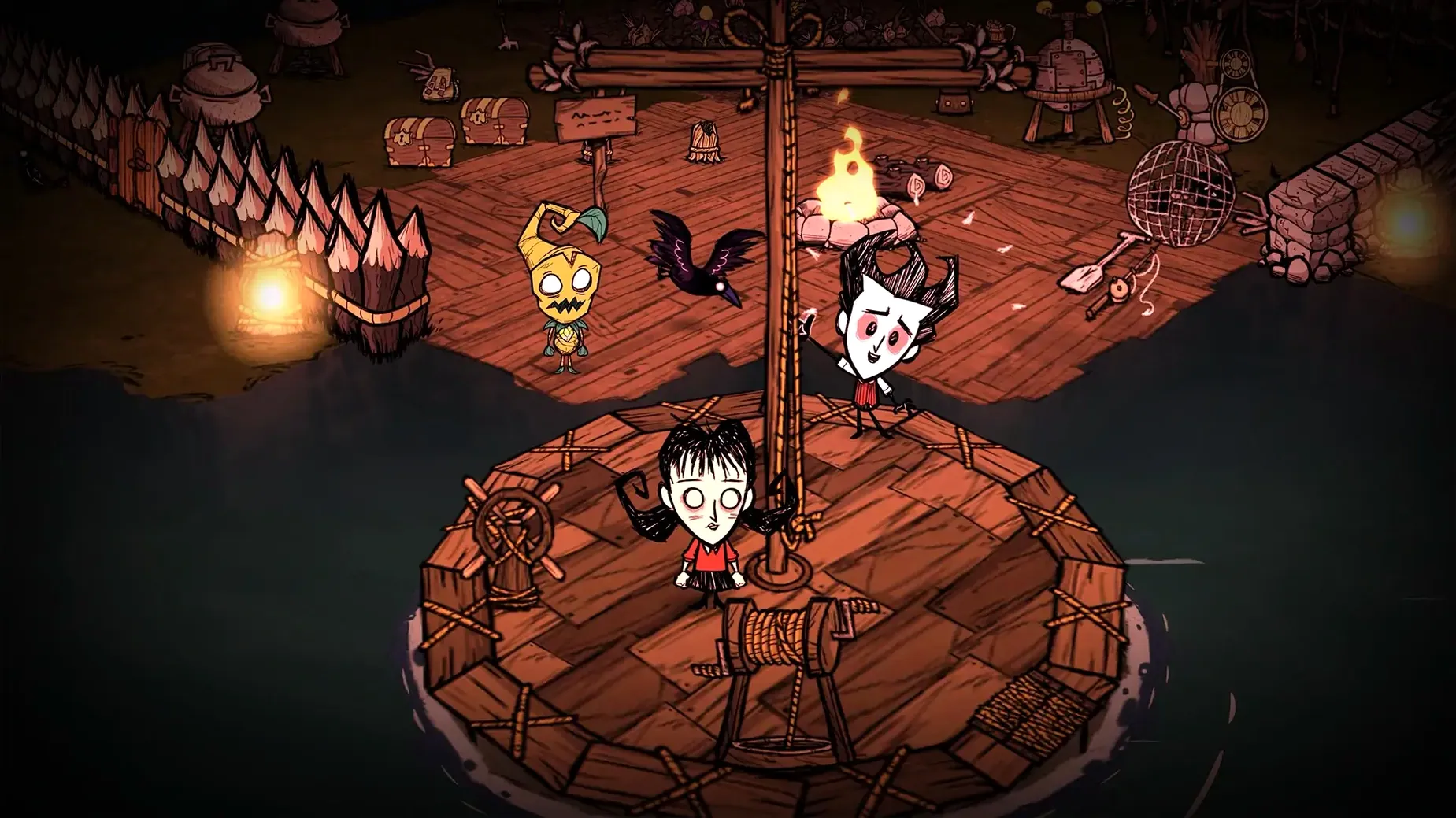
What changed in this version is mostly under the hood — engine polish, network stability improvements, and a handful of character-skin gifts that long-time players will spot right away. The heart of the game hasn't budged: it remains the same wonderfully hostile shared-world survival experience Klei shipped in 2016.
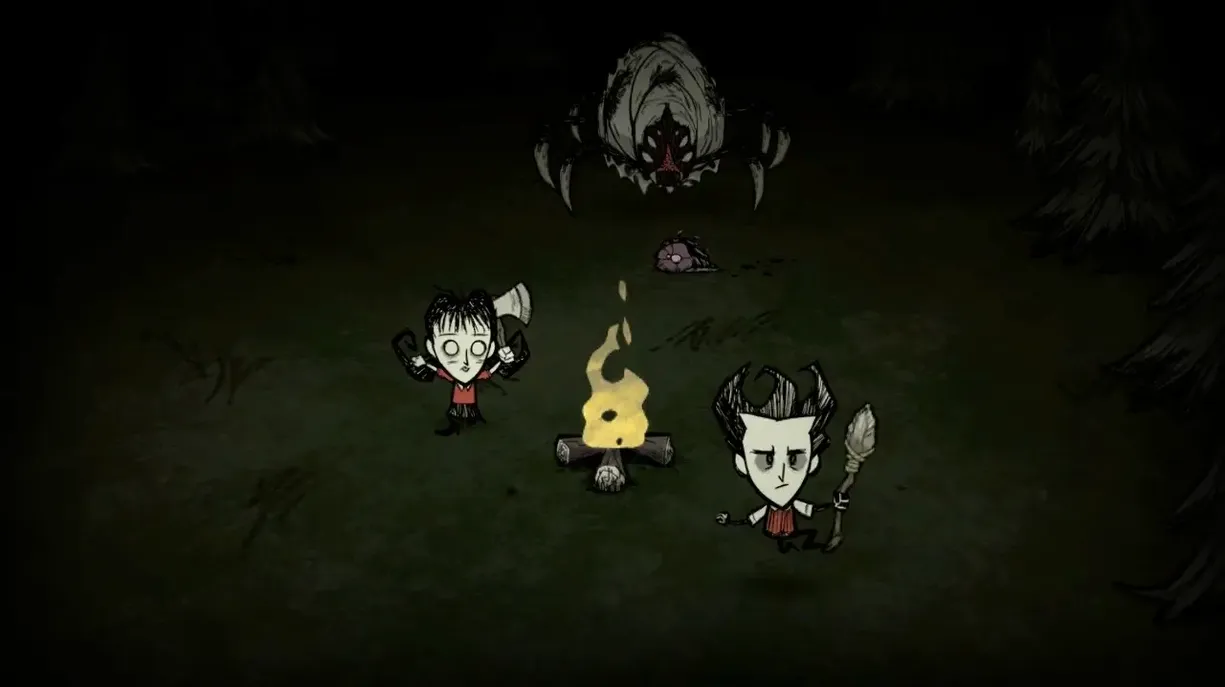
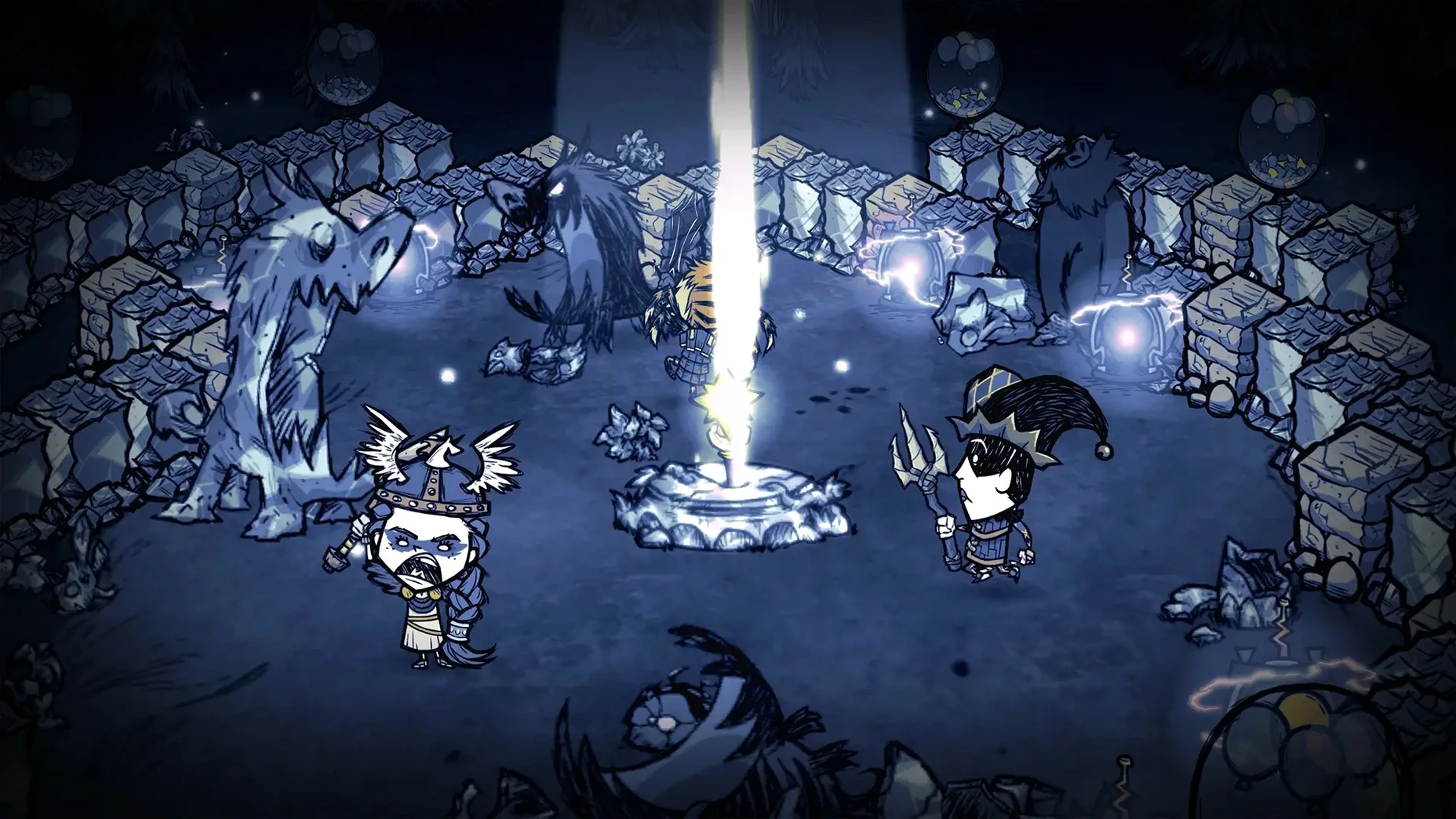
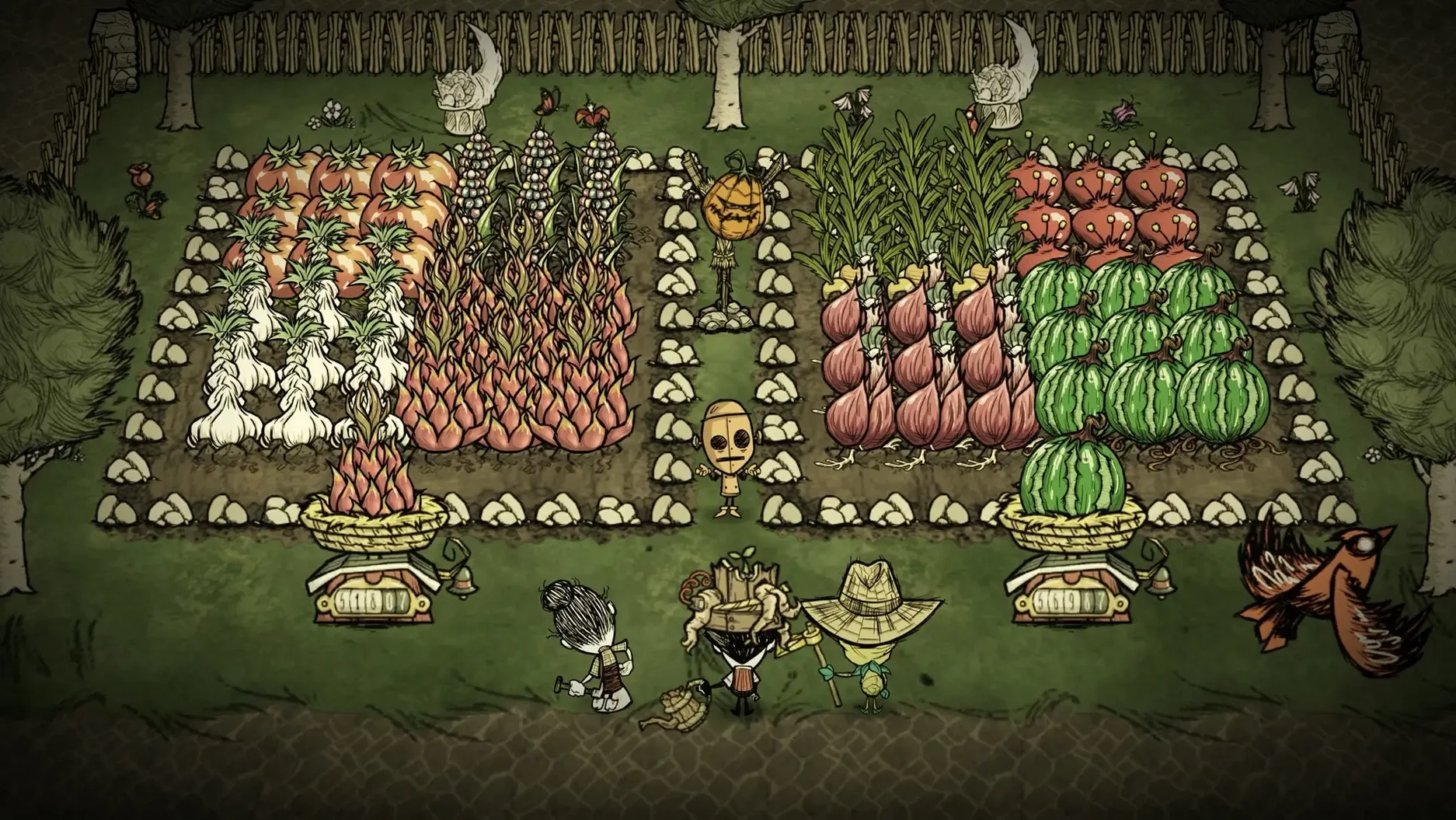
You and your friends land in a procedural wilderness with nothing but your wits and a vague sense of dread. Everything wants to kill you — darkness, seasons, the things that rustle in the night — and the only way through is to build, farm, cook and fight side by side. A shared map means somebody has to tend the crock pot while another chops trees, and nobody can hoard the good gear without consequences.
Long-term worlds where cooperation beats survival alone
- Small groups who enjoy long-term world-building rather than quick rounds
- Players who like a survival game where cooperation genuinely matters — roles emerge naturally
- People who want the full Don’t Starve experience without the isolation of the solo original
Every lesson arrives through a foolish death
- There is no gentle tutorial — you learn by dying, often in silly ways, and that is part of the design
- Hosting a world ties that save to the host; friends can only join while that world is running
- Managing food, sanity, health and light all at once can feel like spinning plates until you find your rhythm
An eight o’clock autumn scramble with two friends
You fire up the game around eight in the evening, host a world, and send the invite. Autumn is the sensible starting season, and two friends join within a couple of minutes. The opening scramble is always the same: one person grabs flint and twigs, another scouts for a rocky biome, the third starts pre-building a science machine near a cluster of rabbit holes. Nobody gives orders — the division of labour just happens, shaped by who spawned closest to what.
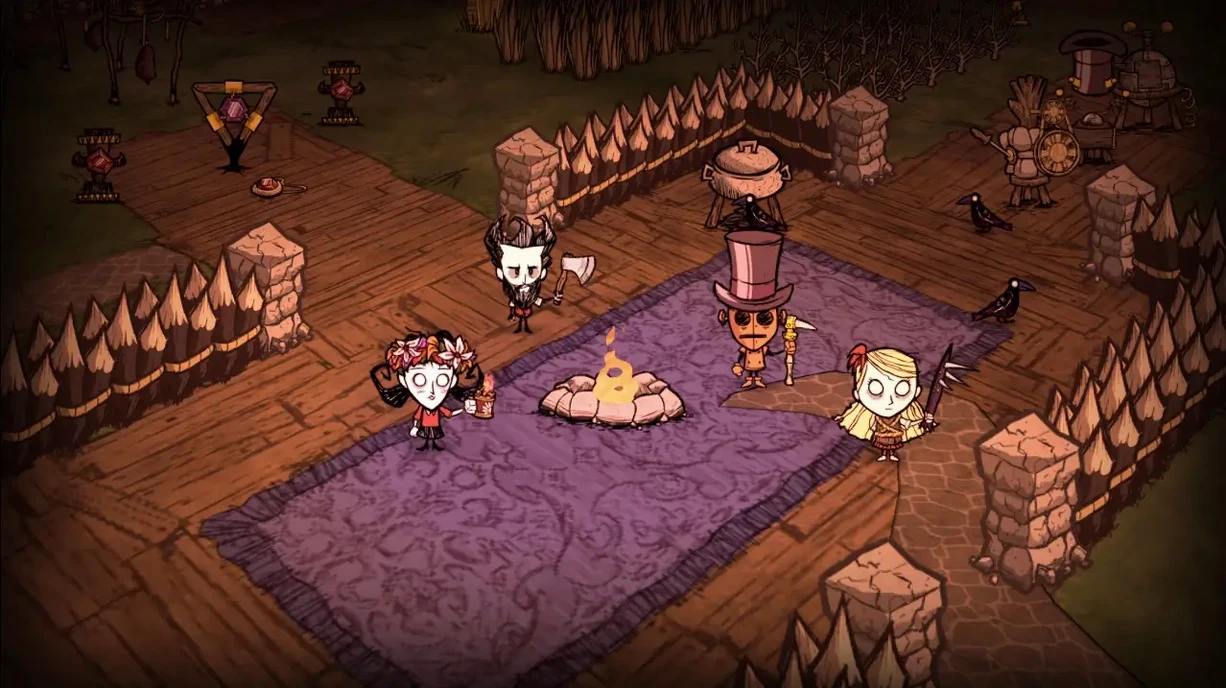
By day four you have a modest base with a fire pit, a crock pot and a row of drying racks. The first hound wave comes early because the experienced player in the group triggered it by exploring too far, so you spend a frantic sixty seconds kiting hounds around a campfire while someone stuffs monster meat into the crock pot for meatballs. That blend of calm preparation and sudden chaos defines a typical session. You plan a fridge, then winter arrives and you realise nobody built a thermal stone, so the next two days become a hunt for a winter koalefant while you huddle near a blazing fire pit hoping the sanity drain doesn’t bring shadow creatures before morning.
Sessions drift naturally from survival triage into longer-term projects: relocating berry bushes, building pig houses near the base, laying tooth-trap corridors for the deerclops fight you know is coming. By the time you glance at the clock, three hours have vanished. Somebody logs off, the host saves and shuts down the world, and you spend the next morning’s coffee thinking about whether a birdcage would have saved your bacon farm.
Chasing a koalefant no longer stutters across the screen
Version 747465 is not a content drop — Klei have been steadily polishing the multiplayer skeleton for years, and recent updates focus on making the shared world feel more responsive. Rubber-banding while chasing a koalefant has become a rarity rather than a running joke, which changes the texture of combat encounters more than patch notes suggest. The server browser also feels snappier; filtering for nearby regions and lower pings now populates results almost instantly on a wired connection.
Small quality-of-life tweaks have crept in over the last few builds. Character-skin gifts that arrive after certain play milestones give you a little cosmetic nudge to try someone new, and the wardrobe system now switches outfits without a trip to the main menu. For co-op groups who rotate characters between sessions, that tiny friction removal genuinely smooths the start of an evening.
Stability, speed and how it treats your Mac
On a 2024 Mac mini with Apple Silicon the game launches cold in under eight seconds and settles into a steady sixty frames per second at default settings, even during a full-moon spider-queen scrum with three players online. The fan stays whisper-quiet throughout. Older Intel machines — the kind that spin up a jet engine during the menu screen — run the game comfortably provided you dial shadows down a notch and keep the world size on medium; the engine is old enough now that most Macs from the last five years can hold forty-plus frames without complaint.
Memory usage floats around 1.2 GB on a fresh world and creeps toward 2 GB after a hundred days with multiple players and sprawling bases. That is modest by modern standards, and the game plays nicely with background apps — I have switched to a browser mid-session, checked a wiki page, and returned without a stutter. Network-wise, hosting on home broadband with two remote players adds about sixty milliseconds of latency on average. You notice it only when trying to perfectly time a kiting pattern; anything else, including base-building and farming, feels local.
First days — tips for finding your feet
The first afternoon after installing is really about unlearning the solo game’s habits. In single-player you hoard everything; in Don’t Starve Together, a chest full of silk helps nobody when the wigfrid player is tanking damage in a grass suit. Drop a chest beside the fire pit on day one and label it with a sign — the signs are cheap and they prevent the slow-burn resentment that comes from someone cooking your last dragonfruit.
A few other things that smooth the first week:
- Set the world to endless mode while you learn. Corpse runs are fun once you know the map; they are demoralising when you cannot yet tell a birchnut from a treeguard.
- Pick one role per session and stick to it. Try a full evening as the base-builder who never leaves the crock pot radius, then next time play the scout who maps the edges and brings back gears. Switching mid-game dilutes everyone’s progress.
- Bind a dedicated key for push-to-talk in the game’s controls panel. The in-game voice chat is perfectly usable, but an open mic during a tense night phase broadcasts every sigh and keyboard clatter to your teammates.
- Before your first winter, craft a razor and shave a beefalo at night while it sleeps. The wool plus a couple of silk makes a winter hat, and a winter hat changes the entire season from a desperate hunger spiral into something you can actually plan around.
If you are coming from a don't starve mac download of the solo original, the biggest mental shift is accepting that time keeps ticking when you open a chest or stare at the crafting menu. In single-player the world pauses whenever you browse recipes; here, the dusk hounds will not wait politely while you decide between a log suit and a football helmet. Make the decision fast or make it before the sun sets.
This update is a maintenance pass with a few treats. Klei have tightened network handling so joining a friend's world feels snappier, and there is a fresh batch of character skins cycling through the gift system. Nothing that rewrites the rulebook — just the sort of quiet polish that keeps a well-loved world running smoothly.
- Back-end network improvements for smoother multiplayer connections
- New time-limited character skins added to the drop pool
- Several long-standing edge-case bugs in world generation tidied up
- macOS version: consult the developer's Steam page for the current minimum (not formally stated in the build)
- Architecture: both ARM (Apple Silicon) and x86 64-bit Intel
Questions I keep hearing
Can I play Don’t Starve Together on a Mac with Apple Silicon?
Yes, the game runs natively on both ARM (Apple Silicon) and x86 64-bit Macs, so an M4 or earlier M-series machine works without Rosetta translation.
Do my friends need to own Don’t Starve to play this with me?
No, Don’t Starve Together is a standalone game — nobody in your group needs the original Don’t Starve to join a shared world.
Questions from the class 0
Sign in or join the class to ask a question.
Nobody has asked anything yet. If you have used it on a real job, say what the file did.
Also on the Games shelf
The whole Games shelf DOOM
Sends you running and gunning through hellish arenas packed with demons and big guns.
DOOM
Sends you running and gunning through hellish arenas packed with demons and big guns.
 Dune: Imperium
Lets you place agents and build a deck to win control of the desert planet Arrakis.
Dune: Imperium
Lets you place agents and build a deck to win control of the desert planet Arrakis.
 Dustborn
Takes a misfit crew on a road trip across a divided America where words are actual weapons.
Dustborn
Takes a misfit crew on a road trip across a divided America where words are actual weapons.
 Dying Light
Sets you loose in a quarantined city where you parkour across rooftops and fight after dark.
Dying Light
Sets you loose in a quarantined city where you parkour across rooftops and fight after dark.
 Dead Island
Drops you into a tropical zombie outbreak where a makeshift paddle can save your life.
Dead Island
Drops you into a tropical zombie outbreak where a makeshift paddle can save your life.
 Easy Red 2
 Dead Cells
Reshuffles its castle every time you fall, so knowledge of its systems is your only true upgrade.
Dead Cells
Reshuffles its castle every time you fall, so knowledge of its systems is your only true upgrade.
 Escape from Duckov
Sends you on short solo raids where every trip teaches you a little more about survival.
Escape from Duckov
Sends you on short solo raids where every trip teaches you a little more about survival.