 ASPNetWorld
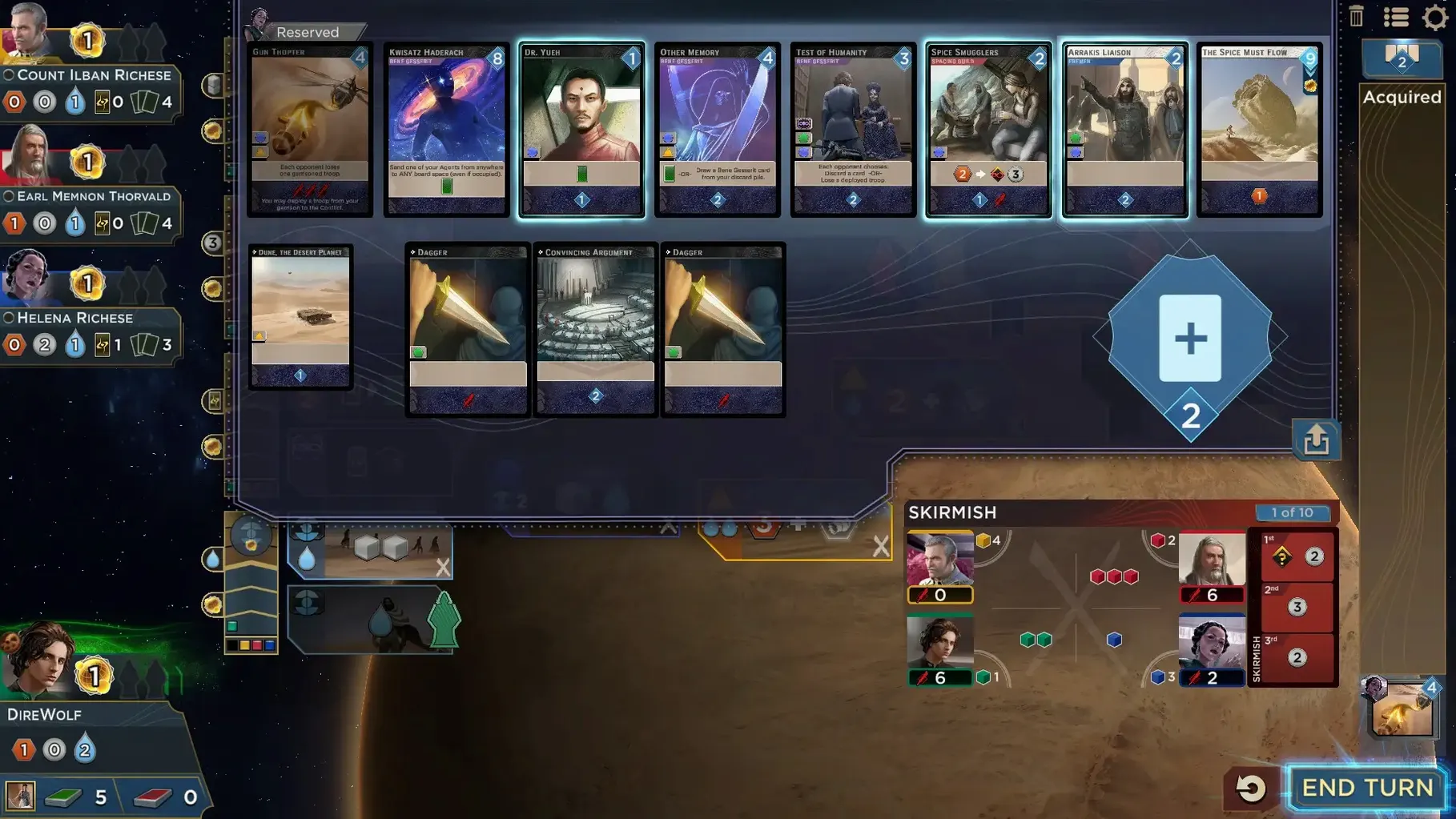
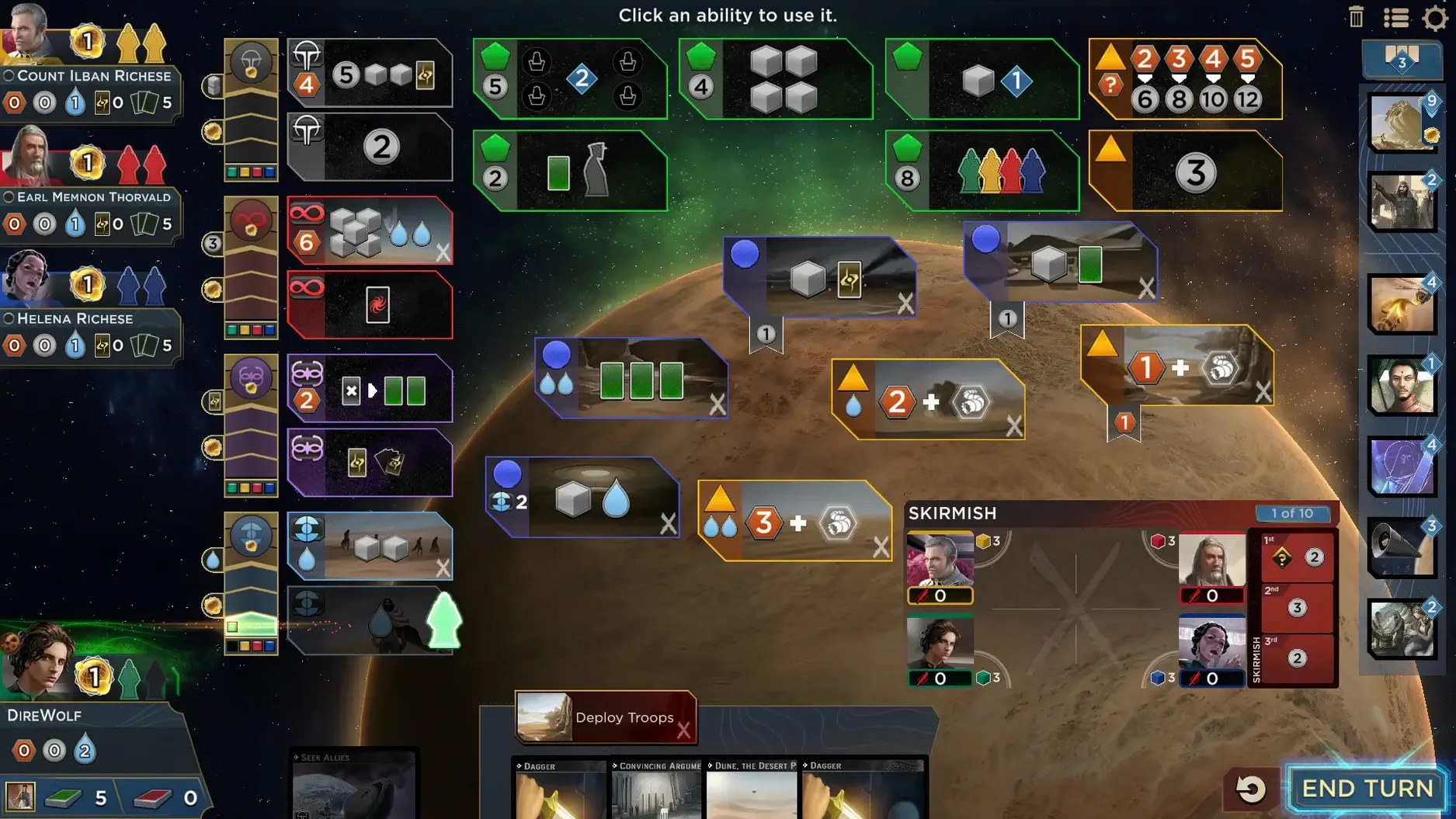
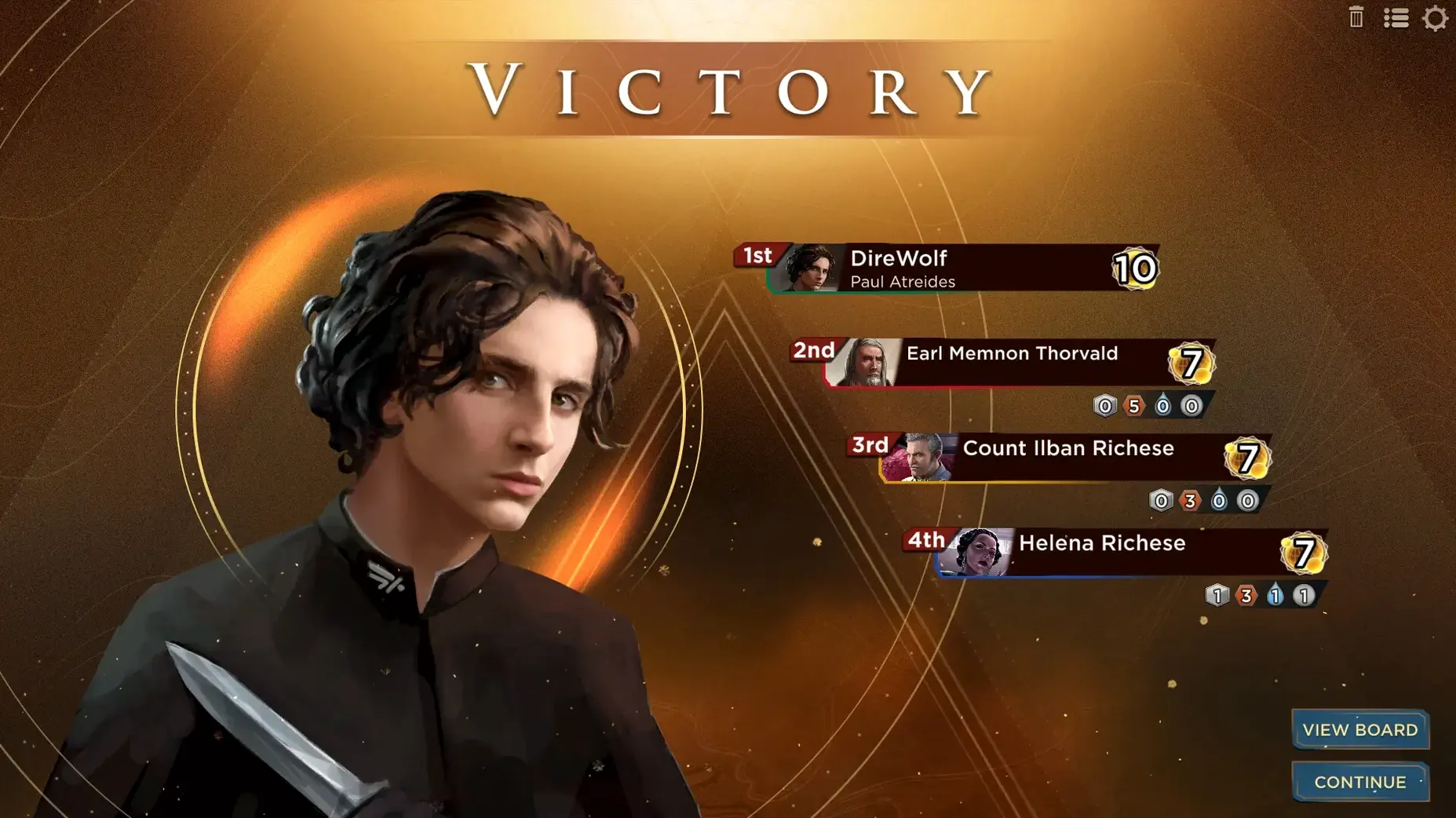
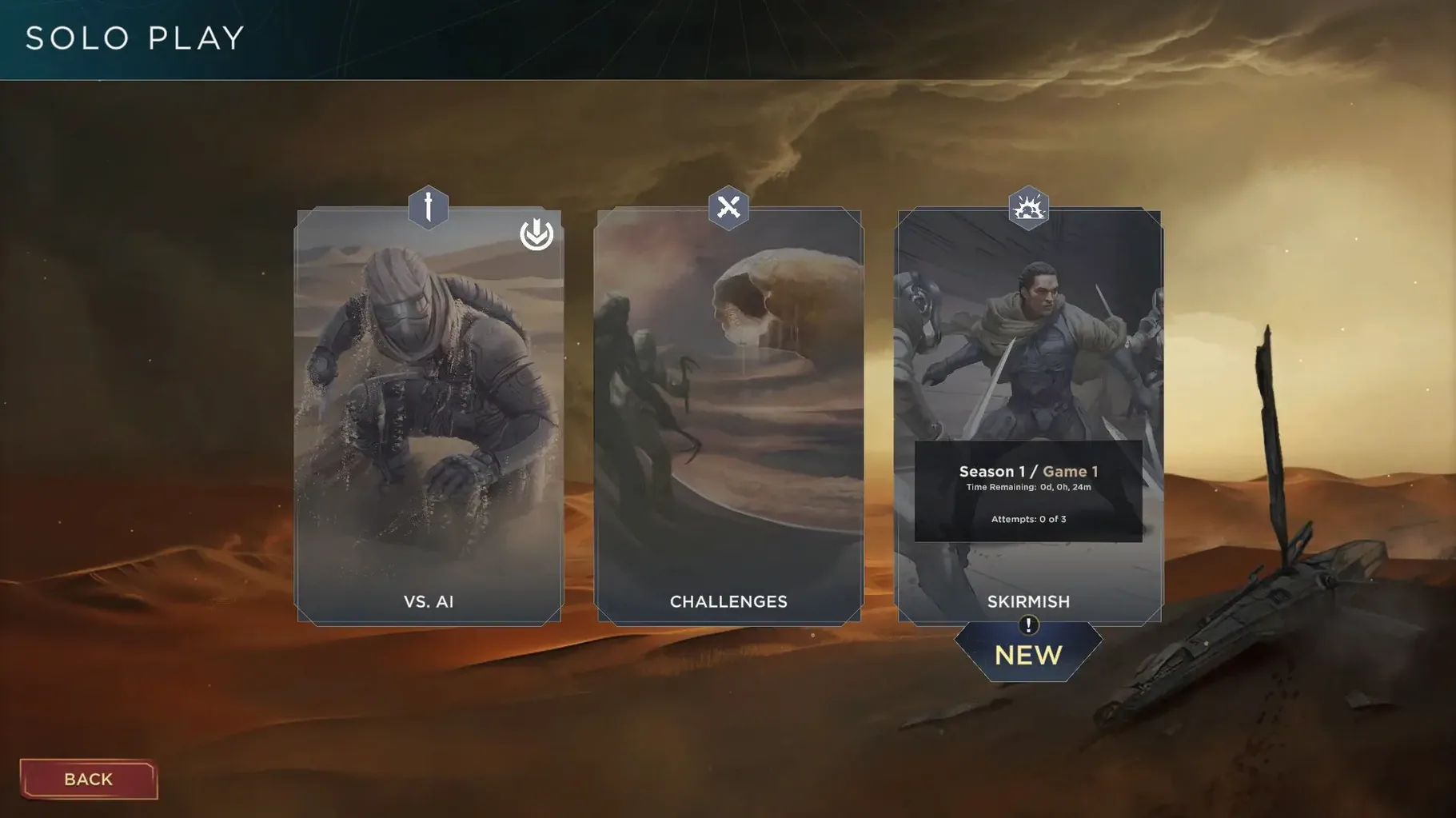
If you've played a physical worker-placement game like Lords of Waterdeep, the rhythm here will feel familiar—but Dune: Imperium layers deck-building on top, so your options each turn depend on the hand you've drawn as well as where you send your agents.
Agent turn — each round, you play cards from your hand to send an agent to a board space, paying the card's persuasion cost. The space might give you water, spice, or troops, or let you draw new cards.
Reveal turn — once all agents are placed, you reveal the cards you held back. Their combat strength adds to your military power for the round's conflict.
Conflict — every round, a new battle appears on the surface of Arrakis. Players compare total combat strength; the winner claims the reward printed on the conflict card, and the runner-up often gets a smaller prize.
Faction influence — the Emperor, the Spacing Guild, the Bene Gesserit, and the Fremen each offer a separate track you climb by spending resources. Reaching certain thresholds unlocks victory points or persistent abilities.
Deck-building — cards you buy during the match go into your discard pile and eventually cycle back into your hand, making your deck stronger and more focused as the ten-round match progresses.
A Fremen hand in nine moves
Picture a solo player who knows the board game well but has never touched the digital version. They launch a skirmish against two AI opponents on a Sunday afternoon, drawn in by the promise of a quick match without table setup. The first three rounds feel cautious—they buy a Dune, the Desert Planet card early and cling to it, hoping the two-symbol persuade will carry them. By round six they've barely touched the Fremen track and their deck is clogged with low-impact starter cards that keep showing up at the wrong moment. They lose the seventh-round conflict by a single point of combat strength, and the AI player who grabbed the Spacing Guild alliance suddenly jumps two victory points ahead.
The mistake wasn't buying the wrong card; it was playing a physical-board-game tempo in a digital environment where the AI doesn't pause for chit-chat. Digital matches run faster, and the game's auto-resolution of combat and faction rewards means you get less breathing room between decisions. The player realises they should have been more ruthless about trashing weak cards early and committing harder to one faction track rather than dabbling in all four. The rematch feels sharper—they deliberately thin their deck by round four, time their reveal turns to snatch second place in conflicts they can't win outright, and watch the Fremen alliance pay out just as the ninth-round conflict flips in their favour.
Slip-ups that trip up newcomers
A handful of habits show up repeatedly when someone sits down with a dune imperium mac download and no prior deck-building experience. The first is hoarding cards like a miser. Persuading yourself to keep every purchase feels productive, but a bloated deck means your key cards cycle too slowly. When the spice must flow and your Reverend Mother is buried at the bottom of a twenty-card stack, you'll feel it.
Another common stumble is treating the conflict phase as optional. Beginners sometimes pour all their resources into faction tracks and board spaces, then reveal a hand that contributes zero combat strength. Even a third-place finish often gives nothing, so completely ignoring the battle means handing free rewards to opponents who remembered to hold back one combat card. On the flip side, over-committing to conflict early—before your deck has any teeth—can leave you without the water or persuasion needed to climb the faction tracks that actually convert into victory points.
The last trap worth naming is faction tourism: visiting the Emperor one round, the Fremen the next, then the Bene Gesserit after that. Spreading influence too thin turns every track into a slow crawl, whereas picking one or two and pushing them to the second threshold often nets a victory point that swings the final score before anyone notices.
Board game veterans who already know the worker-placement skeleton
Mac users who already love mid-weight strategy board games—think Wingspan, Terraforming Mars, or Root—tend to slide into Dune: Imperium without friction. They recognise the worker-placement skeleton and appreciate how the deck-building adds uncertainty without feeling random. The ten-round match length fits neatly into an evening, and the game's polished interface on Apple Silicon means a MacBook Air stays cool even during a full four-player online bout.
Dune fans who aren't necessarily tabletop gamers get a different kind of payoff. The digital adaptation doesn't assume you've read the novels, but if you have, the faction dynamics feel immediately legible: the Spacing Guild hoards information, the Bene Gesserit pull strings from the background, and the Fremen reward long-term commitment to the desert. That resonance turns what could be abstract resource-trading into something more textured, even when you're technically just moving tokens on a screen.
Multiplayer groups who use cross-platform play get the most mileage. The Dire Wolf Digital account requirement for online matches sounds like housekeeping, but it means a player on a Mac can join friends on iPad or PC without fuss. That flexibility makes the dune imperium mac download appealing if you're the only Mac user in a circle of mixed-device gamers—you're not locked out of a session just because someone else brought a Windows laptop.
- Works on Intel and Apple Silicon Macs.
- A Dire Wolf Digital account is required for online play.
Questions from the class 0
Sign in or join the class to ask a question.
Nobody has asked anything yet. If you have used it on a real job, say what the file did.
Also on the Games shelf
The whole Games shelf Dustborn
Takes a misfit crew on a road trip across a divided America where words are actual weapons.
Dustborn
Takes a misfit crew on a road trip across a divided America where words are actual weapons.
 DOOM
Sends you running and gunning through hellish arenas packed with demons and big guns.
DOOM
Sends you running and gunning through hellish arenas packed with demons and big guns.
 Dying Light
Sets you loose in a quarantined city where you parkour across rooftops and fight after dark.
Dying Light
Sets you loose in a quarantined city where you parkour across rooftops and fight after dark.
 Don’t Starve Together
Drops you into a hostile wilderness where you and friends must gather, build, and not starve.
Don’t Starve Together
Drops you into a hostile wilderness where you and friends must gather, build, and not starve.
 Easy Red 2
 Escape from Duckov
Sends you on short solo raids where every trip teaches you a little more about survival.
Escape from Duckov
Sends you on short solo raids where every trip teaches you a little more about survival.
 Euro Truck Simulator 2
Settles you behind the wheel for long-haul deliveries across calm roads.
Euro Truck Simulator 2
Settles you behind the wheel for long-haul deliveries across calm roads.
 Europa Universalis IV
Puts you in charge of a nation's trade, diplomacy, and growth over centuries.
Europa Universalis IV
Puts you in charge of a nation's trade, diplomacy, and growth over centuries.