 ASPNetWorld


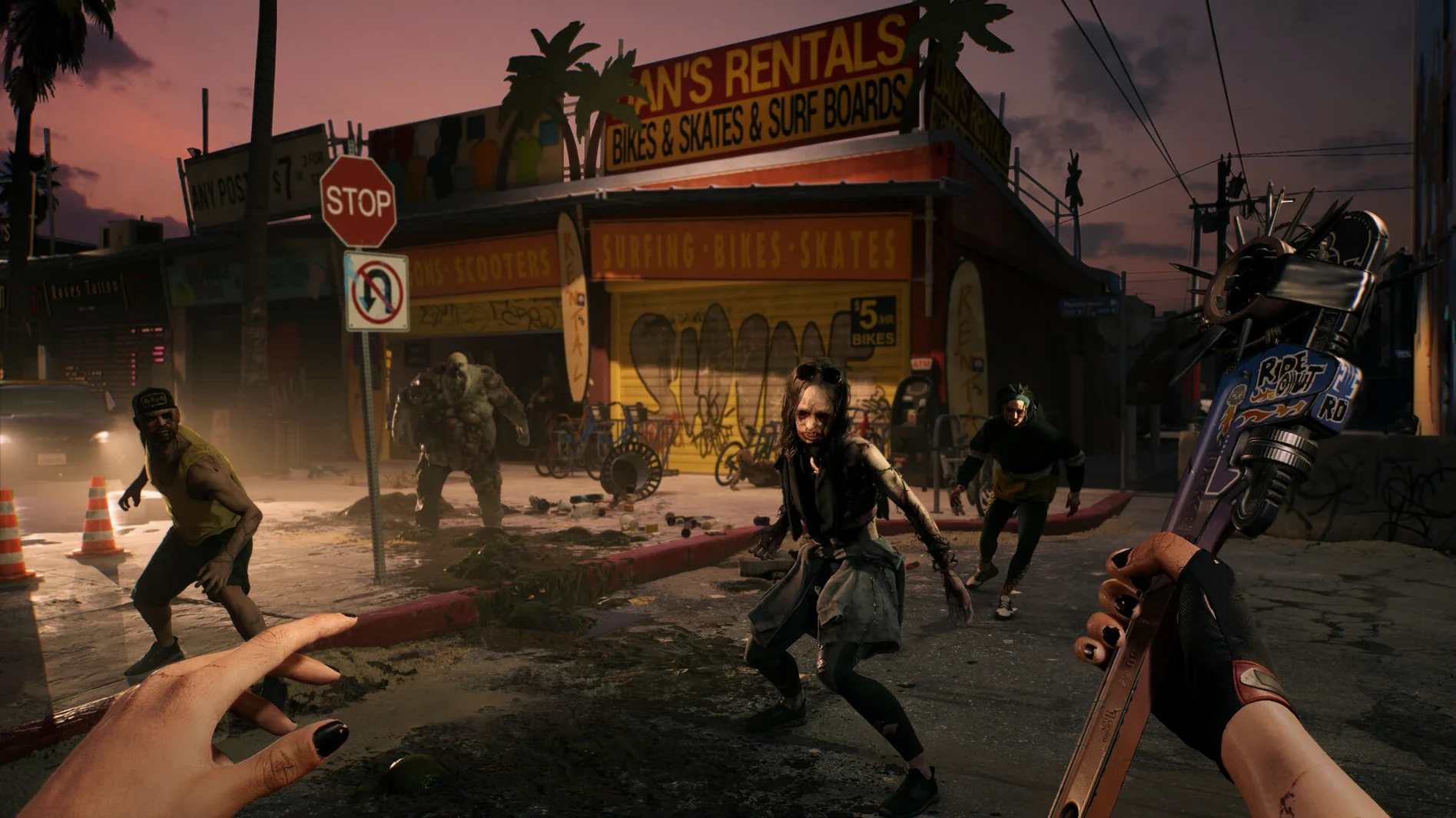
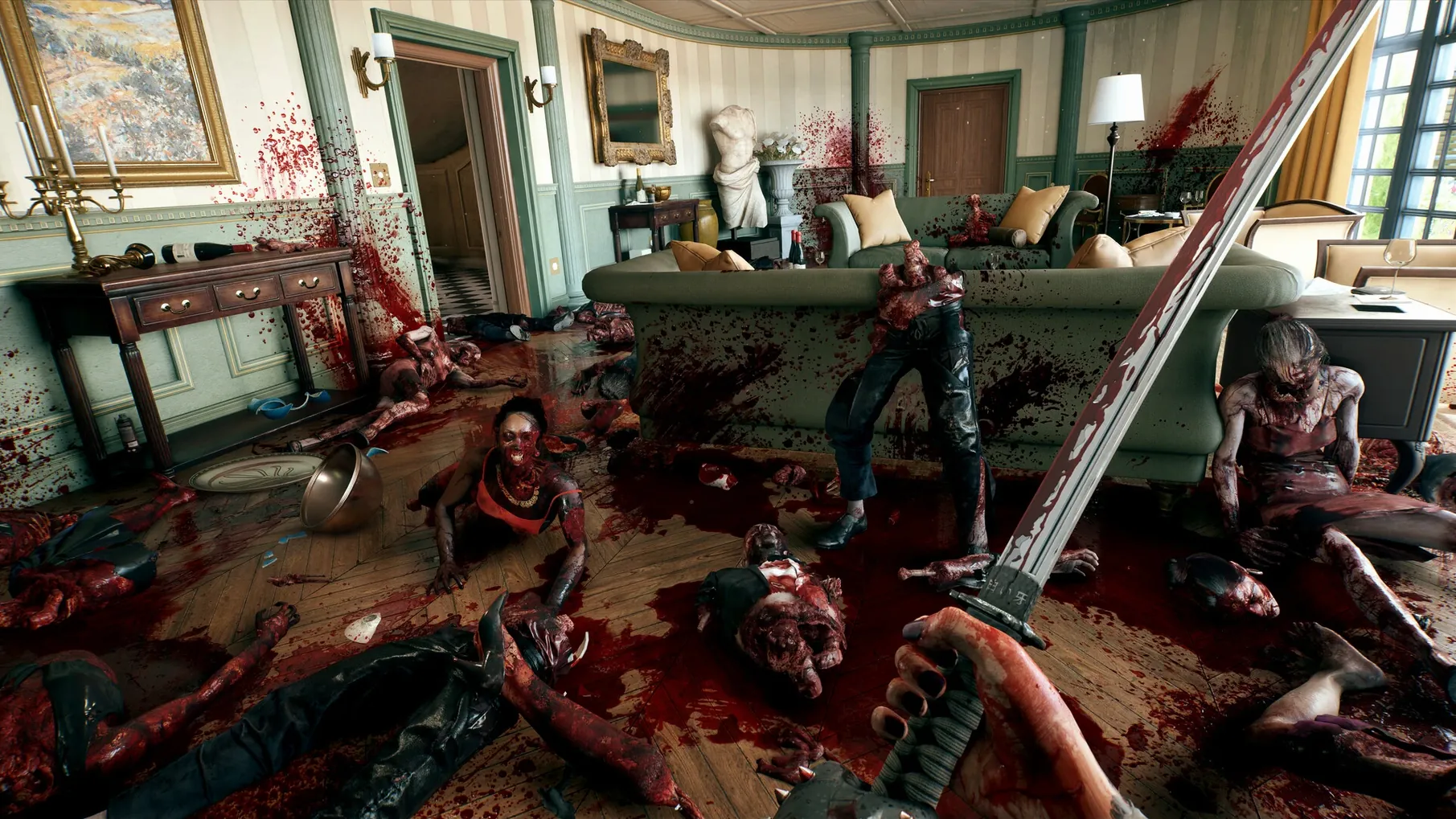
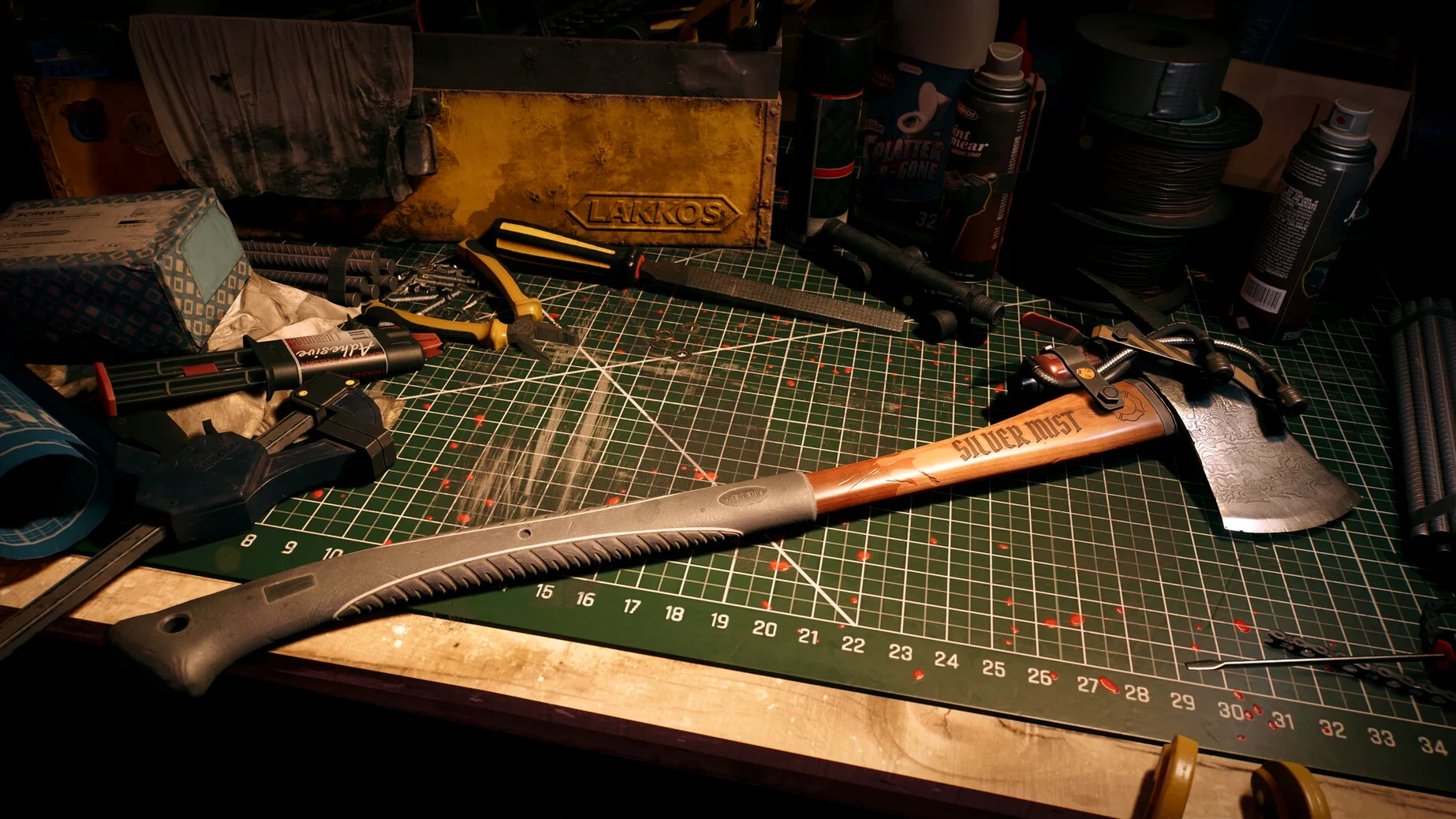
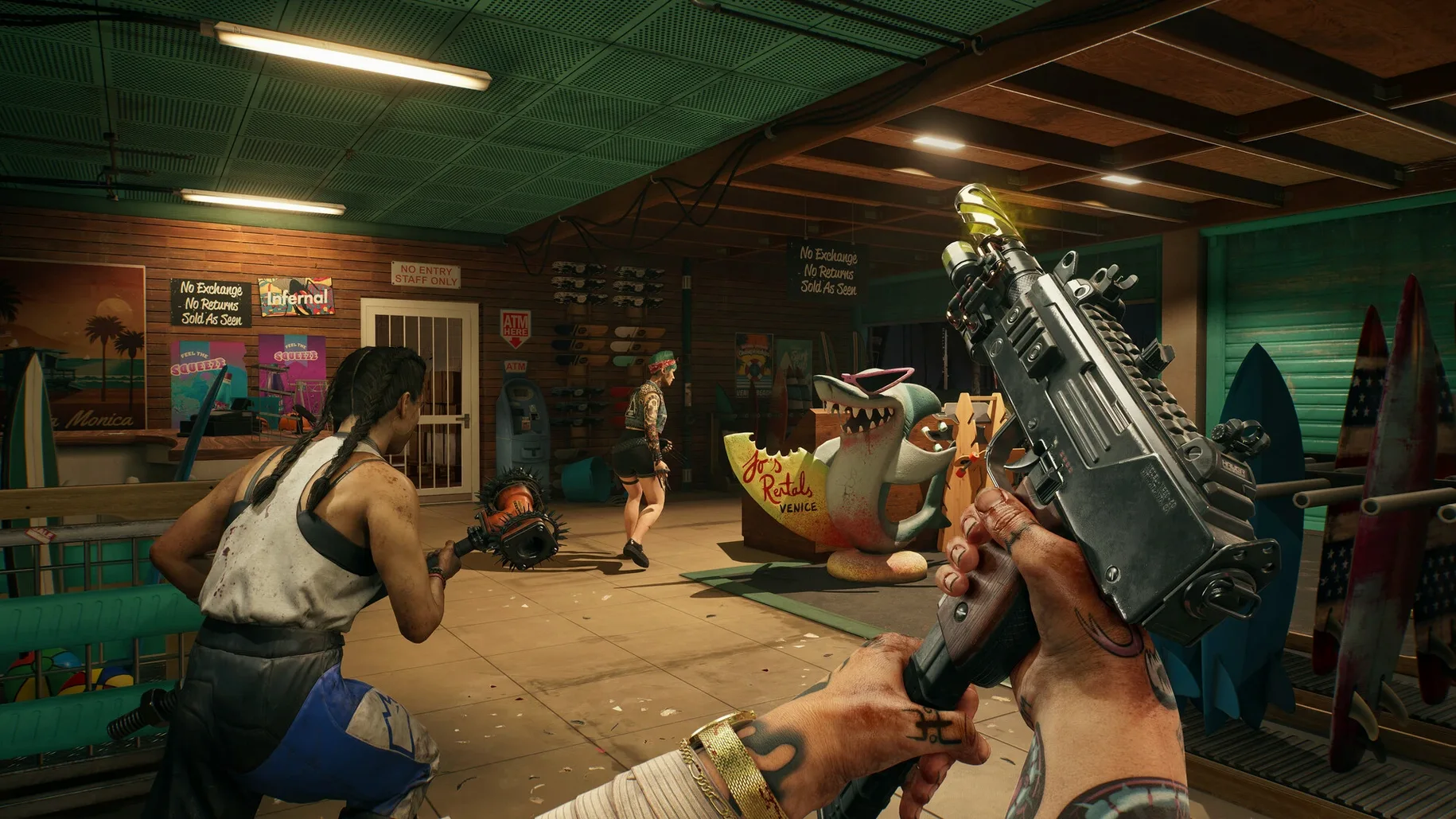
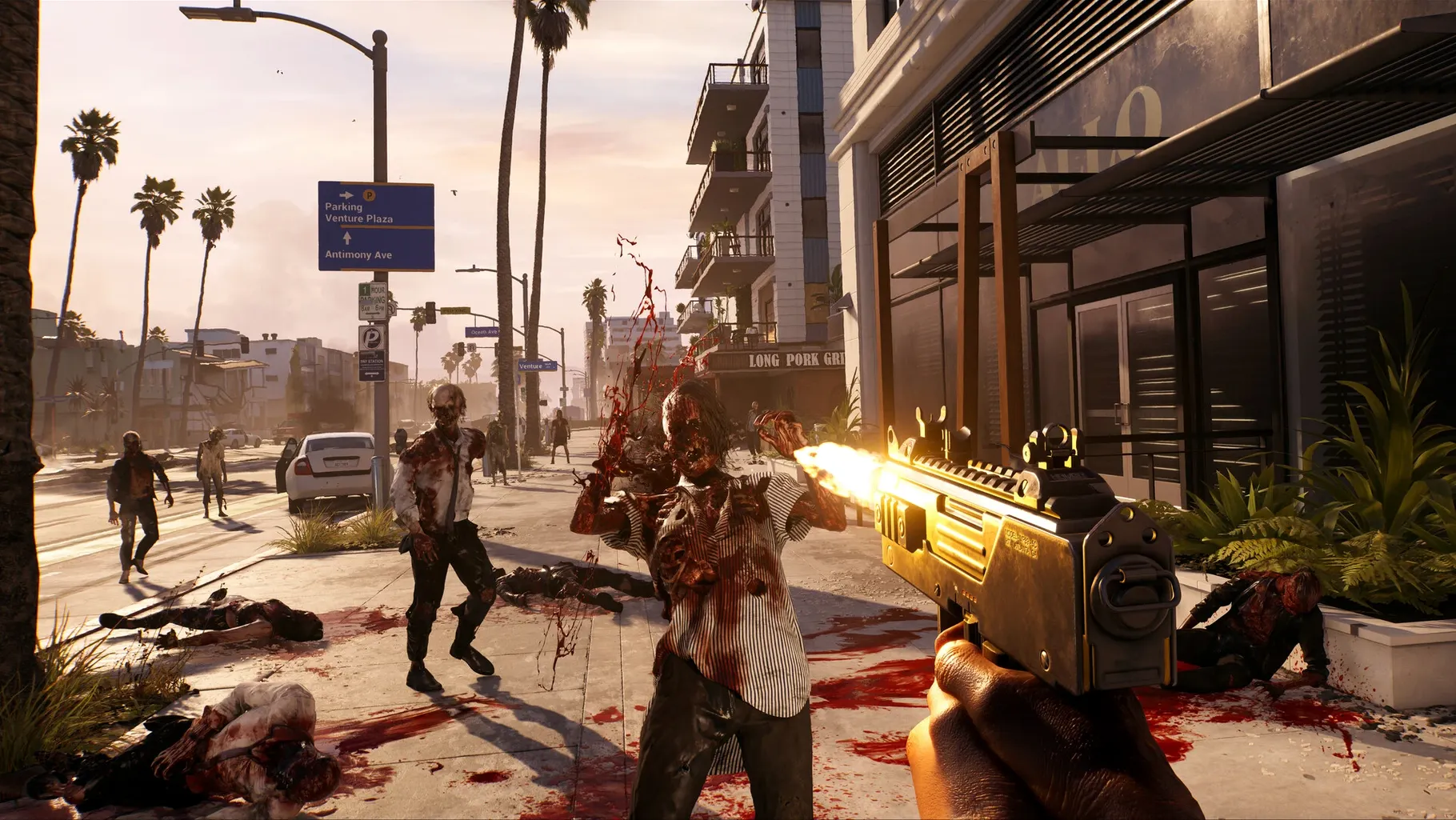

The current Mac build is version 1.0.1, a focused fix release for the Apple Silicon-native port.
Ultimate Edition — the format of the Mac release; bundles the base campaign with every major story add-on.
Haus — the first expansion, shifting the action to a deranged, death-cult villa in Malibu where survival feels more like a waking nightmare than a brawl.
SoLA — the second expansion, dropping players into a music festival ground that’s been overrun; the backdrop mixes pulsing stages with the rhythm of shambling dead.
Six Slayers — the playable character roster. Each comes with distinct combat stats and personality, so swapping between them changes the pace of a scrap.
Skill deck — a card-based system that lets you hot-switch your entire ability loadout mid-fight without backing out to a menu; useful when a crowd suddenly thickens.
HELL-A — the game’s version of Los Angeles, sealed off after a military retreat. The quarantine zone stretches from coastal mansions to sewer tunnels, and the environment itself tells much of the story.
ARM native — the package is compiled for Apple Silicon, so it runs without Rosetta translation. Testing was done on an M1 MacBook Air under macOS Sequoia, and the frame pacing holds up on that modest hardware.
A quiet first evening in HELL-A
You will spend the first twenty minutes after installing watching shaders compile. That is not a complaint — it is a one-time job the engine does to stop stutter showing up later, and on an M1 it finishes while you make a cup of tea. Once it is done, the game remembers the cache across sessions, so you will never sit through it again unless there is a major update.
After that, head into the options menu before you swing a single weapon. The Mac build defaults to a resolution that often undershoots what the display can handle, and the field-of-view slider starts conservatively. Pushing both up on an M1 Max or M2 will cost you a few frames, but on the base M1 MacBook Air that was used for testing, keeping the resolution at the panel’s native figure and the FOV around ninety degrees gave a perfectly playable result. Motion blur is on by default; switch it off if you dislike the smeary look — it buys back a sliver of sharpness and a tiny bit of headroom for busier fights.
One more tip for the first session: pick a Slayer whose trait sounds fun, not just the one with the highest damage numbers. The voice lines, the way they react to a zombie missing half its jaw, and their idle chatter all feed into whether five hours in HELL-A feel like a grind or a road trip. Carla, for instance, brings a wry toughness that makes even a routine key hunt feel like a scene, while Dani’s punk energy adds a reckless charge to fights. There is no wrong choice, but there is a choice that will make you smile more.
Fanless M1 MacBook Air holds a steady frame rate without stutter
The port was built for Apple Silicon and it shows. On an M1 MacBook Air — the fanless one — the game holds a steady enough frame rate that you stop counting after the first half-hour and just play. The fanless design means the chassis gets warm, especially around the function row, but it never hits the point where you want to lift your hands off the keyboard. On machines with active cooling, the fans spin up audibly during large set-piece brawls with flame effects and electric particles flying, but they settle back to near-silence when you are just looting a bungalow or reading a journal left on a poolside lounger.
Memory use sits around the eight-to-ten gigabyte mark in the busiest areas, so an eight-gigabyte Mac will page to the SSD occasionally. You will not see it happen, but you might feel a half-second hitch when sprinting through a new district for the first time. On a sixteen-gigabyte machine that hitch disappears entirely. The game does not seem to leak memory over long sessions; after a four-hour co-op stint the resident size was barely higher than at the start.
Stability has been dull in the best way: no kernel panics, no GPU restarts, and only one repeatable crash in the Haus expansion when interacting with a particular puzzle element. The 1.0.1 release included a fix for that exact issue, and since applying it the game has stayed up through marathon Sunday sessions. Quick Resume — if you are using the macOS feature that preserves your workspace — plays nicely with the game, though I would not trust it across a reboot. Save manually before you shut down for the night.
A typical session, moment by moment
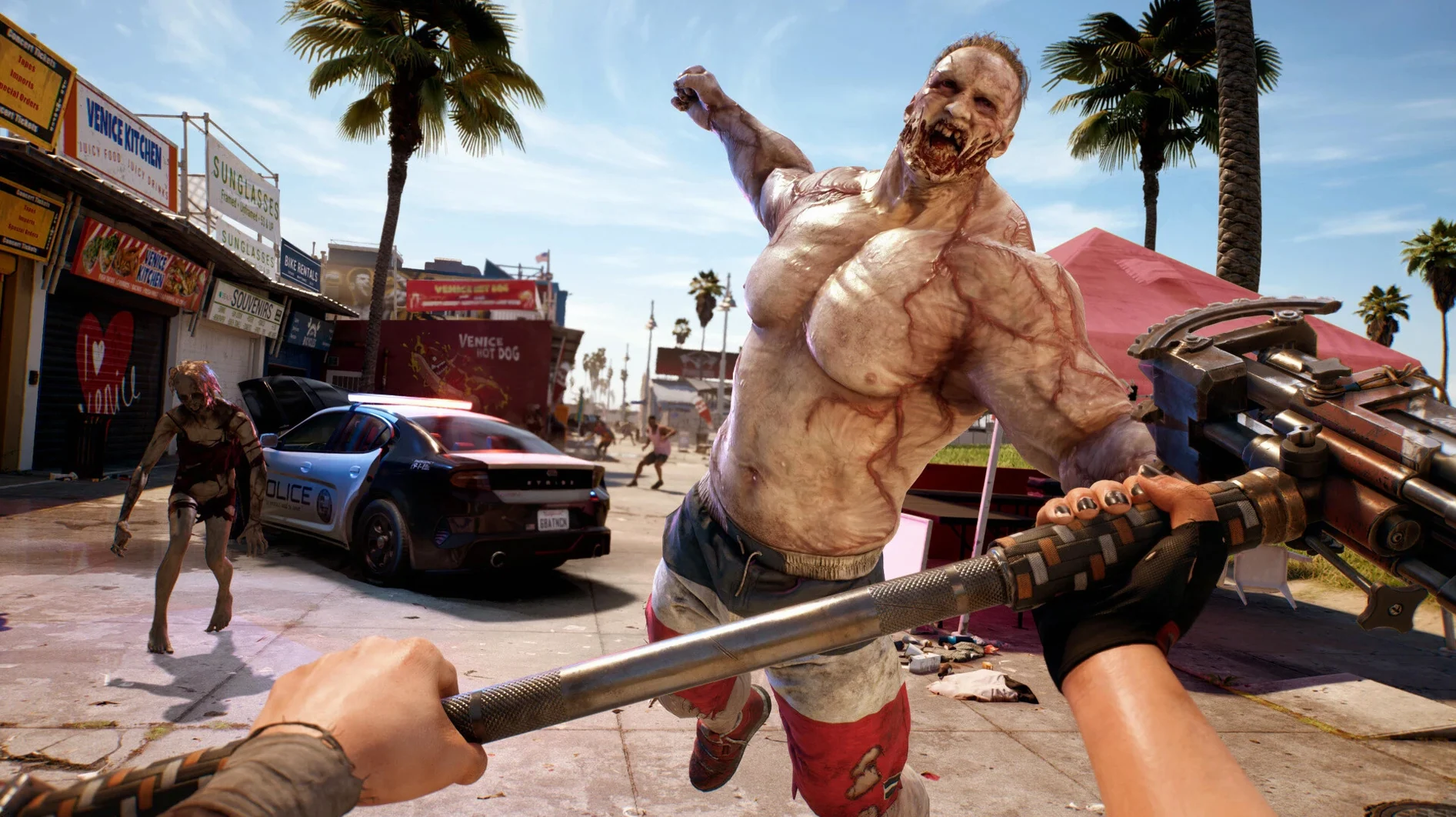
You launch from the Dock, and the main menu appears within five seconds — no splash-screen dawdling. You tap Continue and land exactly where you left off: the pier at Venice Beach, late afternoon light spilling over the boardwalk. To your right, a zombie in a lifeguard vest shuffles between two overturned hot-dog stands. You crouch. You check the weapon wheel — a weighted baseball bat modded with nails, a pistol with half a magazine, and a freshly crafted electrified blade you built ten minutes ago from a car battery and a machete.
You pick the bat because the sound design makes the *thwack* satisfying in a way that keeps you coming back. The zombie staggers, you step back to create distance, and a second one lurches out from behind a flipped ambulance. This is where the skill deck earns its keep: you hold the button, the card grid slides up, and you swap your dodge-boost card for a ground-pound shockwave. The swap takes under a second. You drop the shockwave, both zombies stumble, and you finish them with the blade while the electricity arcs blue across the wet sand.
You loot the corpses — scrap metal, a roll of duct tape, a protein bar that restores a sliver of health. Then you open the map and see a sidequest marker glowing three streets inland. The journey there is the game at its most atmospheric: a residential street where the army barricades have been pulled aside, wind chimes still hanging on a porch, a radio somewhere playing a half-remembered pop song. You hear a scream that turns out to be a trapped survivor, not a threat, and the dialogue that follows is genuinely funny in a way that undercuts the gore without undermining it.
By the time you log off, the sun has set in-game and the zombies have grown bolder. You have not touched the main story for two hours, and you do not mind one bit.
Mostly grounded combat makes hordes feel more claustrophobic than Dying Light
Set Dead Island next to Dying Light and the most obvious difference is verticality. Dying Light’s parkour makes the city a climbing frame; Dead Island keeps you mostly on the ground, which makes a horde feel more claustrophobic and less like an obstacle course you can vault over. The combat here is weightier — every swing has a commitment to it that Dying Light’s faster melee does not replicate. If you play games for the rhythm of a scrap rather than the flow of movement, Dead Island will connect harder.
Against Resident Evil Village, the tone is night and day. Village runs on tension, inventory tetris, and a sense that every bullet could be your last. Dead Island runs on catharsis. You are not rationing shotgun shells — you are dropping a car battery into a swimming pool full of zombies and laughing at the result. Both games look excellent on Apple Silicon, but Village aims for dread while Dead Island aims for a messy, joyful brawl. If you want the Mac equivalent of a B-movie night with friends, this is the one.
Measured beside World War Z, the difference is scale and pace. World War Z throws hundreds of fast zombies at you at once and asks for team discipline under pressure. Dead Island rarely crowds you with more than a dozen enemies at a time, but each one takes more punishment and has its own attack pattern to read. World War Z feels like a sprint; Dead Island feels like a street fight where you have time to notice the absurd details — the zombie still wearing one AirPod, the half-finished smoothie on the café counter. Both deliver co-op thrills, but the tempo is completely different.
The Mac port sits among these without feeling like a late arrival. It loads quicker than the Intel-translated competition, takes full advantage of the Metal graphics stack, and arrives with two expansions already folded in. For a game that launches straight into Apple Silicon without a detour through Rosetta, the polish is higher than you might expect from a day-one native build.
- macOS Sequoia
- Apple Silicon Mac
Questions from the class 0
Sign in or join the class to ask a question.
Nobody has asked anything yet. If you have used it on a real job, say what the file did.
Also on the Games shelf
The whole Games shelf Dead Cells
Reshuffles its castle every time you fall, so knowledge of its systems is your only true upgrade.
Dead Cells
Reshuffles its castle every time you fall, so knowledge of its systems is your only true upgrade.
 Cuphead
Teaches you to treat each boss death as a drum beat in a long, hand-drawn jazz number.
Cuphead
Teaches you to treat each boss death as a drum beat in a long, hand-drawn jazz number.
 Crusader Kings III
Simulates a medieval dynasty where your real resource is the tangled web of relationships.
Crusader Kings III
Simulates a medieval dynasty where your real resource is the tangled web of relationships.
 Crimson Desert
Follows a mercenary through vast battles and intimate duels on a war-scarred continent.
Crimson Desert
Follows a mercenary through vast battles and intimate duels on a war-scarred continent.
 Counter-Strike: Source
Brings the defining team-based tactical shooter into a physics-driven engine for offline practice.
Counter-Strike: Source
Brings the defining team-based tactical shooter into a physics-driven engine for offline practice.
 Don’t Starve Together
Drops you into a hostile wilderness where you and friends must gather, build, and not starve.
Don’t Starve Together
Drops you into a hostile wilderness where you and friends must gather, build, and not starve.
 DOOM
Sends you running and gunning through hellish arenas packed with demons and big guns.
DOOM
Sends you running and gunning through hellish arenas packed with demons and big guns.
 Command & Conquer: Generals
Rethinks real-time strategy missions by scripting victory conditions beyond base capture.
Command & Conquer: Generals
Rethinks real-time strategy missions by scripting victory conditions beyond base capture.