 ASPNetWorld
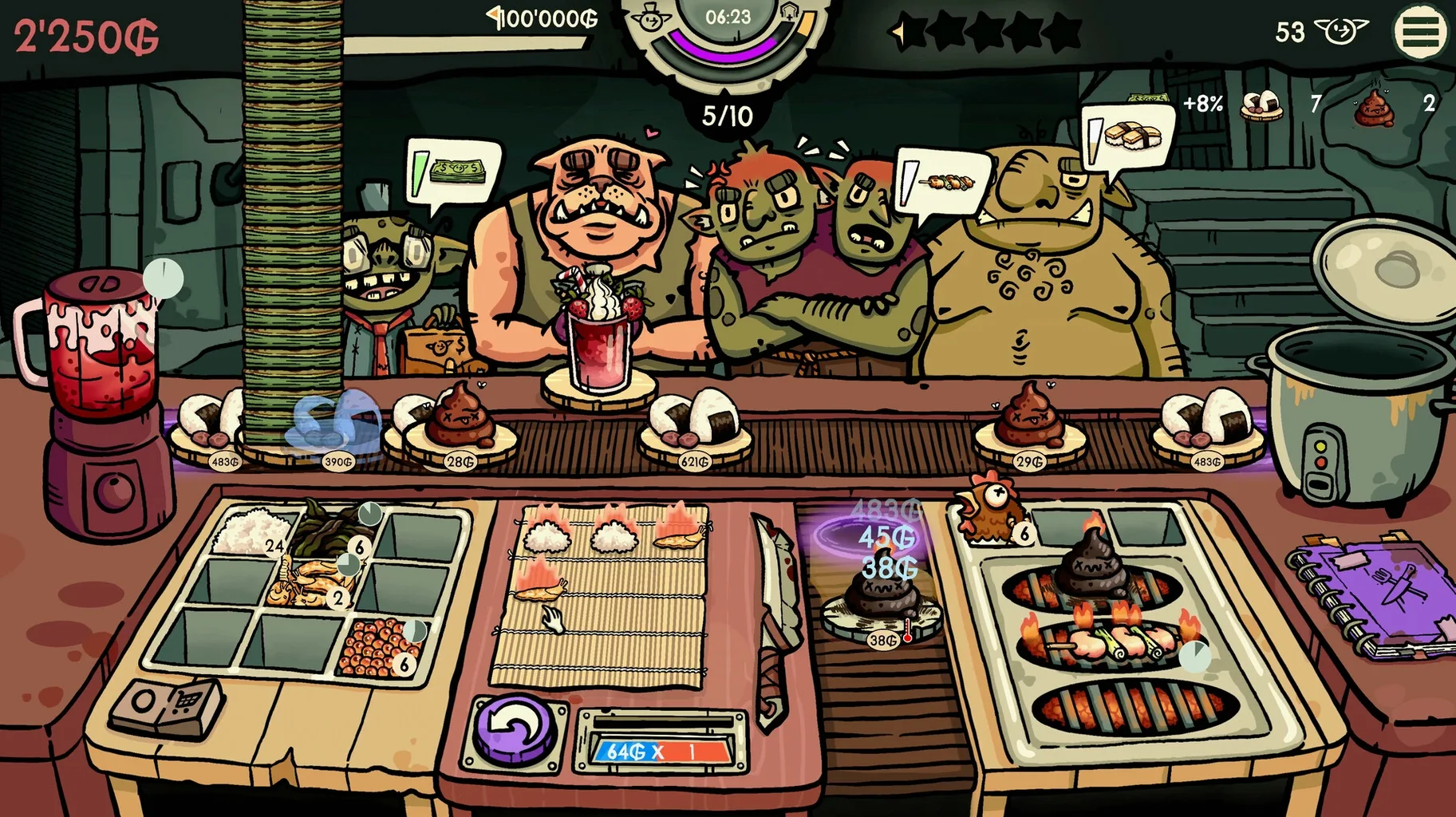
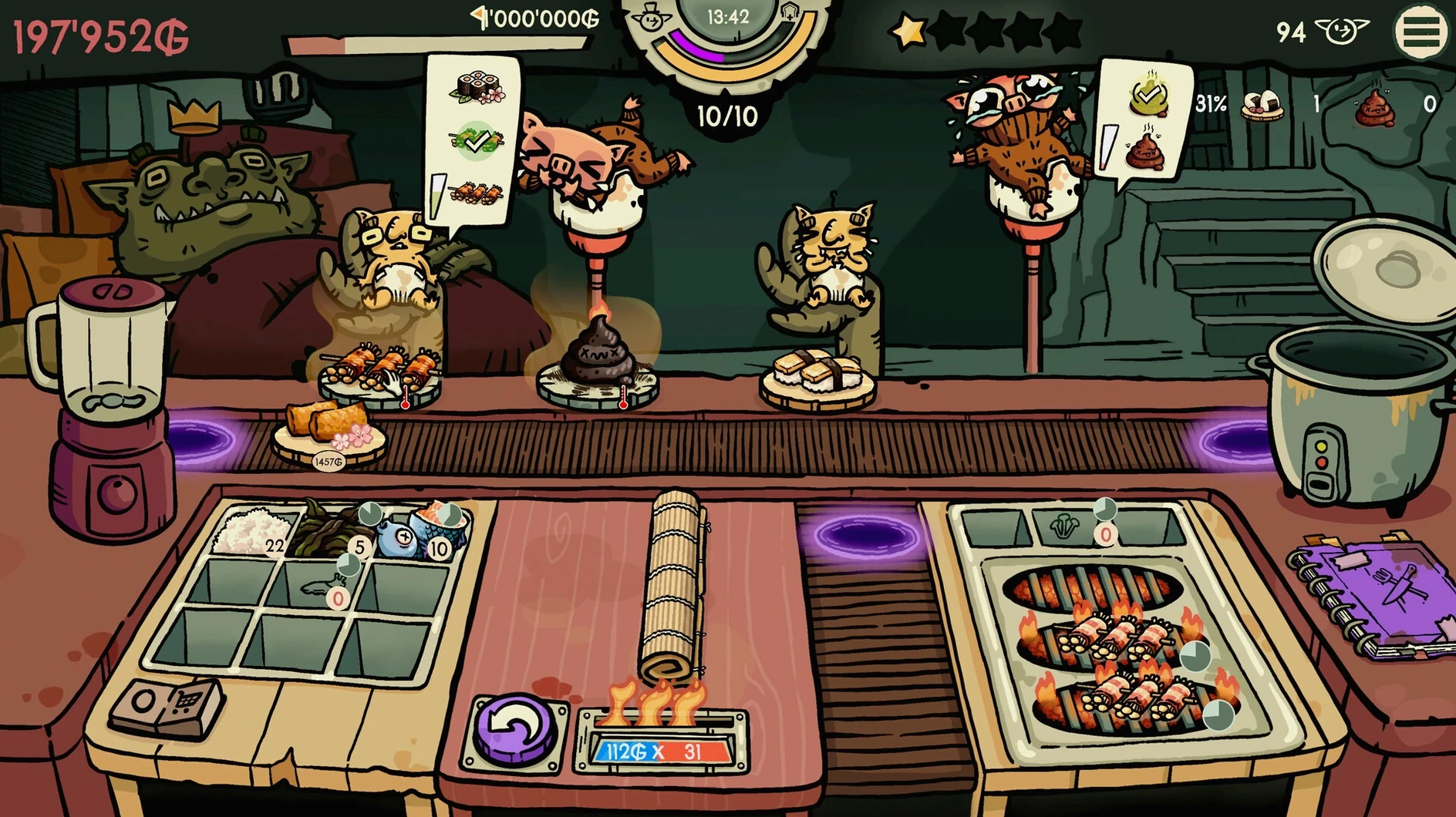
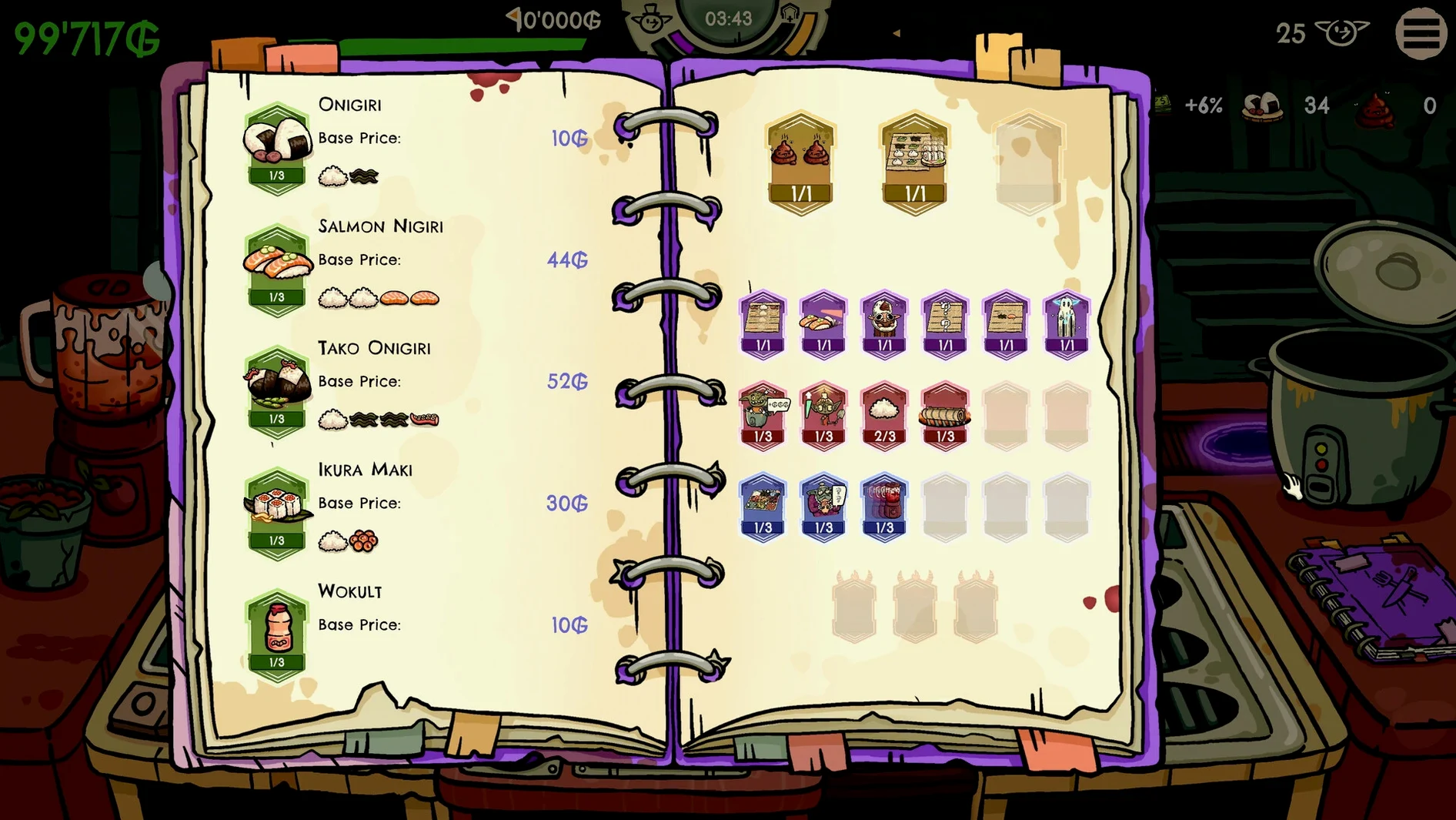
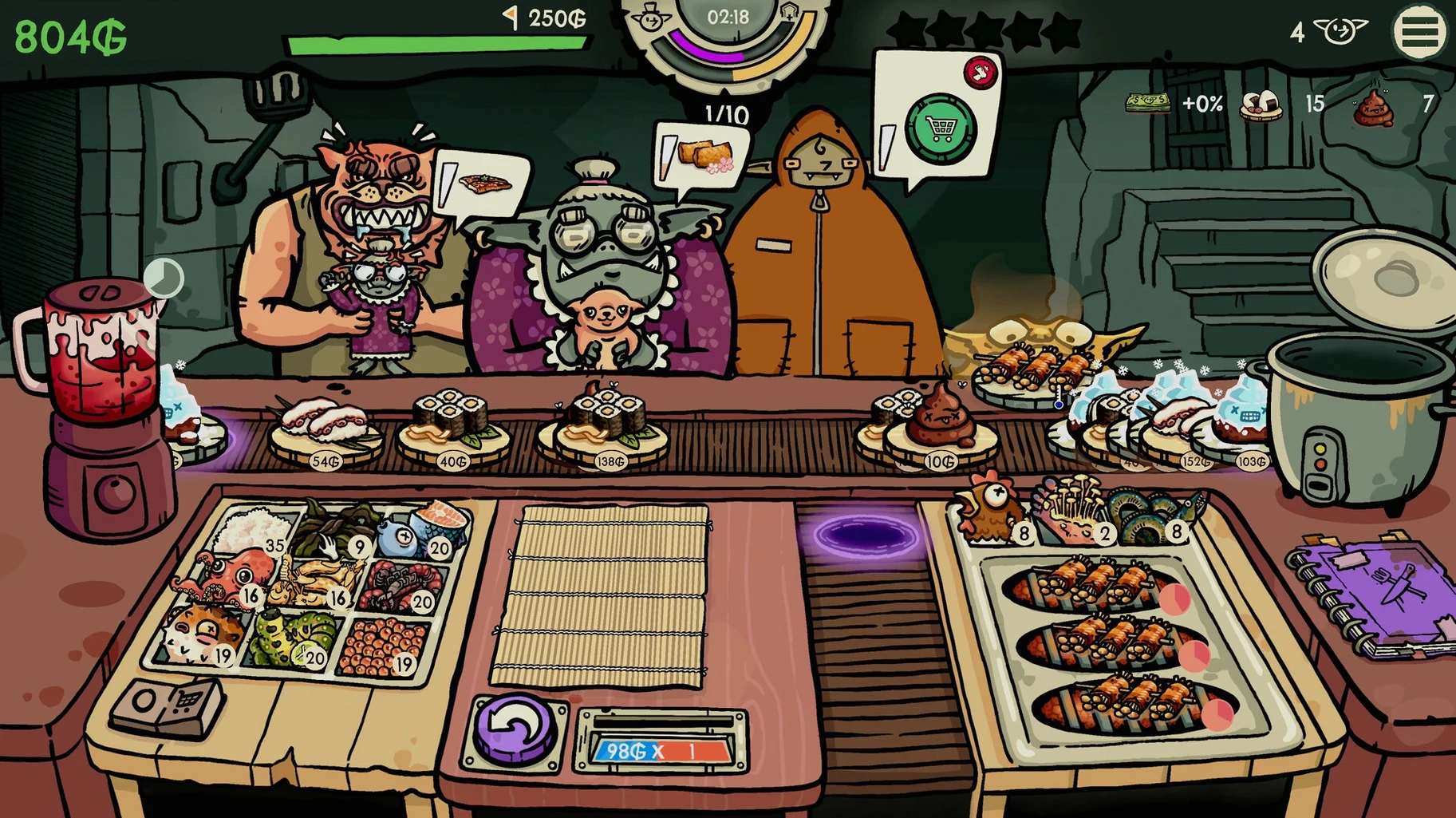
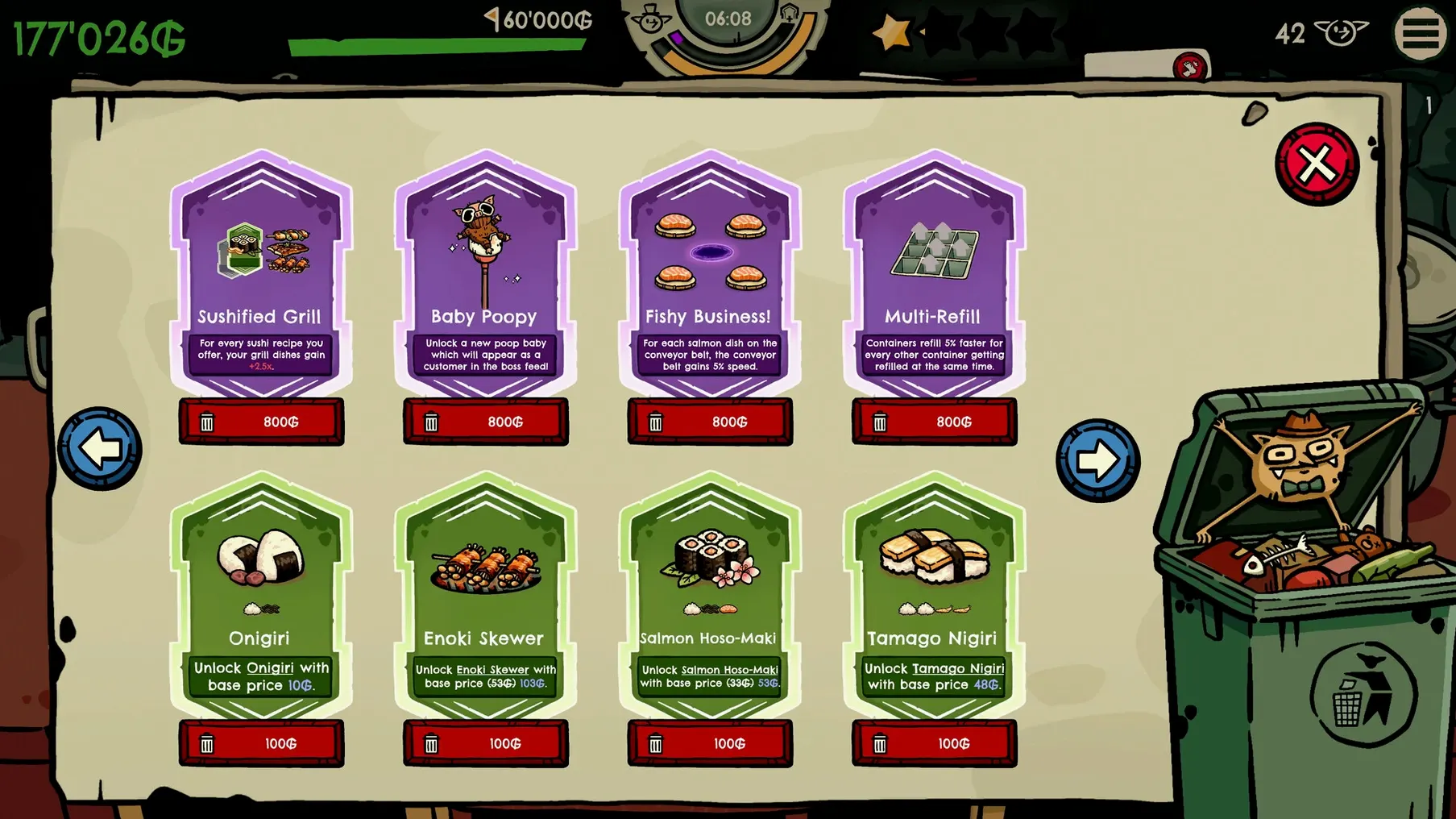
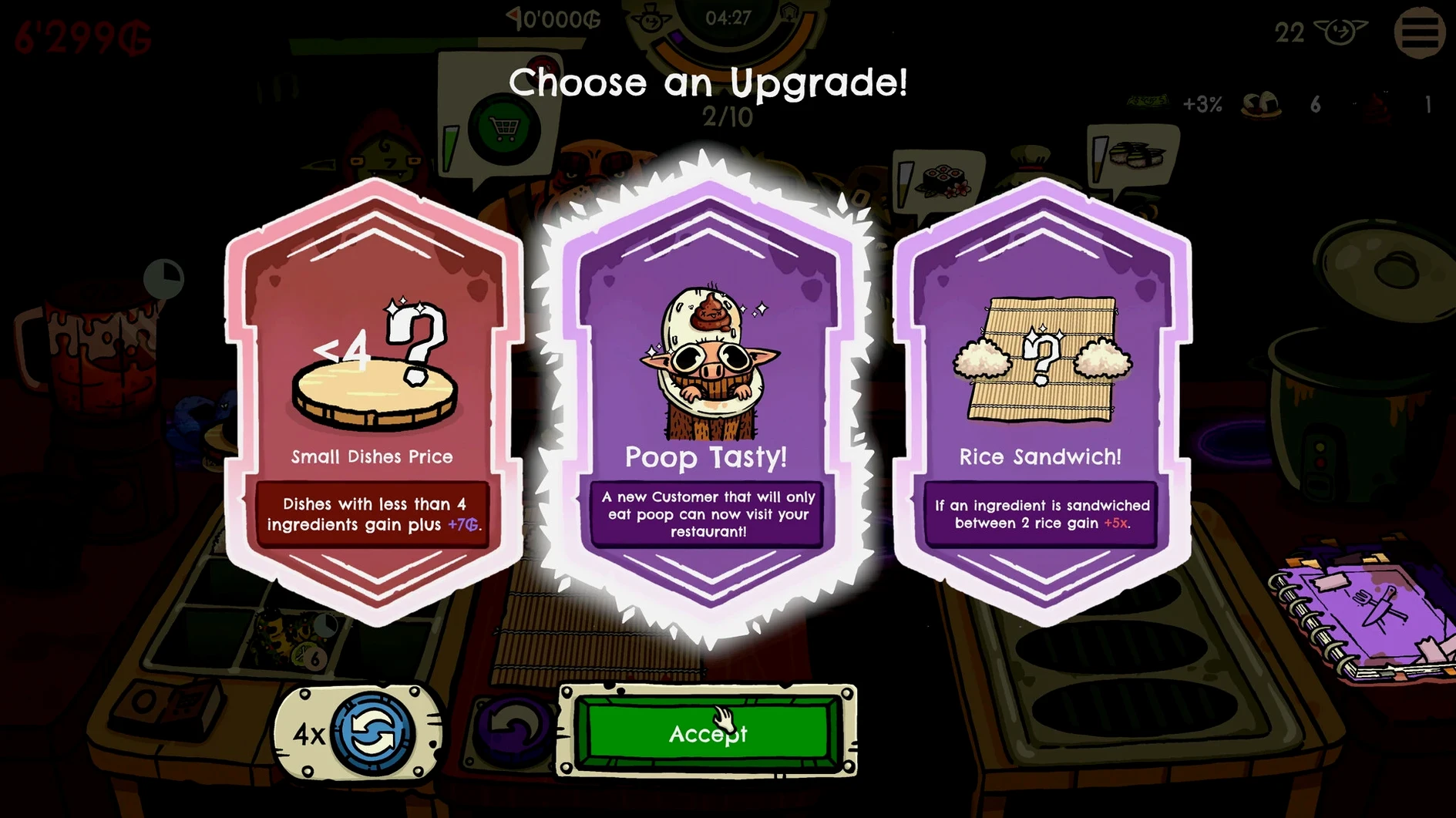
It is a restaurant-management roguelike where every two-minute rent deadline could end your career as a goblin sushi chef.
Roguelike — a game where failure means starting over from scratch, with randomly generated challenges each time.
Restaurant sim — you prep, cook, and serve dishes against a timer, balancing speed with accuracy.
This game will suit you if you enjoy pressure that comes from overlapping systems rather than twitch reflexes. The ingredient list sets the tone immediately: caterpillars, slugs, chicken heads, and chopped frogs sit alongside more conventional sushi components. Goblins arrive with distinct types and preferences, so reading a customer correctly matters as much as remembering which key drops the caterpillar roll. Rent is due every two minutes — a heartbeat timer that forces you to choose between the perfect plate and the plate that keeps the lights on. The build runs natively on both Intel and Apple Silicon Macs, and I found it smooth on macOS Tahoe with an M4 chip.
You might bounce off it if you dislike timers that dictate the pace of the entire session. While the cooking and customer-management loop is satisfying, the two-minute rent cycle means there is never a moment to pause and admire your kitchen. It is a game about constant triage, and that will either feel exhilarating or exhausting depending on your temperament. The roguelike structure means losing an hour of progress to a bad run of fussy goblin customers, which is the point of the genre but worth knowing up front.
An evening shift with a picky goblin rush
Imagine you are three runs deep on a Tuesday evening. You have juiced the menu with a caterpillar-and-slug special, the bar is upgraded enough to handle two goblins at once, and you are feeling confident. Then the rent clock ticks over and the door swings open on a party of four goblins who all want grilled dishes — and one of them is the type that sends food back if it sits on the counter longer than a few seconds. You scramble to the grill, realise you never upgraded its speed, and watch your carefully balanced kitchen spiral into a pile of rejected chicken heads. The genius of the game lives in moments like that: a tiny strategic oversight, made ten minutes earlier, that comes back to haunt you under pressure. It is not simply about cooking faster; it is about learning which upgrades protect you from your own bad habits.
The rent timer boots you mid-order if you treat it as background detail
The first thing people trip over is the rent timer. It is not a gentle suggestion — two minutes is genuinely tight, and new players often treat it like a background detail until the landlord boots them out mid-order. The fix is to mentally reverse the priority: pay the rent first, then build the round around what remains. Think of it as a rhythm game where the rent is the downbeat.
Another sore spot is the ingredient-to-menu mismatch. You might unlock a new sushi type and immediately slap it onto the menu, only to discover none of your regular goblin customers actually want it, which tanks your income for the round. A better approach is to add new dishes one at a time and watch a few customer waves to see if they land before committing more slots. The game rewards cautious experimentation far more than a full menu overhaul.
Finally, some players report a stutter on Apple Silicon Macs when the kitchen gets visually busy with juice splashes and multiple goblin animations. If you hit that, try toggling the display mode from windowed to fullscreen and back — it often clears whatever frame-pacing hiccup has crept in. The goblin sushi crack mac build runs natively, and like any native code it just needs a quick display reset when the screen fills with angry goblins and flying caterpillar bits.
Hold Tab to see every goblin's mood icon without clicking around
Holding the Tab key highlights every goblin's current mood icon above their head — a tiny feature the tutorial barely mentions, but it lets you triage the queue without clicking on each customer individually. You can spot the impatient ones before they start fuming.
The grill station remembers your last cooked item, so if you are on a grilled-dish streak, you can double-tap the same key to fire another without navigating the menu again. It shaves off a second per order, which adds up over a run.
If you pause the game with Escape, you can still browse the upgrade tree and plan your next purchase. The rent timer stops in the pause menu, giving you a rare moment to think without a goblin yelling about his slug roll. Use it before the two-minute mark, not after — pausing does not undo a missed payment.
- macOS 13.0 or later
- Apple Silicon or Intel 64-bit processor
Questions I keep hearing
What kind of game is Goblin Sushi?
It is a roguelike restaurant sim where you cook sushi for goblin customers while paying rent every two minutes.
Does it run on Apple Silicon Macs?
Yes, the build supports both ARM and x86 64-bit architectures, and it has been tested on an M4 Mac mini.
What makes the cooking unusual?
The ingredient list leans into the goblin theme with items like caterpillars, slugs, chicken heads, and chopped frogs alongside standard sushi ingredients.
Questions from the class 0
Sign in or join the class to ask a question.
Nobody has asked anything yet. If you have used it on a real job, say what the file did.
Also on the Games shelf
The whole Games shelf Going Medieval
Guides a deeply personal colony of settlers through a harsh medieval world.
Going Medieval
Guides a deeply personal colony of settlers through a harsh medieval world.
 Geometry Dash
Tests your timing through rhythm-driven obstacle courses.
Geometry Dash
Tests your timing through rhythm-driven obstacle courses.
 Granny Remake
Traps you in a dark house where every sound alerts a hunting keeper.
Granny Remake
Traps you in a dark house where every sound alerts a hunting keeper.
 GRIME II
Lets you absorb and summon the forms of every creature you defeat.
GRIME II
Lets you absorb and summon the forms of every creature you defeat.
 Frostpunk
Forces you to run a frozen city where every law has a cost.
Frostpunk
Forces you to run a frozen city where every law has a cost.
 Hades
Turns each death into a fresh conversation in a story-driven dungeon crawl.
Hades
Turns each death into a fresh conversation in a story-driven dungeon crawl.
 Half-Life Blue Shift
Adds a fresh security-guard campaign to the original Black Mesa disaster.
Half-Life Blue Shift
Adds a fresh security-guard campaign to the original Black Mesa disaster.
 Football Manager 2026
Puts you in charge of a football club's tactics, transfers, and results.
Football Manager 2026
Puts you in charge of a football club's tactics, transfers, and results.