 ASPNetWorld
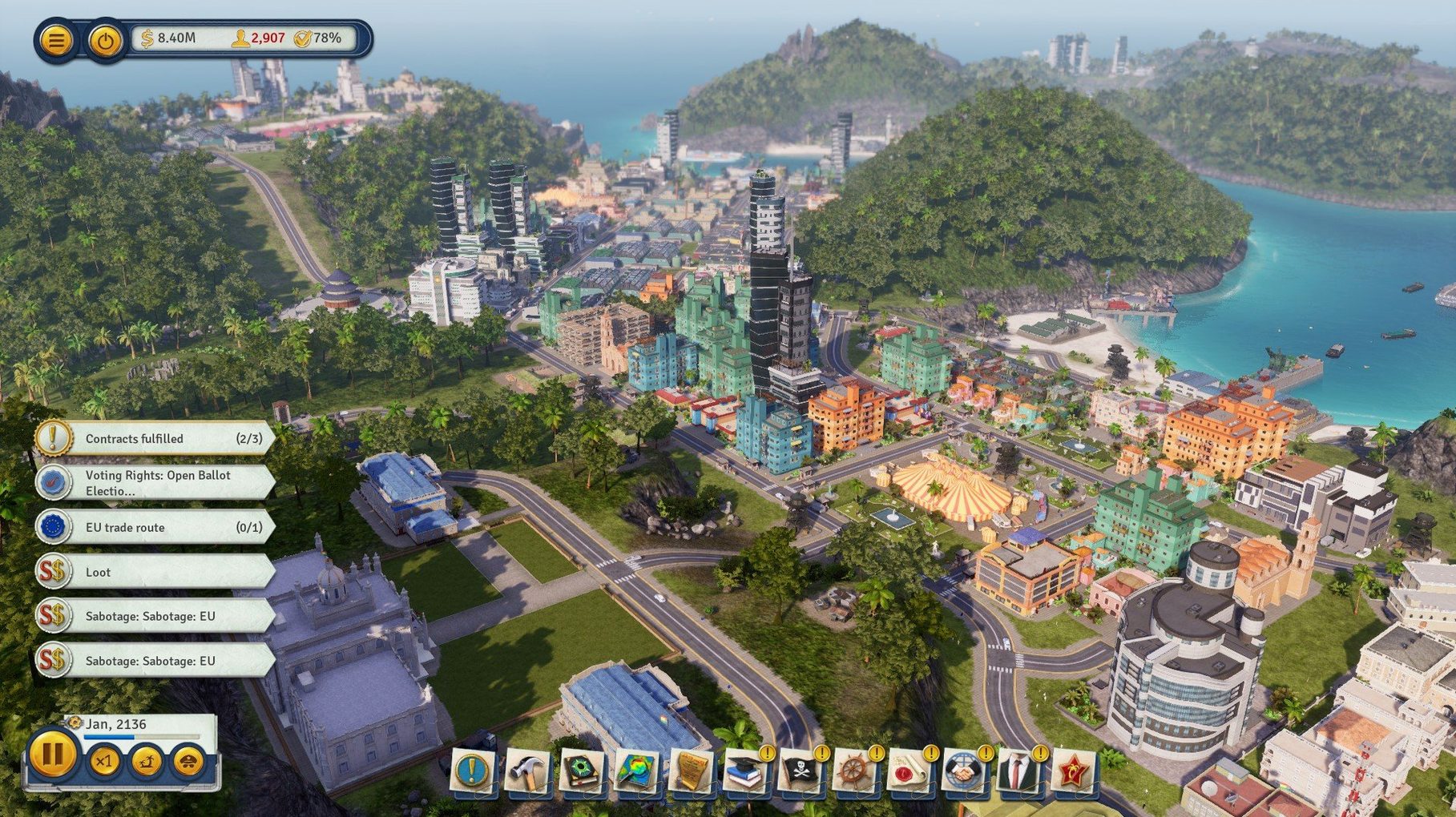
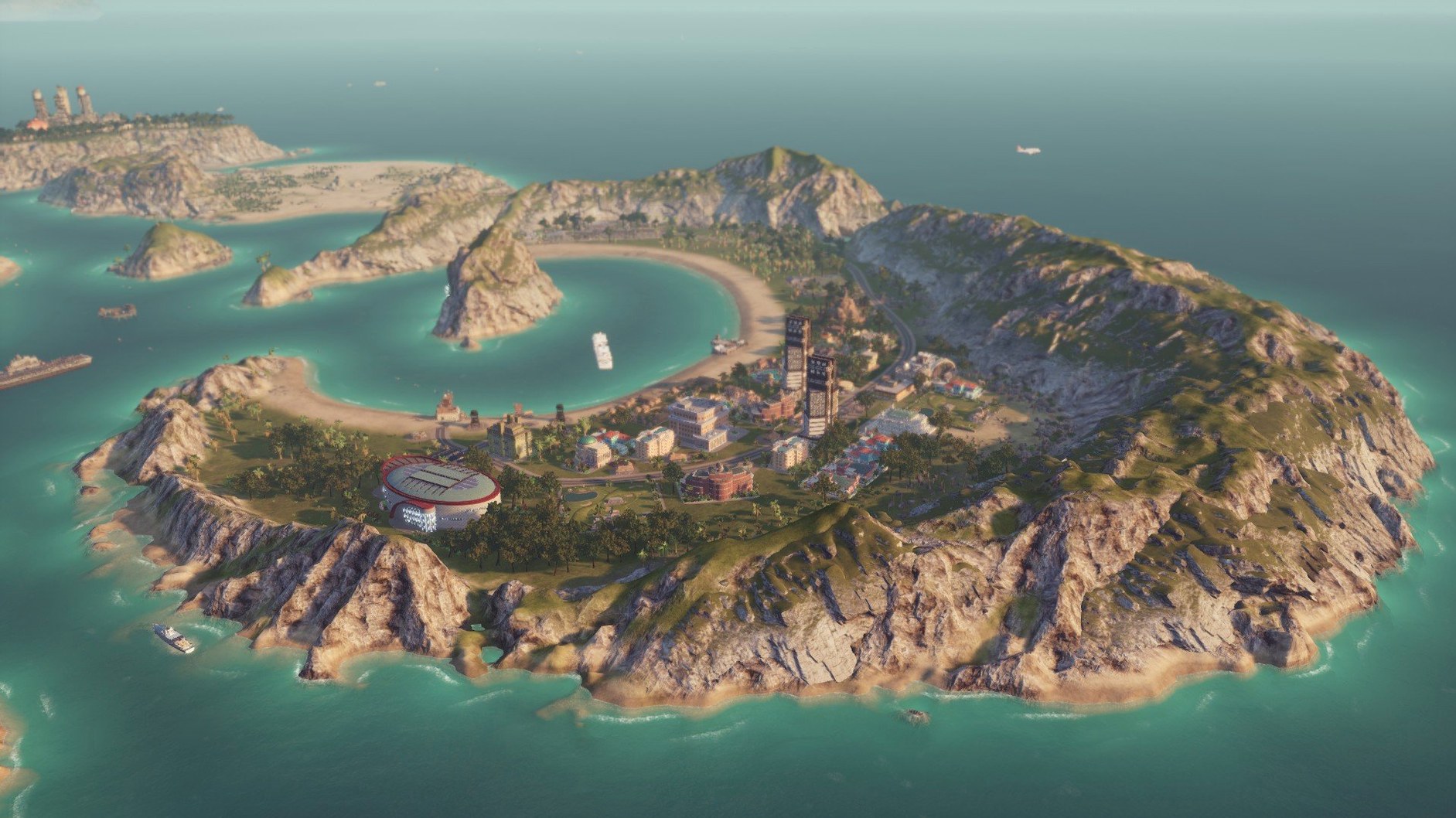
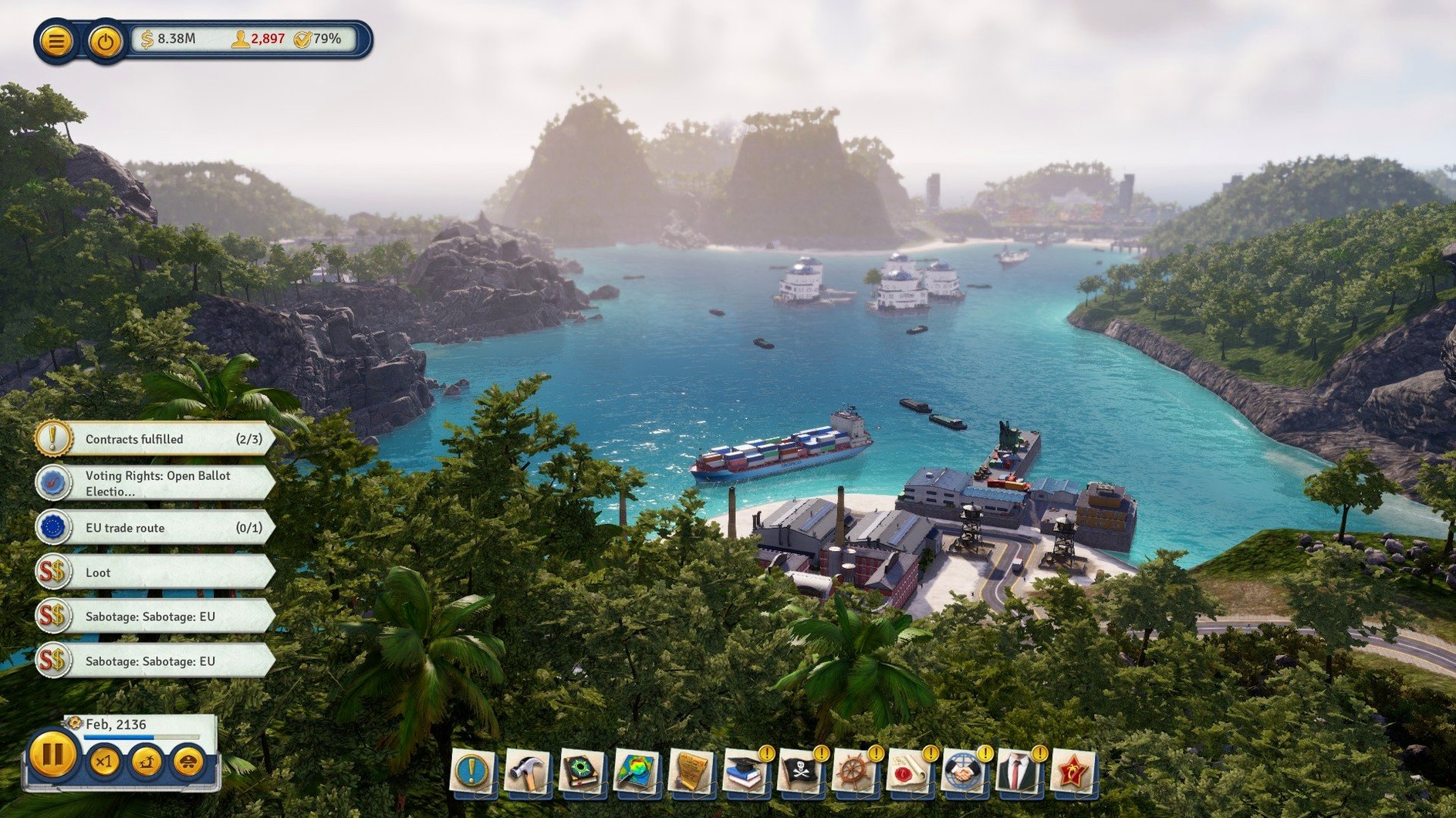
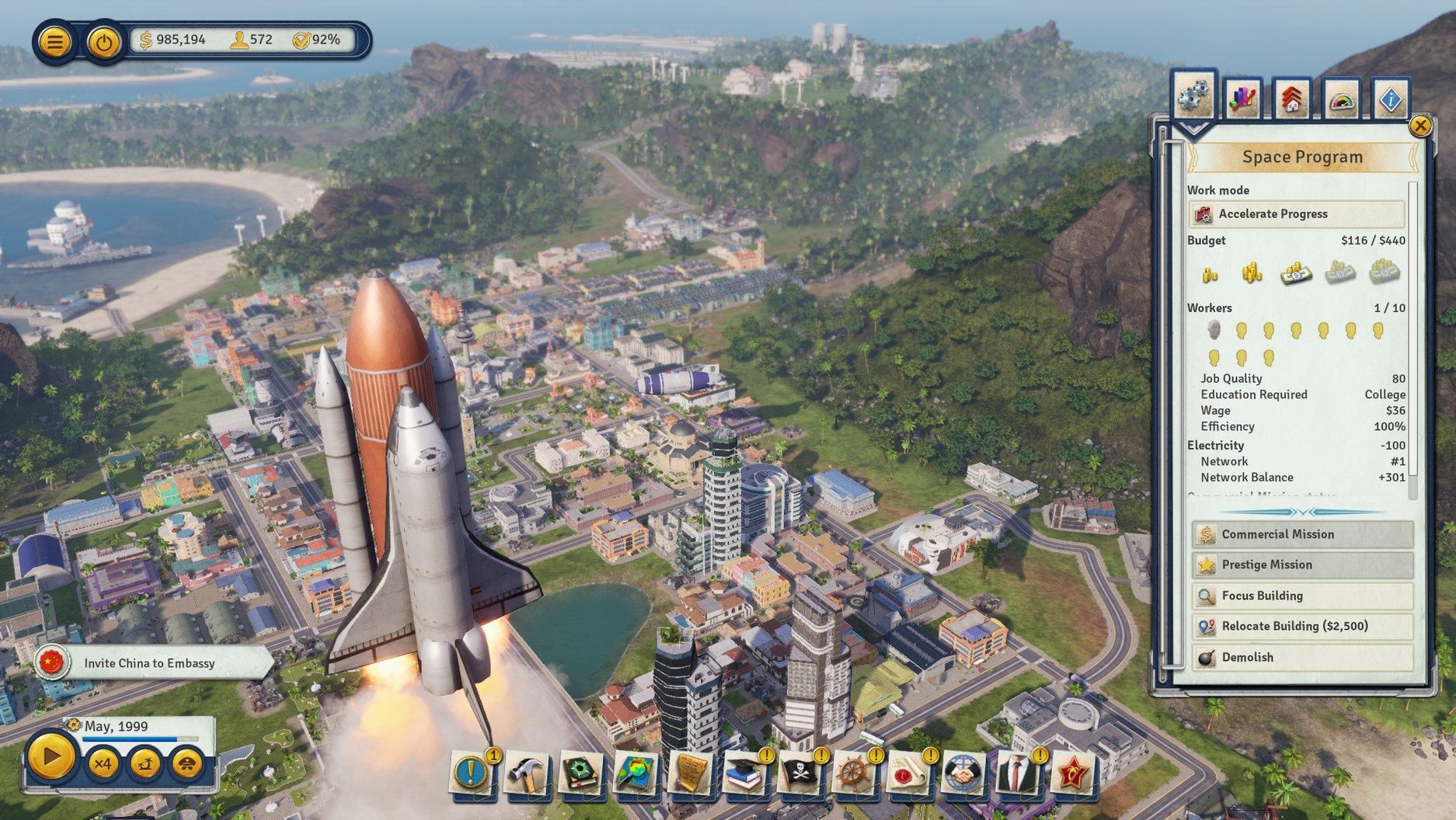
20 islands. 20 arguments waiting to happen. That's the first thing that hits you in Tropico 6 — your new republic isn't a single postcard shoreline, it's a scattered archipelago, and every rock in the sea wants a bridge, a road, or a power line you can't quite afford yet.
Minute by minute on the island
- Survey the map and unpause. The clock starts ticking the moment you let go. Construction workers trudge from their shacks, ships appear on the horizon, and the first citizens start complaining about healthcare before you've even laid a brick.
- Lay down a road. It sounds trivial, but a road is a promise. Connect a dock to a plantation and you've just decided which side of the island gets rich first. Get it wrong and your teamsters spend the next hour stuck in jungle mud.
- Place a building and watch the supply chain. A rum distillery needs sugar. Sugar needs a plantation. The plantation needs workers, and workers need housing near the field, not on the far side of a mountain. Every building creates a little gravity well that pulls in roads, homes, and eventually a pub.
- Read a citizen's mind. Hover over any passer-by and you'll see a tiny inner life — political leanings, current job, whether they're thrilled or furious about the new clinic. One angry voter is background noise; two hundred becomes an election problem.
- Issue an edict, then brace for the consequences. A "Free Housing" decree makes you popular overnight but drains the treasury at the end of each month. The game doesn't stop you from being generous — it just sends the bill.
- Strengthen your defences when the radio crackles. The military tab isn't just for show. A rebel attack on a power plant can black out half your island chain, so positioning guard towers near infrastructure isn't paranoia — it's basic logistics.
The loop is seductive: build, observe, react, then zoom out and realise you've accidentally created a miniature nation with its own grudges and traffic jams. Some sessions end with a thriving tourist paradise; others end with martial law and a burning presidential palace. Both outcomes feel earned.
When the paradise wobbles
New presidents usually hit the same three walls. First, the treasury evaporates around year three because the player built hospitals, schools and a shiny statue before securing a steady export. The fix is boring but works — drop a couple of extra plantations early and set them to multi-culture mode so the soil doesn't give up on you. Let the rum flow before the revolution gets its funding sorted.
Second snag: traffic. Citizens miss work, goods rot in warehouses, and you can't spot the bottleneck until you zoom in and notice forty teamsters trying to squeeze across the same wooden bridge. The archipelago makes this trickier than it was on a single landmass — bridges aren't just scenic, they're the arteries of your economy. Build a second crossing before you add the fourth island to the chain, and don't be shy about upgrading roads to avenues near the docks. A traffic jam that looks like a mild inconvenience is actually costing you thousands in lost production.
Third, elections. If you've ignored housing quality near the power plant or let the religious faction fume without a church, the ballot box will tell you something you'd rather not hear. You can fudge it with a well-timed rally or an edict, but genuinely listening to the mini-map overlays — the ones that show happiness by district — is cheaper than fixing a coup. Tropico doesn't reward perfection; it rewards attention.
A cast of grudges and steel drums, not a blank field
Stack it against Cities: Skylines and the difference is tone. Skylines gives you a blank field and a spreadsheet's worth of zoning tools; Tropico hands you a cast of characters with grudges, a soundtrack of steel drums, and a backstory about colonial meddling. One is a city painter, the other is a political soap opera with bridges. If you want to fine-tune water pressure across twelve districts, Skylines is your evening. If you want to bribe a general while exporting cigars to the Crown, you're in the right republic.
Alongside Anno 1800 — another island-hopping management game with a Mac port — the comparison gets sharper. Anno leans into layered production chains and gorgeous maritime sprawl; Tropico 6 meets you at ground level with a sarcastic radio host and a housing crisis. Both demand supply-chain thinking, but Anno feels like conducting an orchestra, whereas Tropico feels like running a chaotic cabinet meeting where someone keeps stealing the treasury's chair. Neither is better — they just scratch different itches on the same archipelago-shaped itch.
Older Mac players sometimes still reach for Tropico 3 — partly nostalgia, partly because its simpler mechanics run on practically anything. A Tropico 3 torrent still circulates among folk dusting off Intel Macs that can't handle the modern engine. Tropico 6 is more demanding on hardware, but it repays the upgrade with multi-island strategy that makes the earlier games feel like a single-island tutorial.
The thrill of an unclogged bus route and a humming distillery
Mac users who love a system rather than a spectacle. This isn't a game that impresses with particle effects — it impresses when your bus route finally unclogs a neighbourhood and the rum distillery starts humming at full capacity. It suits players who alt-tab to a notepad, scribble a rough export plan, then return to find that a hurricane has undone half of it. The DRM-free package also appeals to anyone who keeps an Intel Mac around as a dedicated gaming machine and doesn't want to phone home every boot.
Single-player strategists get the warmest welcome. There's no multiplayer to fret about, no leaderboard anxiety — just you, the islands, and a slowly dawning realisation that your "temporary" emergency loan is now consuming thirty percent of the national budget. If you like games where failure is a better story than success, Tropico delivers.
A typical session, told straight
You open the game on a Thursday evening — MacBook Air on the kitchen table, coffee going cold. The archipelago loads and you remember that yesterday you left your republic in a mess: debt climbing, the caribbean happiness rating in the gutter, and a rebel camp festering on the eastern isle.
First ten minutes: damage control. You cancel an expensive embassy upgrade and start a new tobacco plantation on fertile ground near the starting dock. The soil overlay tells you the spot will hold for a decade if you rotate crops, so you tick the multi-culture policy and breathe a little. A bridge to the tobacco island — previously a "nice to have" — becomes urgent. You lay it, wincing at the cost.
Half an hour in: the treasury stabilises. Cigars are shipping, the teamsters have stopped complaining about the single-lane bridge, and you've placated the religious faction with a small chapel near the tenements. You notice a citizen named Mateo who's been unemployed for three in-game years; you click him and see he's educated but lives too far from the new factory. You drop a bus stop near his home and the factory gate. Ten seconds later he's on the route, and you feel like a competent president for the first time all week.
Final stretch: you grow bold. A tourist pier on the northern island, a cable car to the scenic peak, a cocktail bar that somehow turns a profit within two months. The radio host makes a joke about your haircut and you laugh because the economy is finally purring. You save the game at midnight, export figures healthy, elections a year away, and a genuine sense that the republic might survive without you — which, in this game, is about the highest compliment it can pay.
- macOS (64-bit required)
- Intel processor: Quad-core i5 or i7 at 3 GHz or better
- 8 GB RAM
- Metal-capable, Shader 5 compliant GPU with 2 GB VRAM
- 16 GB available storage
Questions I keep hearing
Which languages does Tropico 6 support on Mac?
The interface can be set to Russian, English, German, Spanish, Italian, or French, with voice audio available in English, German, Spanish, Italian, and French.
Questions from the class 0
Sign in or join the class to ask a question.
Nobody has asked anything yet. If you have used it on a real job, say what the file did.
Also on the Games shelf
The whole Games shelf Two Point Museum
Curates exhibits, designs gift shops and sends experts on expeditions to find new treasures.
Two Point Museum
Curates exhibits, designs gift shops and sends experts on expeditions to find new treasures.
 Tower of Babel: Survivors Of Chaos
Survives monster waves and reshapes your build with every piece of gear that drops.
Tower of Babel: Survivors Of Chaos
Survives monster waves and reshapes your build with every piece of gear that drops.
 Total War: PHARAOH DYNASTIES
Rewrites a Bronze Age grand strategy game with four new cultures and deeper court politics.
Total War: PHARAOH DYNASTIES
Rewrites a Bronze Age grand strategy game with four new cultures and deeper court politics.
 Unmourned
 Vampire Crawlers: The Turbo Wildcard from Vampire Survivors
Deals a roguelike card game where you chain fangs, blades, and wildcards to clear dungeon rooms.
Vampire Crawlers: The Turbo Wildcard from Vampire Survivors
Deals a roguelike card game where you chain fangs, blades, and wildcards to clear dungeon rooms.
 Vampire Survivors
Sends waves of monsters at you while your weapons fire automatically and you simply steer.
Vampire Survivors
Sends waves of monsters at you while your weapons fire automatically and you simply steer.
 Timberborn
Commands a colony of beavers to reshape rivers and build layered wooden cities.
Timberborn
Commands a colony of beavers to reshape rivers and build layered wooden cities.
 Thronefall
Builds a compact base by day and defends it by night in stripped-back tactical battles.
Thronefall
Builds a compact base by day and defends it by night in stripped-back tactical battles.