 ASPNetWorld

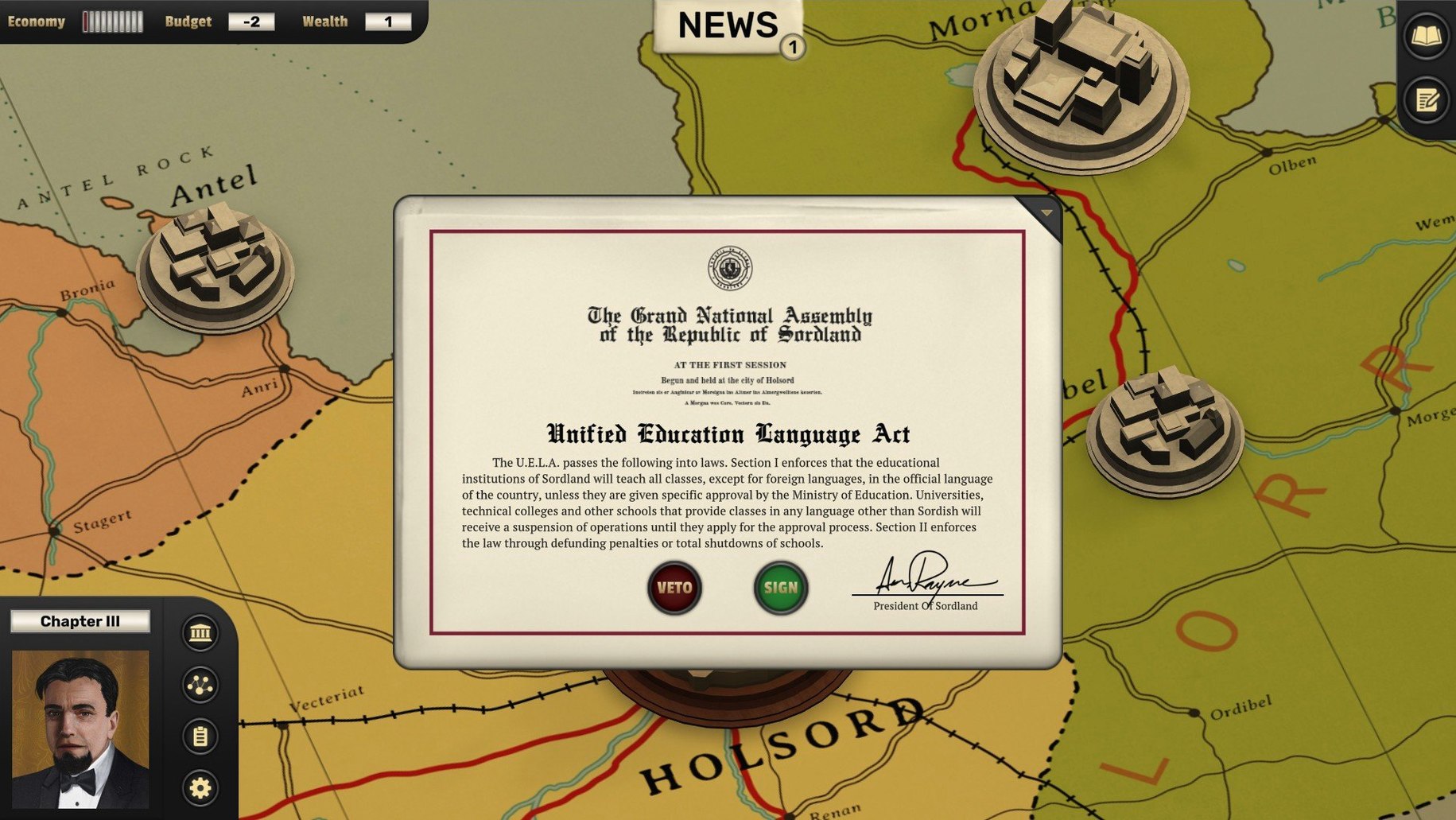
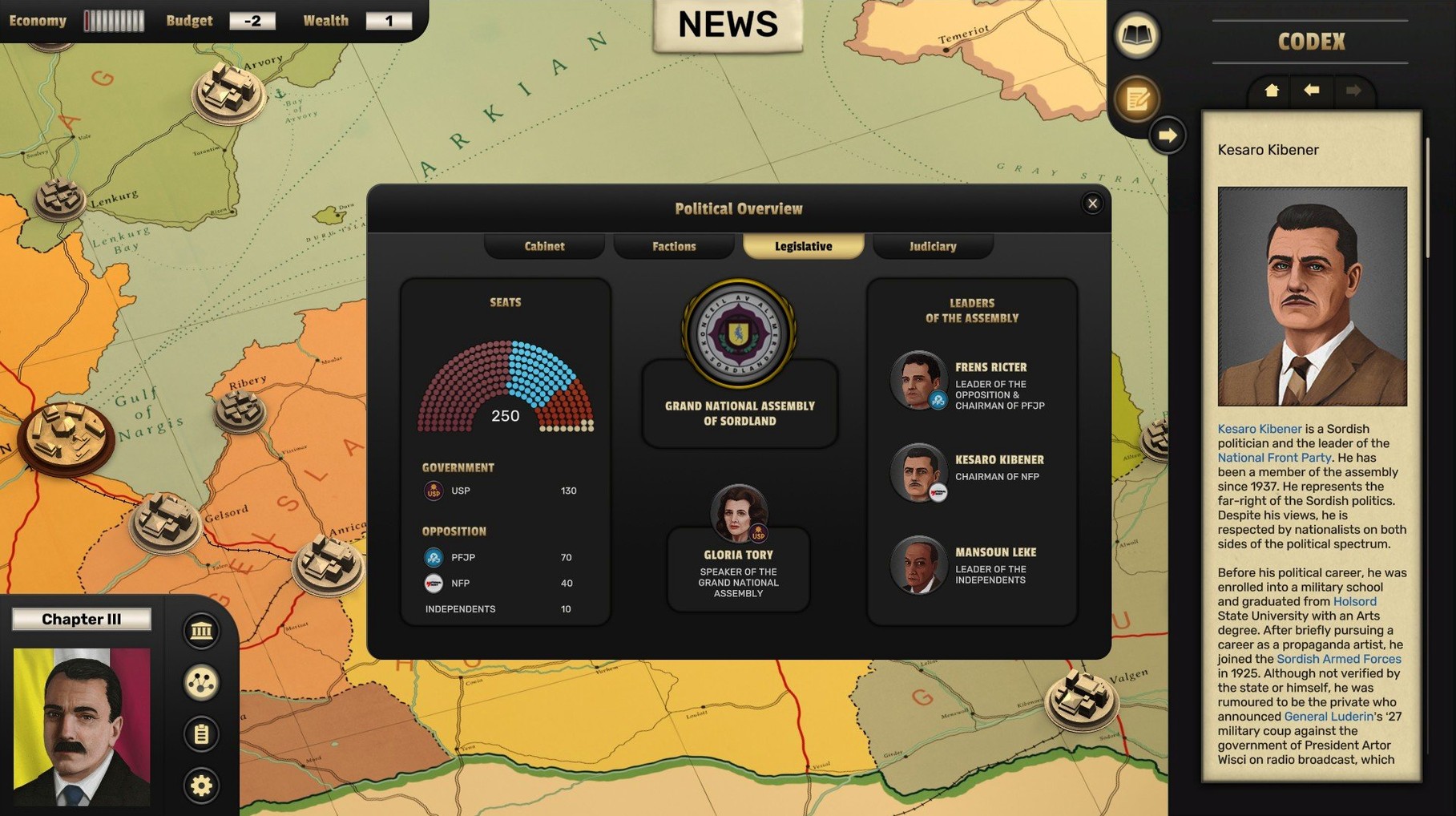
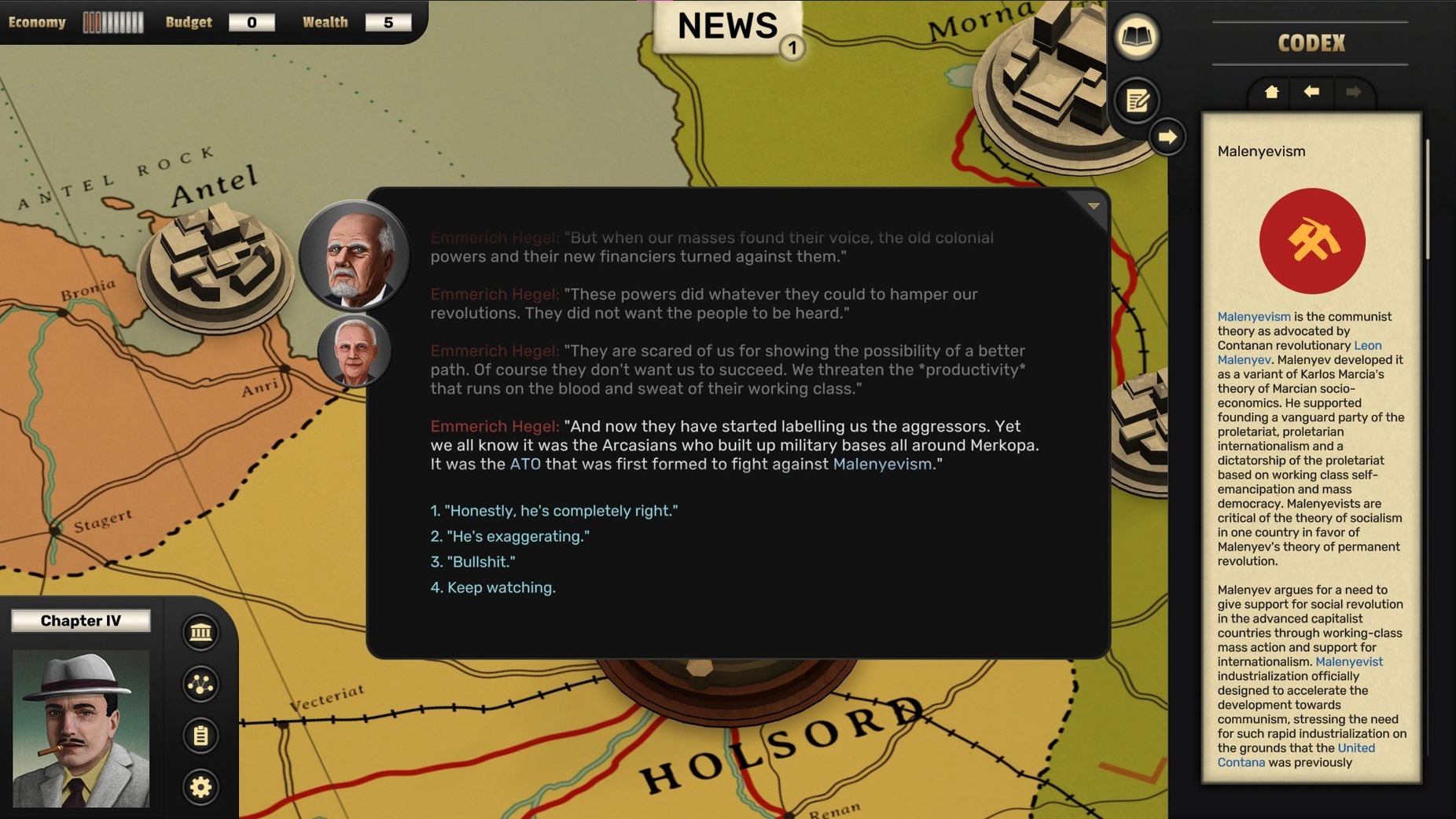
You have roughly 1,200 days in office, and every morning starts with a report on Sordland’s latest crisis. As President Anton Rayne, you sit behind a heavy wooden desk and decide whether to fund a new rural hospital, sign a controversial trade deal, or quietly authorise a security operation that will never appear in the newspapers. The game runs entirely on your choices, and nobody walks out of a cabinet meeting unchanged.
Briefing documents, hidden agendas, and the weight of every conversation
Most of your time is spent reading. Briefing documents land on your desk, marked urgent or confidential. You flip through them, underline the obvious traps, and then meet the person behind the problem — a minister with a hidden agenda, an old ally who now leads the opposition, or a foreign ambassador who smiles a little too warmly. Conversations are the core mechanic. You pick a tone, you pick a promise, and you watch the relationship bar shift. Some people remember a broken promise for the rest of the game.
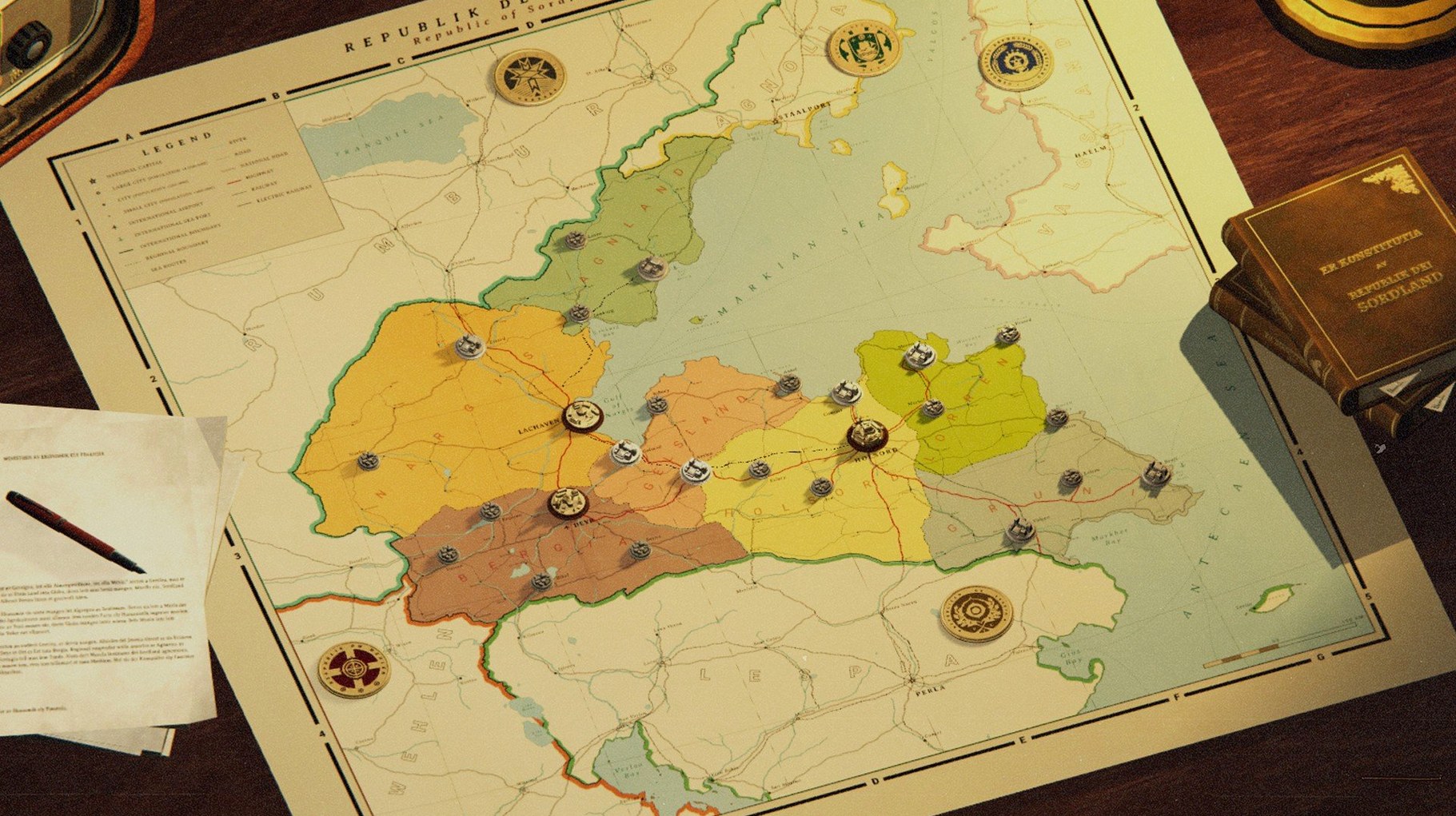
Between meetings, you sign decrees, allocate the budget across a dozen competing departments, and occasionally phone your family, because the job has a way of erasing everything outside it. The map of Sordland sits in the background, its regions changing colour as your policies take hold or backfire. There is no combat system, no inventory to manage — just words, pressure, and the slow realisation that a decision you made six hours ago has triggered a protest outside the presidential palace.
Morally grey decisions and the slow dismantling of a political alliance
- Players who enjoy narrative depth and morally grey decisions
- Anyone curious about the machinery of government, from constitutional reform to backroom lobbying
- Long, single-sitting sessions where a wrong word can unravel an alliance
No Apple Silicon support and no undo button for a diplomatic disaster
- The Mac build is 64-bit Intel only — no native Apple Silicon support
- The game is English-language only, with substantial reading throughout
- Choices are permanent; there is no undo button for a diplomatic disaster
Patience over reflexes, and why policy wonks feel at home here
Suzerain rewards patience in a way that few Mac games do. It is not about reflexes or memorising skill trees. The people who get the deepest satisfaction tend to fall into a few overlapping camps. Policy wonks, for instance, will lose entire evenings adjusting education funding to see how it shifts public opinion three turns later. Writers and journalists often gravitate towards the dialogue system, because every conversation is a miniature negotiation where tone matters as much as substance. And anyone who has ever read a political biography and thought I would have handled that differently will find the game quietly addictive — it gives you the desk, the phone, and the consequences, then steps back.
A less obvious group are Mac users who enjoy slow-burn strategy but lack the time for a sprawling grand campaign. A full playthrough of Suzerain runs around eight to twelve hours, which is compact enough to finish in a week of evenings yet dense enough to replay with a completely different moral compass. If you found yourself reading every codex entry in a game like Disco Elysium, you are squarely in the target audience. The game also runs smoothly on older Intel Macs that would struggle with 3D titles, because its demands are almost entirely text and static interface elements.
Signing popular decrees too early bankrupts the treasury before mid-game
The most frequent mistake is treating the early game like a sandbox. New players often sign every popular decree in the first term, bankrupting the treasury before the mid-game crises even arrive. Sordland’s budget is a finite resource, and trying to please every faction simultaneously usually pleases nobody. Another trap is neglecting the personal relationships — your family, your closest advisors, the old guard who put you in power. It is tempting to focus purely on legislation, but Suzerain tracks loyalty on a granular level, and a minister who feels ignored will eventually leak your worst secret to the press.
Beginners also tend to skim the briefing documents instead of reading them properly. A single word in a trade agreement — a clause about military access, say — can lock you into a foreign policy position that unravels half your cabinet. The game does not highlight these clauses; it trusts you to notice them. Finally, many first-time players assume that a diplomatic approach is always safer than a confrontational one. In Sordland of 1954, that assumption can lose you the presidency.
Where Suzerain sits among your Mac apps
The game is self-contained, but it fits into a wider ecosystem in interesting ways. Because the Mac build launches as a standard application from the Applications folder, it coexists naturally with macOS tools like Notes and TextEdit. Some players keep a running journal in Notes during a campaign — tracking promises made to specific characters, or sketching out a budget plan before committing to it in-game. The absence of cloud saves can actually be a benefit here; you can copy the save folder manually and experiment with a divergent path without losing your original timeline.
Suzerain also plays well with the Mac’s notification discipline. In a game built around reading and concentration, turning on Focus mode before launching keeps the political immersion intact. The soundtrack — mostly sombre orchestral pieces — sits at a volume that works alongside other ambient audio, so you can leave a music player running in the background without clashing. And if you have been hunting for a suzerain mac download that respects the machine’s quiet, fanless operation on Apple Silicon (via Rosetta 2), this is the kind of title that will never spin up your fans even during long sessions.
This release brings a wave of refinements that seasoned players will notice immediately. The developer has smoothed out several narrative inconsistencies and rebalanced key decisions so the mid-game feels less punishing without losing its bite.
- Content balancing and design improvements across multiple chapters
- Various bug fixes, including several reported dialogue errors
- Lore updates that clarify historical references within the world of Sordland
- macOS (64-bit Intel processor required)
- No native Apple Silicon support
Questions I keep hearing
Is Suzerain a strategy game or a role-playing game?
It is a narrative political role-playing game. You shape the story through dialogue and decrees rather than managing units or resources on a map.
How long does a full term as president last?
The story spans President Rayne's term in office, measured in turns that each represent a day. Player decisions determine whether the country declines or prospers by the end.
Can I replay the game and get a different outcome?
Yes, the branching narrative means each playthrough can lead Sordland in a sharply different direction depending on your cabinet choices and personal loyalties.
Questions from the class 0
Sign in or join the class to ask a question.
Nobody has asked anything yet. If you have used it on a real job, say what the file did.
Also on the Games shelf
The whole Games shelf Supermarket Simulator
Simulates running a small supermarket.
Supermarket Simulator
Simulates running a small supermarket.
 Stronghold Definitive Edition
Builds and defends medieval castles.
Stronghold Definitive Edition
Builds and defends medieval castles.
 Stronghold Crusader HD
 STORROR Parkour Pro
Lets you practise parkour across city rooftops.
STORROR Parkour Pro
Lets you practise parkour across city rooftops.
 Teardown
Plans and executes destructive heists.
Teardown
Plans and executes destructive heists.
 Stellaris
Guides a civilisation through the stars.
Stellaris
Guides a civilisation through the stars.
 Tennis Elbow 4
Simulates professional tennis matches.
Tennis Elbow 4
Simulates professional tennis matches.
 Stardew Valley
Builds a quiet life on a farm.
Stardew Valley
Builds a quiet life on a farm.