 ASPNetWorld

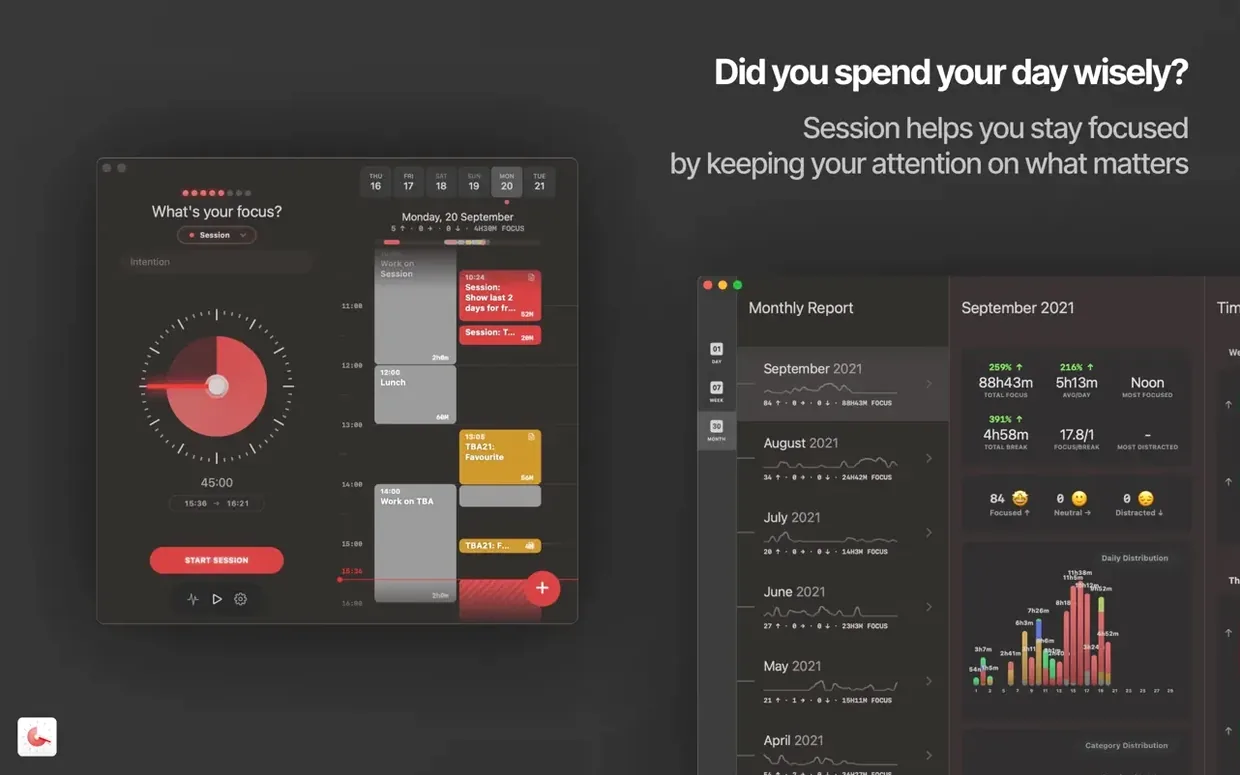
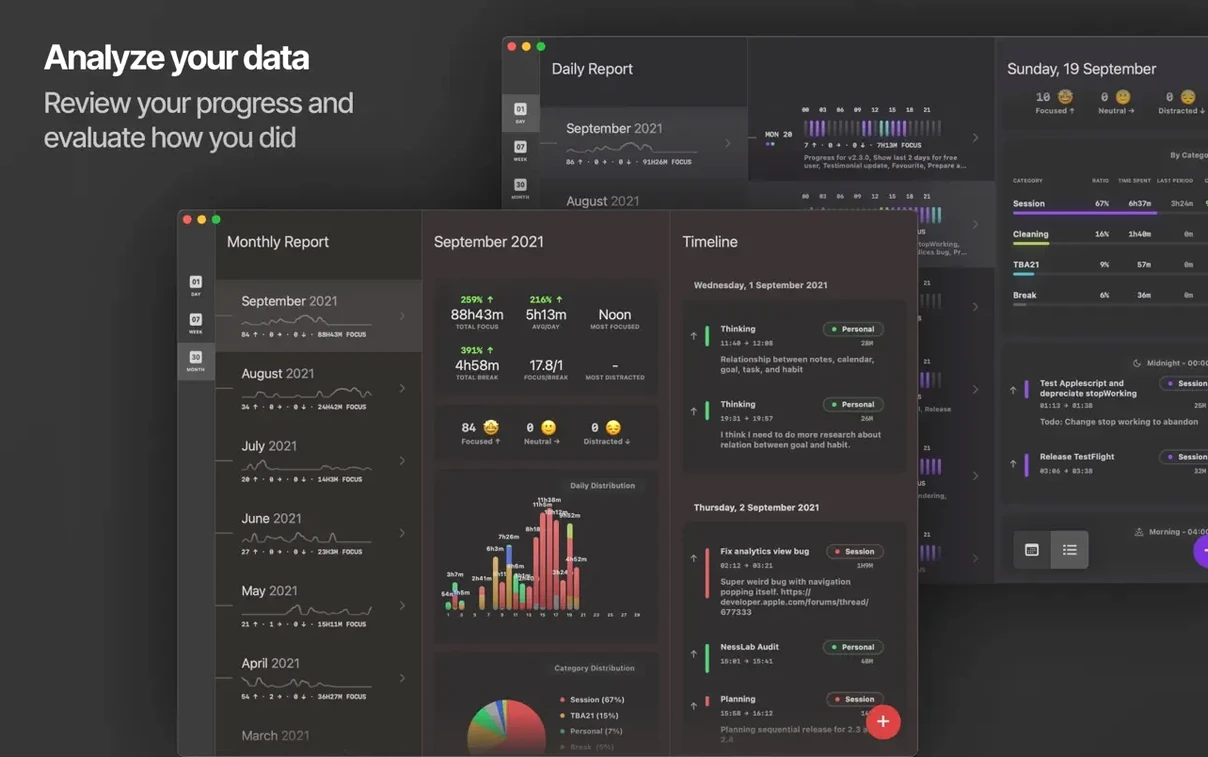
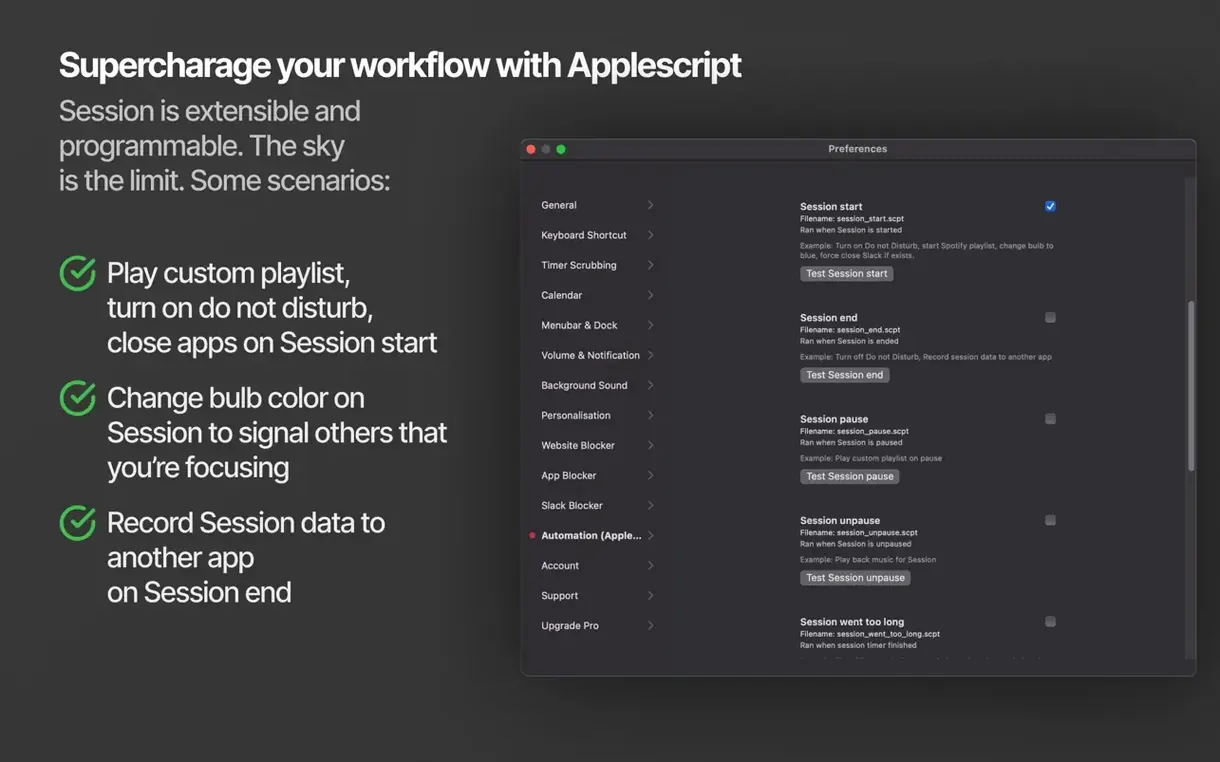
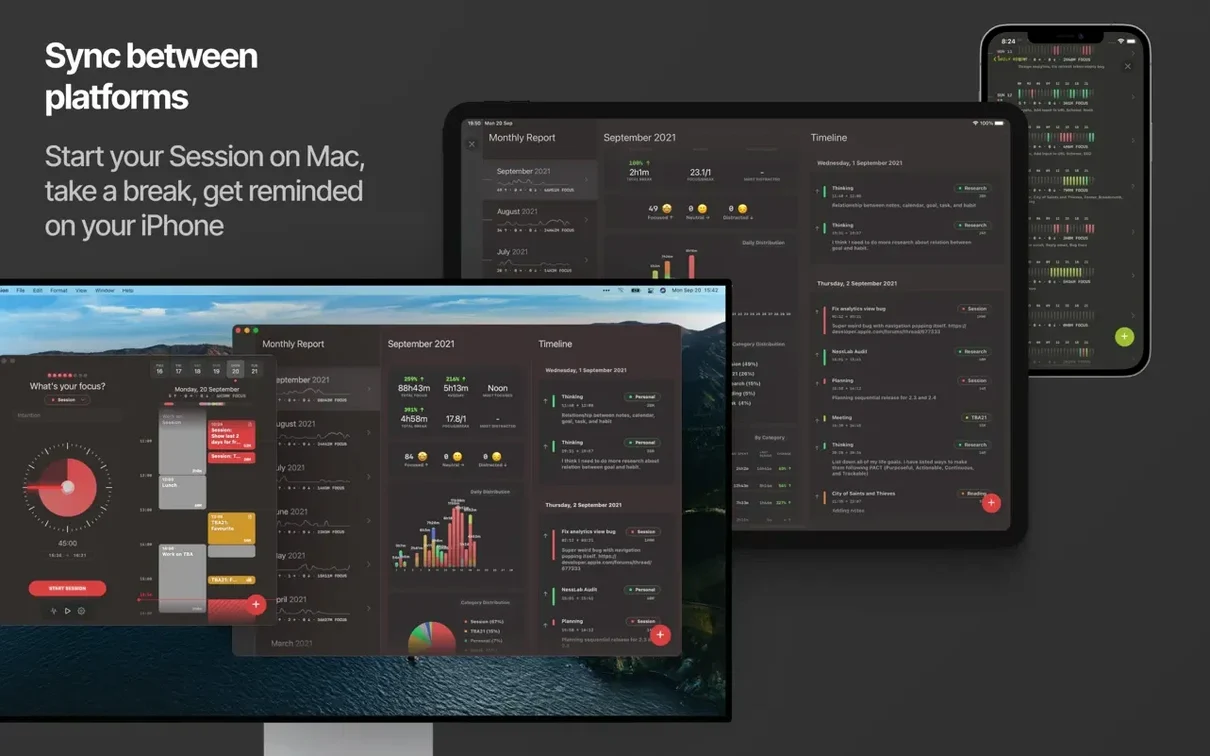
The current version of the Session Pomodoro focus timer, 2.13.48 from Translucent LLC, tidies up a small but noticeable rough edge — the resize gesture on the calendar view no longer misbehaves. It is a housekeeping fix that keeps the app feeling polished while you plan your work blocks.
What the update leaves alone
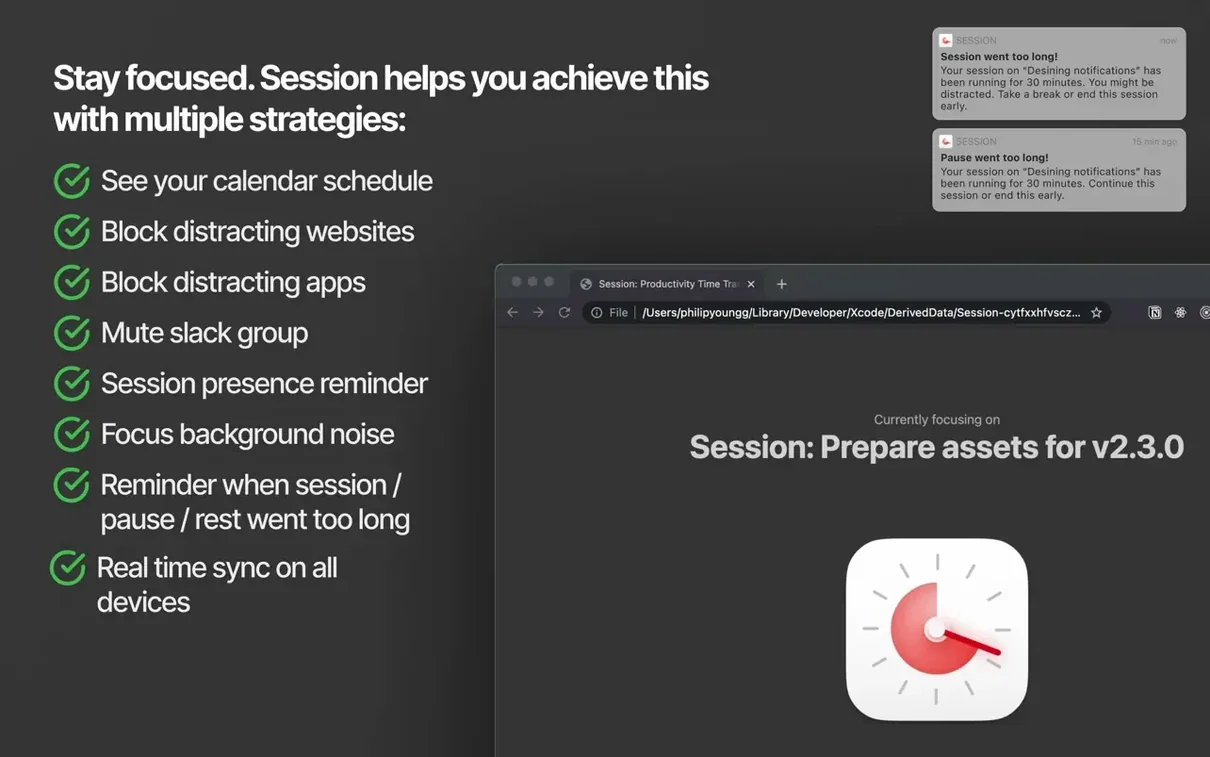
Everything else about the timer’s quiet, distraction-squashing character stays exactly as you remember it. Start a session and the app can automatically flick on Do Not Disturb, mute a chosen Slack team, and hold blocked websites and apps at arm’s length. When the timer chimes for a break, those barriers lift, and the app gently reminds you to step away. It tracks time against tasks across Mac, iPhone and iPad, so your focus data follows you without fuss.
The toolkit that works in the background
Under the hood, Session runs natively on both Apple Silicon and Intel Macs from Catalina onward. The Session Pomodoro Focus Timer Mac torrent of features — deep system integration, break reminders, cross-device sync — hums along because the developers have spent their energy on the unglamorous work of making concentration automatic rather than adding surface-level gloss.
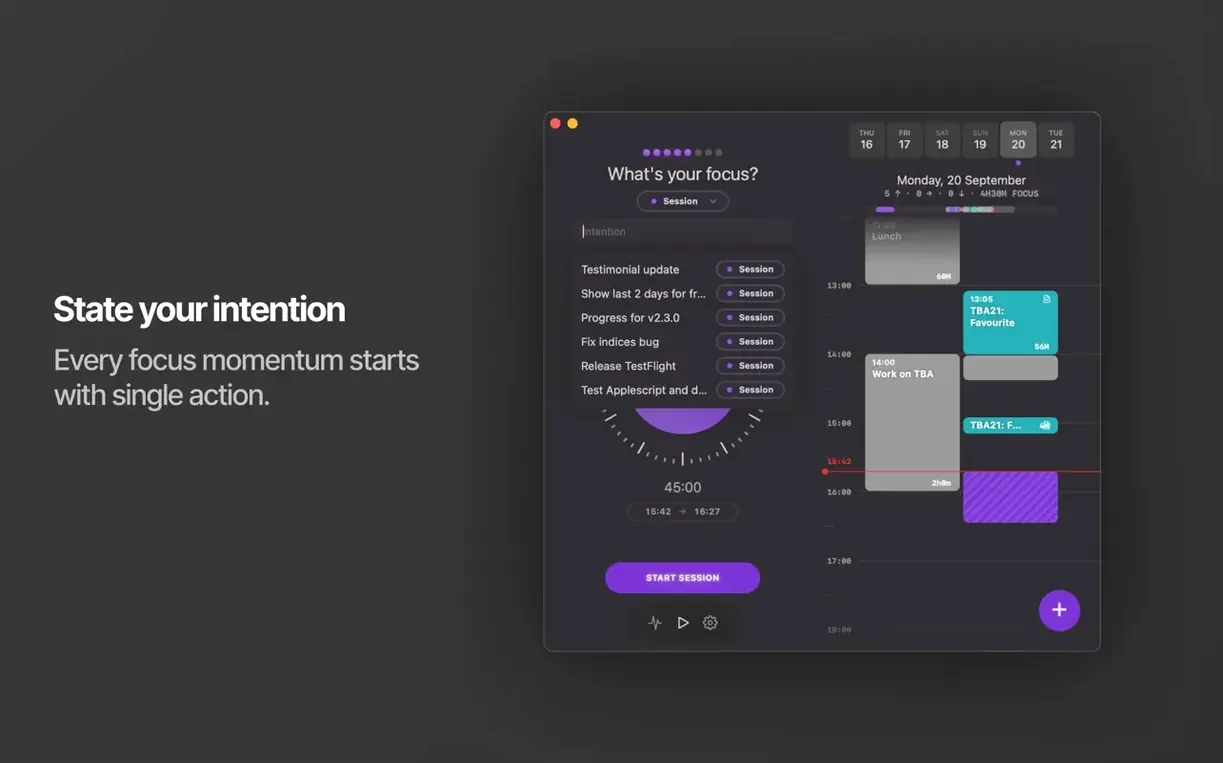
The first time you sit down with Session, launch it from Launchpad and sign in with whatever account you already use — no new password to remember. The main window settles into a modest panel showing a timer, a task name field, and a handful of toggle switches. Type in what you intend to work on, say “budget spreadsheet,” and hit start. The timer counts down from twenty-five minutes. Meanwhile, if you have ticked the right boxes in advance, your Mac quietly flips on Do Not Disturb, your designated Slack team goes mute, and the news site you swore you would stop refreshing simply refuses to load.
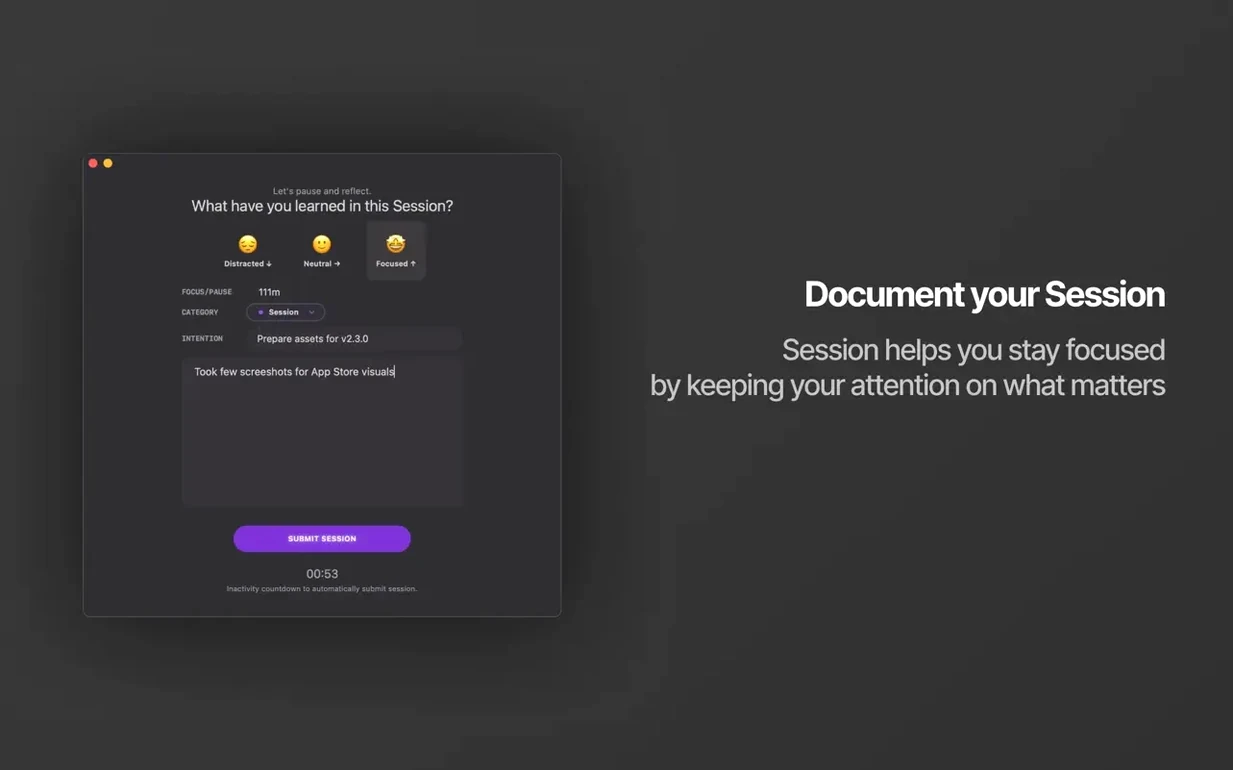
Half an hour later the chime sounds. Blocked apps and sites spring back to life, Slack unmutes, and a small notification suggests you stand up and stretch for five minutes. When you sit back down, the task field still reads “budget spreadsheet,” and the session counter ticks upward from zero again. At the end of the afternoon you open the log view and see a clean record: three sessions on the spreadsheet, two on email, a single long block on a proposal draft. Each entry shows duration, which task it belonged to, and a note about what you learned — if you bothered to type one. That is the rhythm Session wants to build: start, focus, rest, review.
Build a distraction blocklist that covers your actual vices
Tweak a few defaults early, and the app bends to fit your working day rather than the other way around. Head into preferences and look for the Blocking pane first. The built-in list of distracting websites is modest; spend sixty seconds pasting in the URLs that actually pull you away — a forum, a streaming service, a social feed you check on autopilot. The app blocking works the same way: add any application that tempts you to drift, and Session will bounce you back to the task at hand until the timer runs out.
Next, open the Automations tab. If you use Slack for work rather than as a distraction, pick the team you want silenced during focus blocks and leave the others alone. The Do Not Disturb toggle is on by default, which suits most people, but check that your critical calendar alerts will still break through the way you expect. Lastly, consider lengthening the default short break. Five minutes can feel abrupt when you are deep in thought, and stretching it to seven or eight often helps the mental reset without eating into the next session.
Why you have to make an account to start the timer
Does it really need an account just to run a timer? Yes, and that catches people off guard. The sign-in step exists because Session syncs your task logs, settings, and blocked-item lists across Mac, iPhone and iPad. The account is the bridge that keeps everything consistent, so if you use more than one device it earns its keep quickly. On a single Mac you still sign in once and then forget about it.
Will the website blocker interfere with my VPN or work tools? The blocking works at the system level by adding rules that the browser respects, and it does not route your traffic anywhere. A VPN continues to work normally, and corporate proxies should not notice a difference. The only thing that changes is whether a handful of named domains resolve during a focus session. If a site does slip through, adding its full address in the preferences fixes it immediately.
What happens if I quit the app mid-session? The timer stops, blocked apps and sites unlock straight away, Do Not Disturb switches off, and Slack unmutes. There is no lingering lockdown. You can also pause a session manually from the menu bar if you need a quick interruption without ending the block — handy when a colleague taps you on the shoulder and you do not want to restart the whole cycle.
Version 2.13.48 lands with a single, precise fix: the resize gesture on the calendar now behaves predictably, matching the smoothness of the rest of the interface.
- macOS 10.15 Catalina or later
- Apple Silicon and Intel (64-bit) Macs
- Requires an account sign-in
Questions from the class 0
Sign in or join the class to ask a question.
Nobody has asked anything yet. If you have used it on a real job, say what the file did.
Also on the Mac Apps shelf
The whole Mac Apps shelf Shadowrocket
Routes your network traffic through different proxies based on rules you set up.
Shadowrocket
Routes your network traffic through different proxies based on rules you set up.
 Sidebar
Lets you peek at every open window by hovering over an app in your Dock.
Sidebar
Lets you peek at every open window by hovering over an app in your Dock.
 Sensei
Shows you exactly what your Mac is doing right now and helps you tidy it up.
Sensei
Shows you exactly what your Mac is doing right now and helps you tidy it up.
 ScreenFlow
Captures and edits screen recordings, then turns your clicks and taps into animated callouts.
ScreenFlow
Captures and edits screen recordings, then turns your clicks and taps into animated callouts.
 Sip
Collects colours from anywhere on your screen and organises them into shareable palettes.
Sip
Collects colours from anywhere on your screen and organises them into shareable palettes.
 Screen Studio
Records your screen while automatically smoothing cursor movement and trimming silence.
Screen Studio
Records your screen while automatically smoothing cursor movement and trimming silence.
 Sketch
Designs every screen of an app or website in one vector document before a developer touches it.
Sketch
Designs every screen of an app or website in one vector document before a developer touches it.
 SketchUp Pro
Draws and extrudes 3D models as freely as you might sketch a shape on paper.
SketchUp Pro
Draws and extrudes 3D models as freely as you might sketch a shape on paper.