 ASPNetWorld

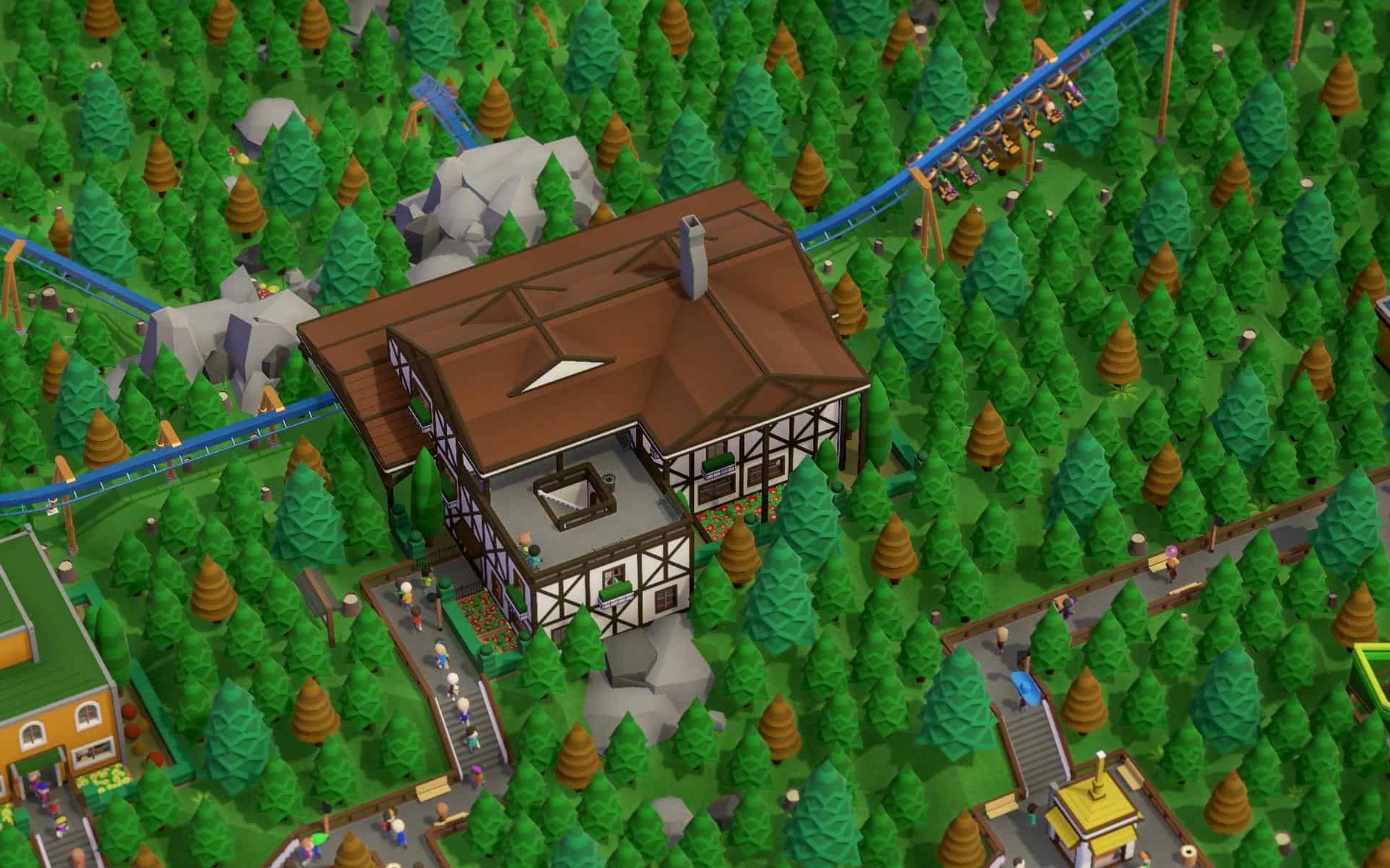
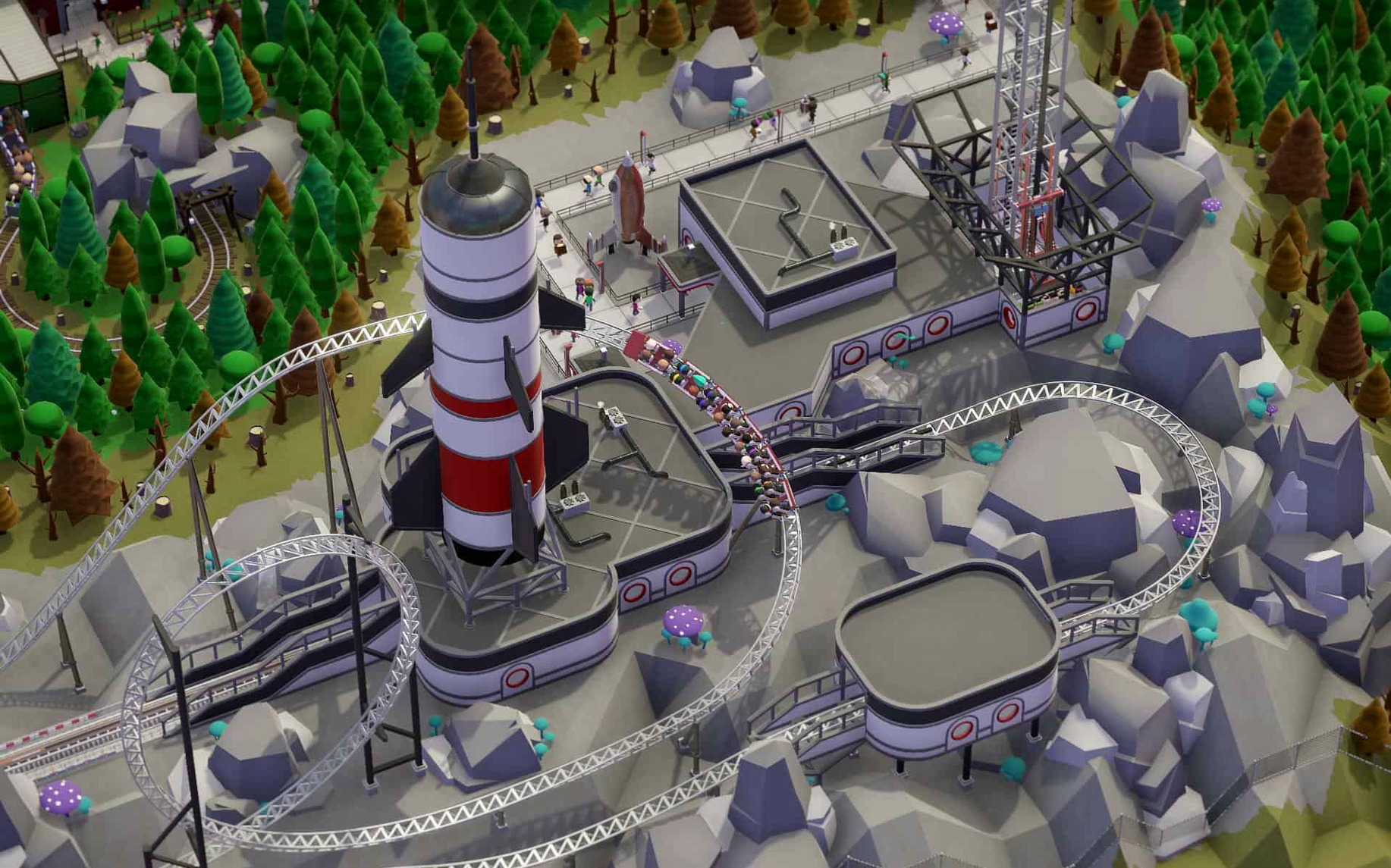
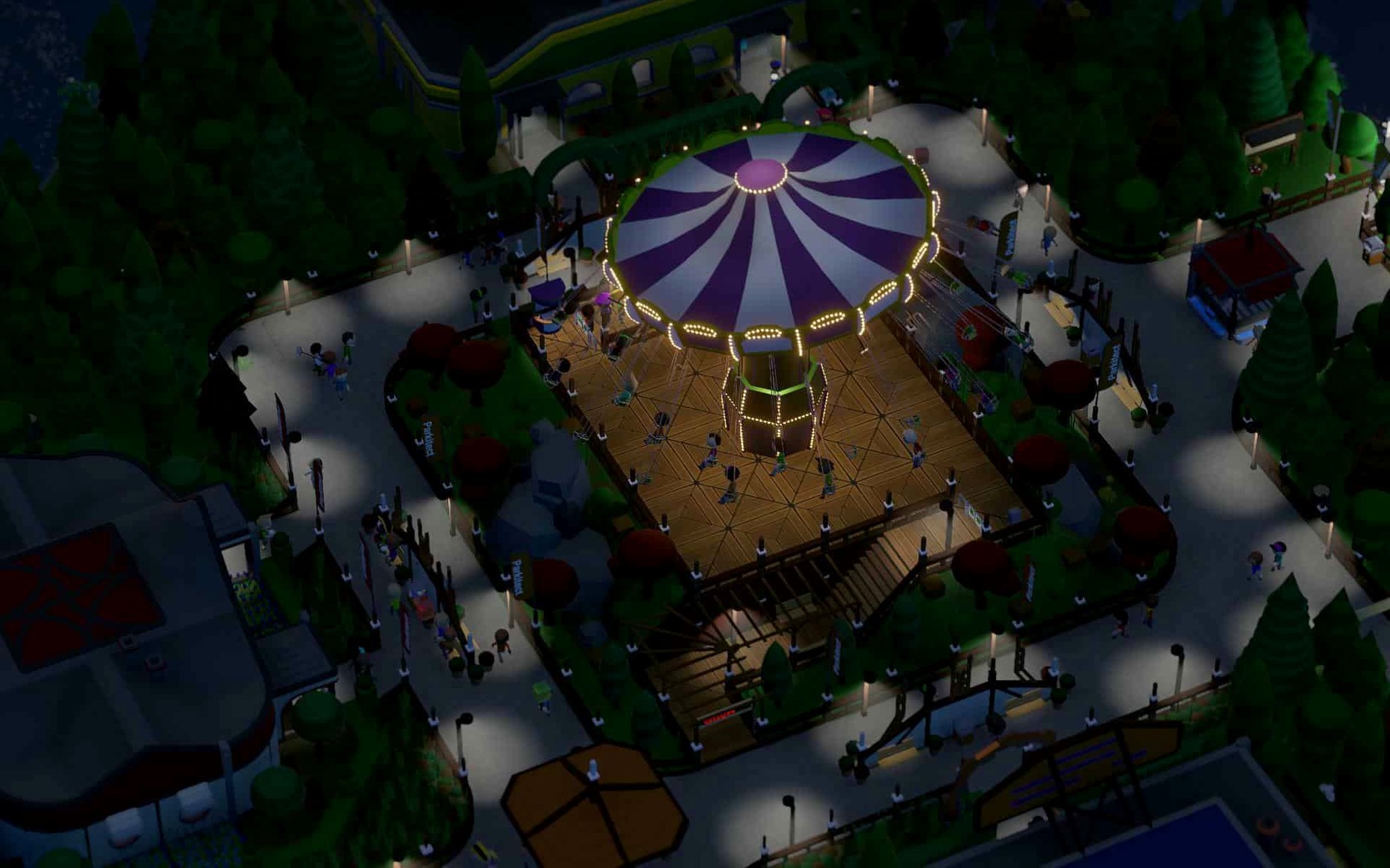
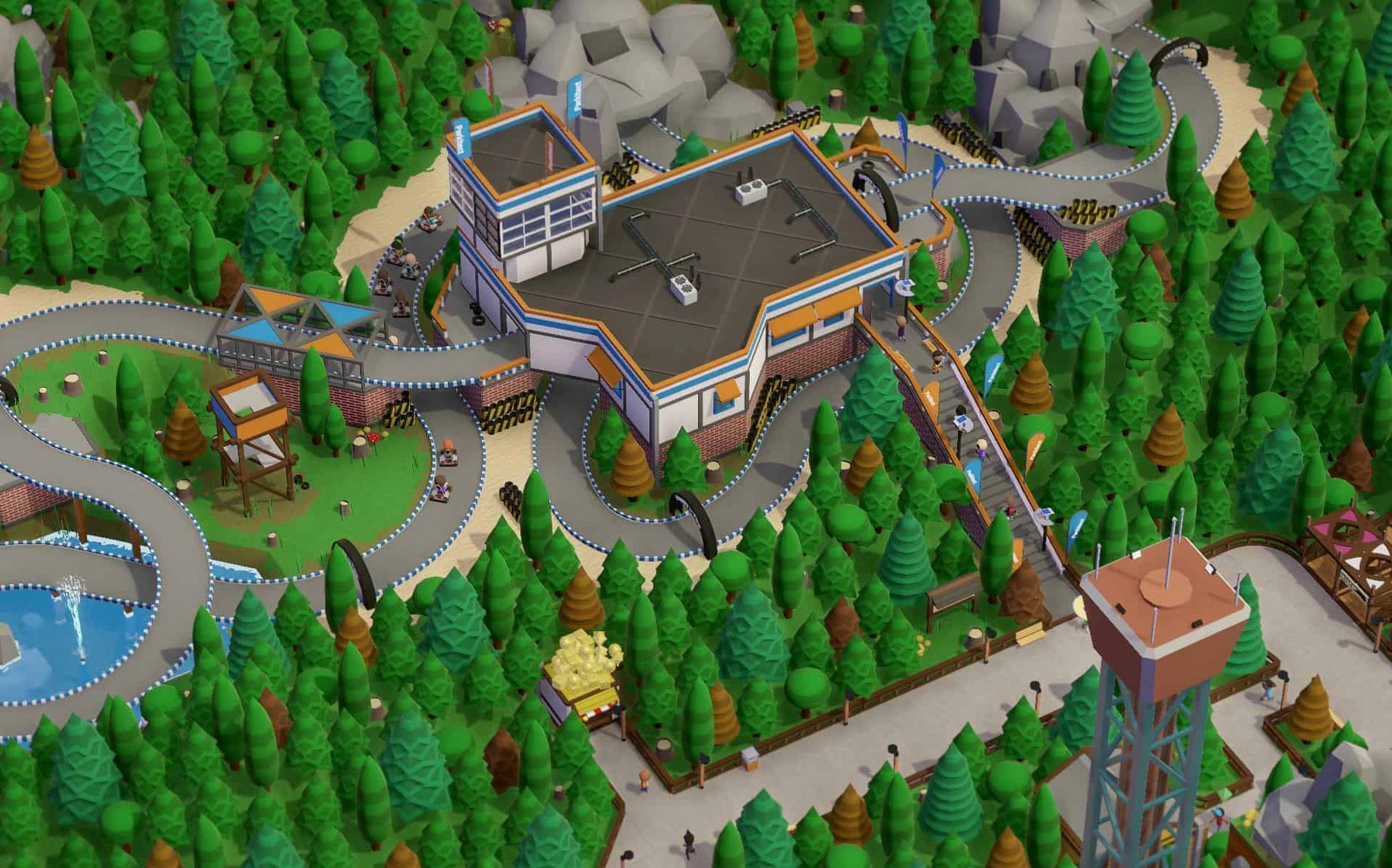
Version 1.12f3 quietly fixed the Licorice fence's paint job, a small but telling detail in a game that cares deeply about letting you make a park your own.
Parkitect — a business simulation about constructing and managing theme parks, where every coaster, concession stand and litter bin shapes your guests' experience across more than 70 attractions and a full campaign.
Native Mac build — compiled for Intel Macs, so it runs through Rosetta 2 on Apple Silicon; a 2024 Mac mini M4 handled the game smoothly in testing, though you'll want to keep an eye on object-heavy parks.
Steam Workshop integration — lets you add custom scenery, rides and full game modifications, extending the base game with a steady stream of community-built content.
A standalone app you drop into Applications — no launcher or accounts
The game runs as a DRM-free standalone build, which means no launcher, no online checks and no accounts required — just the application sitting in your Applications folder like any other Mac program. People often wonder about the X-shaped system requirements. It's an Intel binary, and on Apple Silicon Macs it uses Rosetta 2 translation. The machine tested it on — a 2024 Mac mini M4 — never broke a sweat, though that's a rather capable little box. Older Intel machines with integrated graphics will need settings dialled down once guest counts climb into the hundreds.
Another question that crops up is whether parkitect crack mac searches lead to a working game. The build here is the full, untouched application; you install it and you play. No extra steps, no terminal fiddling, no sketchy patches. The installer asks where you want it — stick with Applications as suggested and you'll be building coasters within a minute.
Can you share parks with friends who own the game on other platforms? Yes, save files work cross-platform. The game reads its own .park format regardless of operating system, so you can trade park files with Windows and Linux players without conversion. Workshop subscriptions, however, are tied to Steam, so custom content from the community won't carry over unless both players have the same Workshop items installed.
One more thing worth clearing up: the build includes the full campaign, the sandbox mode and all the terrain tools. Nothing is locked behind a separate download. The game supports English, German, Spanish, Simplified Chinese, Korean, Dutch, French and Russian, all available from the settings menu without additional language packs.
A sandbox builder's Sunday afternoon
Imagine someone who spent their teenage years with graph paper and a pencil, sketching coaster layouts during double maths. Now they're a graphic designer, and on a rainy Sunday they open Parkitect with a single goal: build a wild-mouse coaster that threads through a castle courtyard, ducks under a log flume's splash zone, and ends with a helix wrapped around a giant doughnut-shaped scenery piece someone uploaded to the Workshop last week. They aren't touching the campaign today. They open a flat sandbox map, flatten a stretch of land, and spend forty minutes just sculpting a lake with the terrain tools because the reflection of track supports in shallow water looks right. The guests won't arrive until they click "open park," but that's not the point yet. The satisfaction comes from seeing the coaster train complete its first test run without valleying, and noticing the game's little visual cues — queue railings snapping to paths, peeps glancing sideways at tall scenery items — that make the empty park feel already alive. Two hours later the castle courtyard has a pretzel stand, three overfilled bins and a sick guest on a bench, and the designer is blissfully ignoring the loan repayment notification that just popped up.
Adds a logistics layer the isometric classics never had
Parkitect shares its genre with a handful of well-known park builders, each pulling the formula in a different direction. Compared to the isometric classic RollerCoaster Tycoon 2 (which still has an active OpenRCT2 community keeping it fresh), Parkitect adds a layer of management depth that the older title only hinted at — employee-only paths, supply deliveries to shops, and the need to hide backstage areas from guest view. RCT2 gives you pure creative freedom with fewer logistical strings; Parkitect asks you to think like a park operations manager. The visual style is warmer and more readable, too, trading sprite-based sparseness for a soft 3D aesthetic that makes cramped midways easier to parse.
Planet Coaster is the obvious modern comparison, and it runs on Mac via a native port. It's the heavyweight — granular coaster builder, stunning lighting, individual guest AI that feels almost sim-like. Parkitect is more restrained. It won't let you place every rivet on a wooden support beam, but it loads faster, runs on far humbler hardware, and doesn't bury you in creative options before you've learned how to keep a park solvent. Where Planet Coaster can feel like a 3D modelling tool wedded to a game, Parkitect feels like a game that happens to have a capable builder. For players who want a tight management loop and a campaign that teaches you its systems level by level, the lighter footprint matters.
Parkasaurus (dinosaur parks, similar low-poly charm) and Two Point Hospital (same management DNA, different setting) round out the comparison. Parkasaurus leans more whimsical and less simulation-heavy; Two Point Hospital isn't a park builder at all but scratches the same spreadsheet-meets-spectacle itch. Neither offers coaster design. For pure theme-park construction with a business layer that genuinely affects how you lay out paths and place scenery, Parkitect sits in a sweet spot that no other Mac-native title quite occupies.
Stays silky until your park passes a thousand guests
On a modern Mac, Parkitect launches in under ten seconds and settles into a steady frame rate during normal play. Parks with fewer than a thousand guests stay silky even on integrated graphics from the last few years. The real test is object count: a park stuffed with custom Workshop scenery, dozens of flat rides and three coasters with intricate support structures will eventually make the camera stutter when you whip across the map. The game doesn't crash when it gets busy — it just slows down, and lowering the draw distance or trimming scenery detail in the settings usually recovers the smoothness. Memory usage is modest; it rarely pushes beyond a couple of gigabytes, so background apps aren't forced out.
Stability in day-to-day use is one of the build's strengths. The campaign autosaves at sensible intervals, and the application hasn't been known to corrupt park files after interrupted saves. The DRM-free nature helps here — no background service phoning home, no launcher hogging resources at idle. You can play offline, on a train, wherever. The only quirk worth noting is that mods downloaded outside the Workshop occasionally cause the game to take longer to initialise its asset list on startup, but once loaded they run as reliably as built-in content. For a simulation that tracks thousands of individual guest decisions simultaneously, the engine keeps its composure remarkably well.
Version 1.12f3 is a focused patch that restores the Licorice fence's recolouring option, which had stopped working in a previous build.
- Architecture: Intel (runs via Rosetta 2 on Apple Silicon)
Questions from the class 0
Sign in or join the class to ask a question.
Nobody has asked anything yet. If you have used it on a real job, say what the file did.
Also on the Games shelf
The whole Games shelf Palworld
Sets you loose in an open world to build, fight and ranch bizarre creatures alongside friends.
Palworld
Sets you loose in an open world to build, fight and ranch bizarre creatures alongside friends.
 Pathfinder: Kingmaker
Translates the tabletop ruleset into a party-based RPG where you pause mid-battle to plan every action.
Pathfinder: Kingmaker
Translates the tabletop ruleset into a party-based RPG where you pause mid-battle to plan every action.
 Oxygen Not Included
Models the thermodynamics, plumbing and morale of an asteroid colony that digs too deep.
Oxygen Not Included
Models the thermodynamics, plumbing and morale of an asteroid colony that digs too deep.
 Old World
Mixes turn-based empire management with unfolding family dramas and a dynastic line you must protect.
Old World
Mixes turn-based empire management with unfolding family dramas and a dynastic line you must protect.
 Oceanhorn 3: Legend of the Shadow Sea
Sets you loose across a flooded fantasy kingdom to sail, dive, and battle colossal mechanical Titans.
Oceanhorn 3: Legend of the Shadow Sea
Sets you loose across a flooded fantasy kingdom to sail, dive, and battle colossal mechanical Titans.
 Plague Inc: Evolved
Evolves a pathogen and watches it spread across a realistically modelled world map.
Plague Inc: Evolved
Evolves a pathogen and watches it spread across a realistically modelled world map.
 Nova Roma
Guides a fledgling settlement as you build aqueducts, manage trade, and appease the Roman gods.
Nova Roma
Guides a fledgling settlement as you build aqueducts, manage trade, and appease the Roman gods.
 No Man’s Sky
Explores an endless galaxy, landing on planets without a loading screen.
No Man’s Sky
Explores an endless galaxy, landing on planets without a loading screen.