 ASPNetWorld

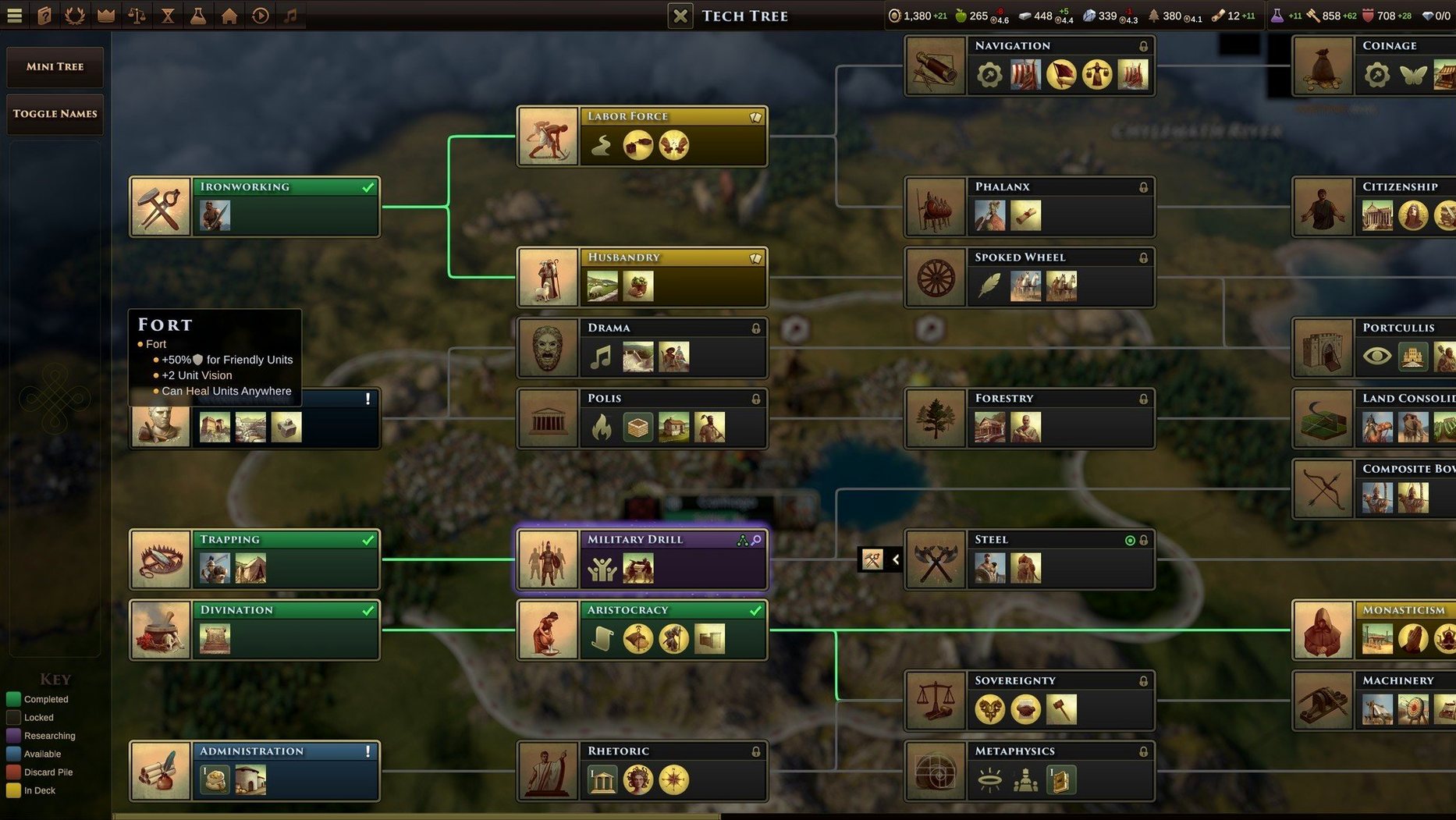
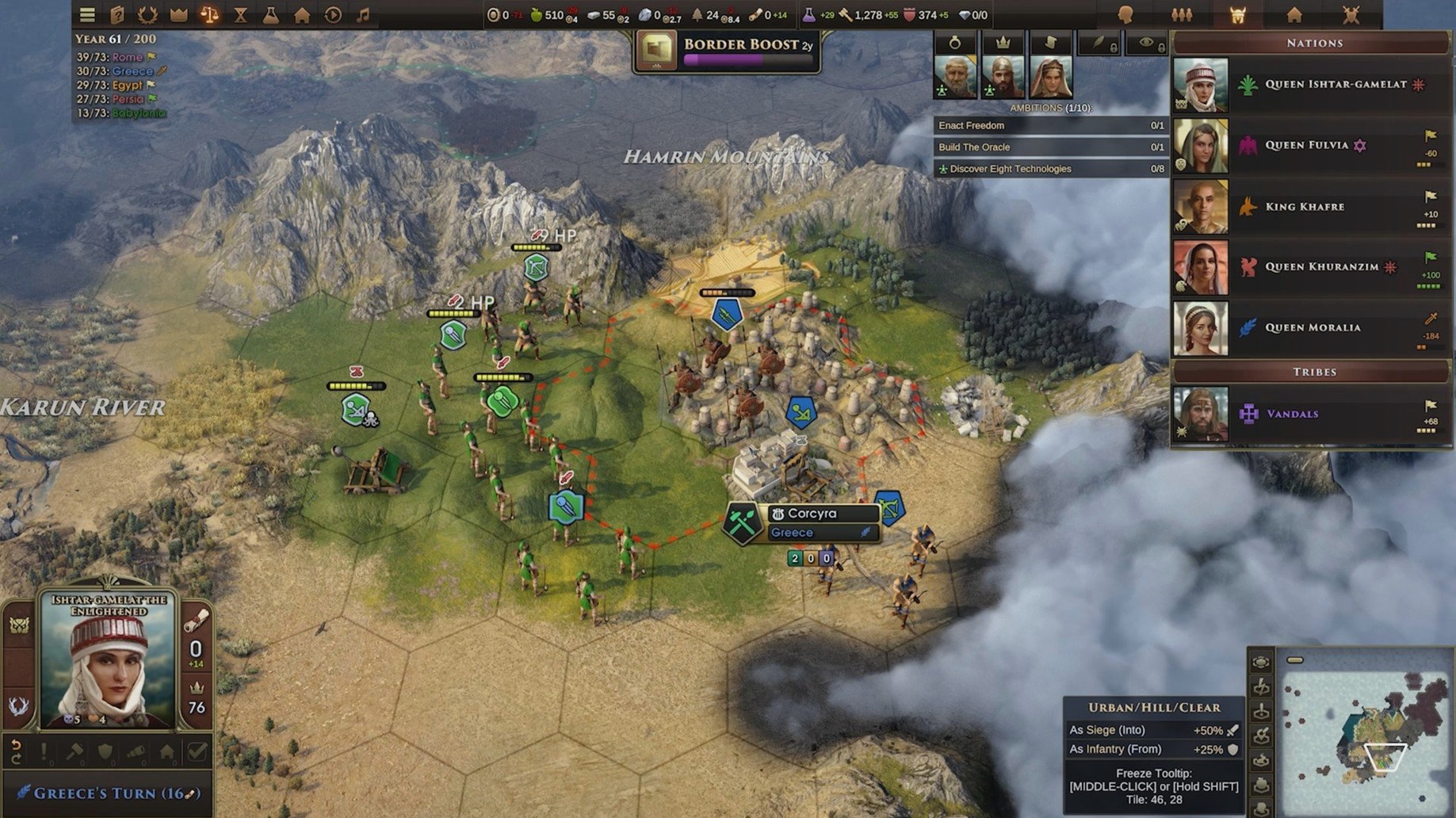
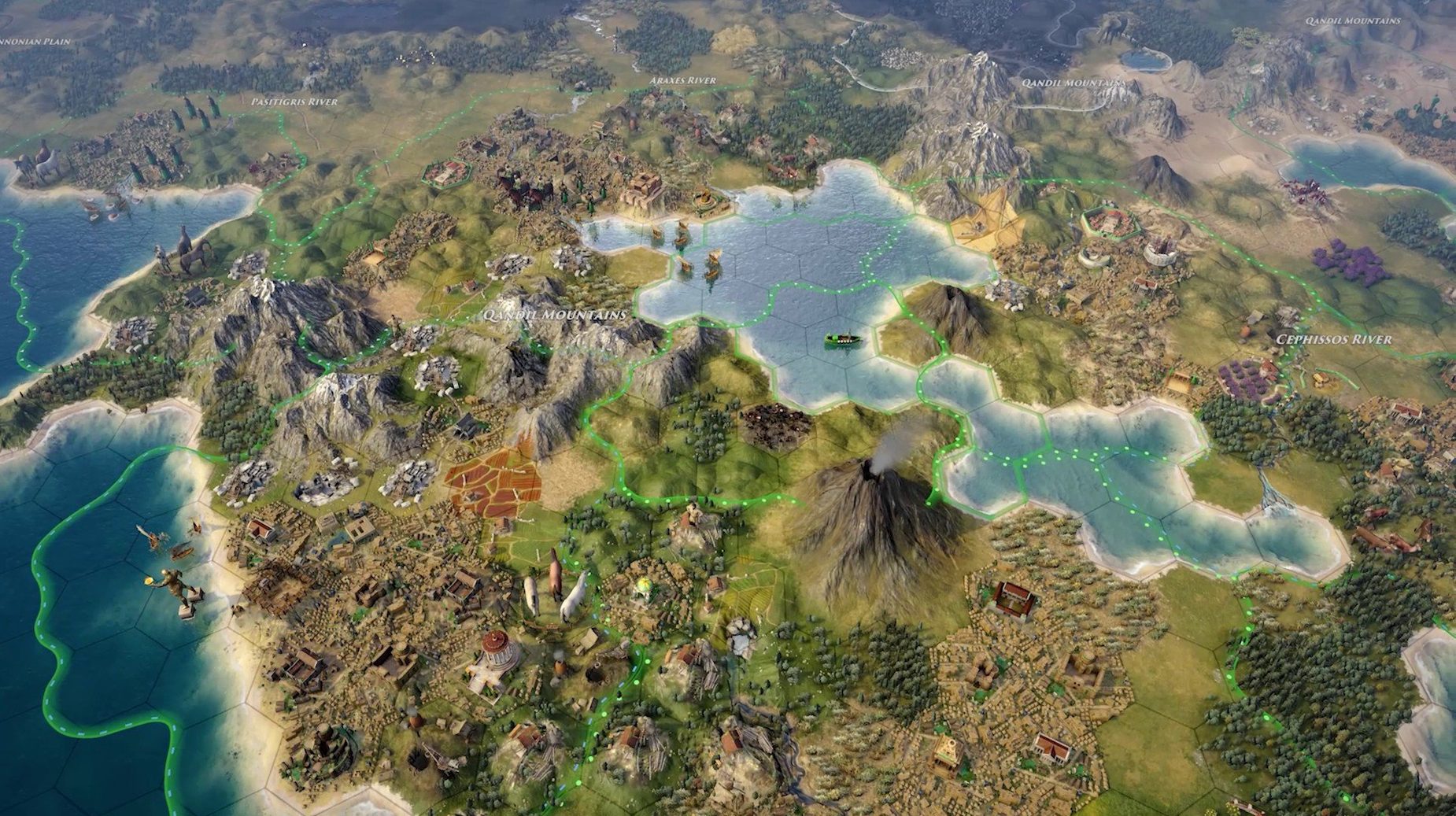
Version 84658 tightens the tactical board in a few welcome ways. Polybolos now hit harder with a +50% attack boost, Forts can no longer huddle next to each other, and the AI spends less time churning out Militia and obsolete units — all nudges that make ancient warfare feel a little sharper. Mac crash debugging has also been folded in, so the turns should roll on more smoothly.
Four squabbling families per kingdom, shaped by your ruler’s traits
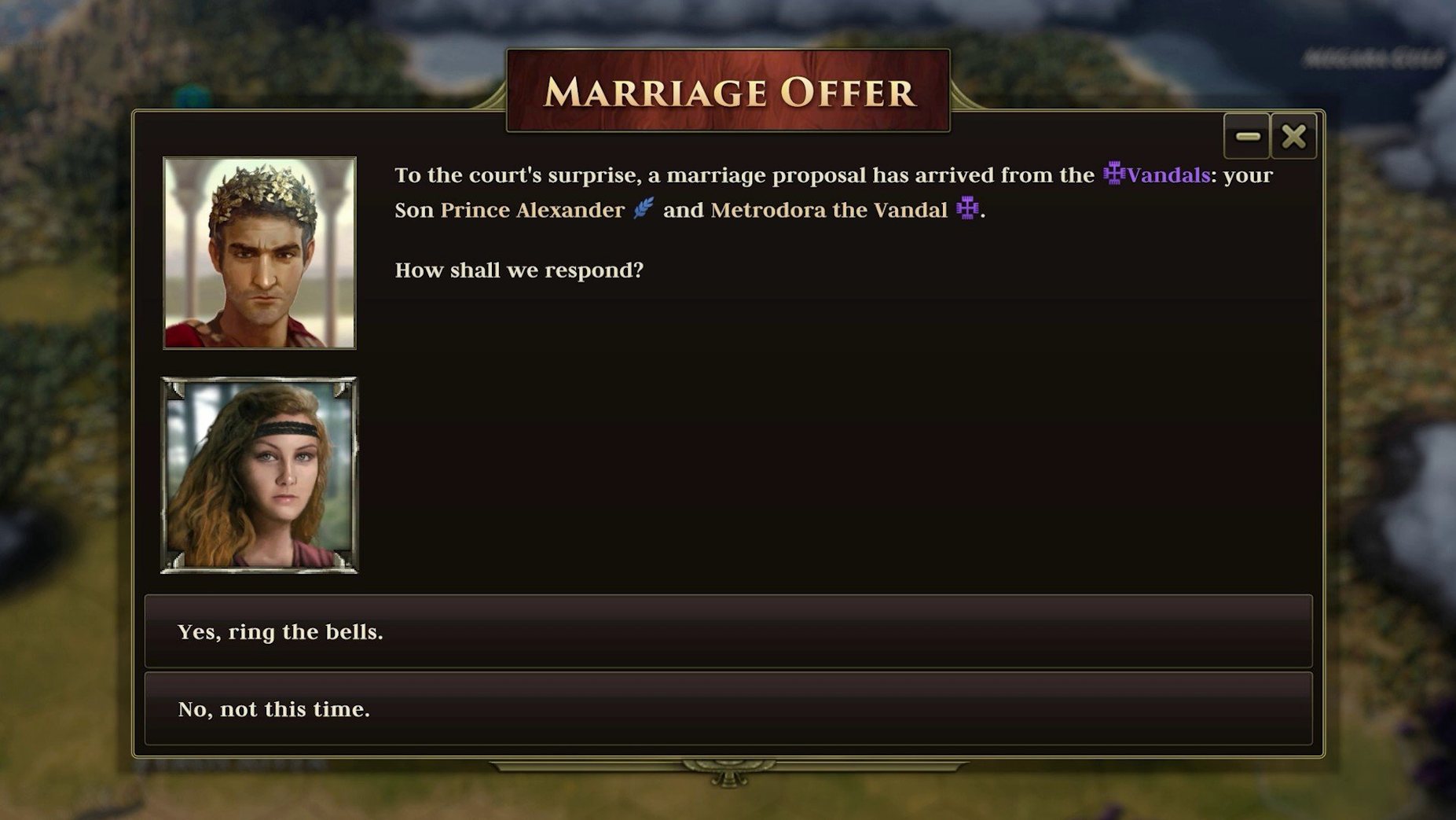
- Armchair historians who like their stories messy. Each of the seven kingdoms contains four noble families with their own ambitions, grudges, and events that fire based on your ruler's traits. Classic antiquity isn't just a backdrop here — it's a web of personalities you have to manage.
- Players who enjoy limited-action board games. The Orders system turns every unit move and action into a shared resource pool. You have a finite number of orders per turn, so every decision carries weight. It rewards planning over endless unit shuffling.
- Modding tinkerers and multiplayer strategists. Full mod support means you can reshape the rules, while hotseat, asynchronous play, and cloud play give you three distinct ways to test your empire against friends.
Character drama over sandbox expansion, so peaceful utopias feel claustrophobic
- It is not a sandbox painter. The focus is on characters and dynasties rather than sprawling, blank-canvas expansion. If you want to build a peaceful utopia without family drama, this might feel claustrophobic.
- Orders constrain your rhythm. The resource cap on movement and actions means you cannot react to everything in one turn. The pace suits deliberate play; it can frustrate if you prefer sweeping, simultaneous offensives.
Heirs drying up and other systems the forums misread as bugs
A handful of pain points crop up often enough in the forums to deserve a quiet walkthrough. They rarely point to a bug — more often they are a misunderstanding of one of the game's less flexible systems.
Heirs dry up and the game over screen arrives without warning. This is almost always a marriage micro-management issue. Each noble family needs a steady trickle of weddings, and the interface won't scream at you until the pool of eligible characters is dangerously shallow. The fix is simple but unglamorous: every few turns, open the Families panel and scan for unmarried nobles in their late teens or early twenties. Arrange a match before they drift into their thirties, because fertility drops noticeably after that. If you have already lost your ruling line, check whether a distant cousin still lives in one of the kingdom's cadet branches — the game sometimes tucks a viable heir in a family you have been ignoring.
Orders evaporate faster than expected. New players tend to treat orders like a movement allowance and forget that construction, diplomacy, and even certain event responses sip from the same pool. The habit to build is to end each turn by assigning idle workers to a project, but if you have queued five building orders and then try to march three legions across a mountain range, the game will simply stop you halfway through. A practical rhythm is to allocate orders in blocks: military on even-numbered turns, infrastructure on odd-numbered turns, with a floating reserve of two or three orders for emergencies. The undo button in the corner of the order bar is genuinely useful here — it lets you claw back a misclick without burning a save reload.
Multiplayer desyncs in asynchronous play. When a cloud save pauses mid-turn and the other player sees a different game state, the culprit is almost always a mod mismatch. Both machines need identical mod lists in identical load order, including any tiny compatibility patches. Before starting a long campaign, share a screenshot of your mod folders; it saves tears twenty hours later.
Right-click a portrait to pin a character you keep checking on
Mohawk Games tucked a few quality-of-life features into corners where tutorials rarely linger. They do not change the strategy, but they save a surprising amount of friction once they become muscle memory.
- Right-click a character portrait to pin their family tree to the sidebar. The tree stays open while you cycle through other panels, which makes arranging cross-family marriages a lot less like juggling paperwork.
- Shift-click the end-turn button to skip the idle-unit warning. If you have deliberately parked a scout on a mountain pass for visibility, the game will otherwise nag you every single turn. Shift-click tells it you know what you are doing.
- Hover over the Orders counter to see a tooltip breakdown. The tooltip separates spending by category — movement, construction, diplomacy — so you can spot which activity is chewing through your allowance without doing mental arithmetic.
- Double-tap the spacebar during event pop-ups to select the default option. Most events have a sensible middle-ground choice that the game highlights; a quick double-tap selects it and closes the window. It is a tiny thing, but across a campaign with over three thousand possible events, it adds up.
One hidden gem for mod users: the game reads loose XML files placed in the Mods folder even without a formal mod structure. If you want to tweak a single value — say, the Polybolos attack bonus beyond the recent +50% bump — you can copy the relevant file, rename it, and edit the number in a text editor. The game will treat it as a local override. It is a forgiving way to experiment before committing to a full mod package.
How the latest versions shifted everyday play
The Polybolos change sounds like a minor stat adjustment, but in practice it recasts siege defence. Before version 84658, a Polybolos behind city walls was a nuisance; now it is a genuine deterrent that forces the attacker to commit siege engineers early. Forts losing the ability to sit side-by-side breaks the old habit of building a contiguous wall of fortifications along a river. You now need to space them out with regular troops or terrain, which makes chokepoints feel more organic and less like a spreadsheet of overlapping defence bonuses.
The AI's reluctance to build Militia and obsolete units is the kind of quiet tuning that changes the mid-game without much fanfare. Earlier versions let the AI spam cheap, outdated stacks that bogged down turns with pointless skirmishes. Now the map fills with sturdier, more threatening compositions, which means a defensive posture that worked at launch may crumble under the current build. Players coming back after a break often misjudge what a neighbouring kingdom can field by turn sixty — expect more heavy infantry and fewer sling-waving conscripts.
The Mac crash debugging mentioned in the notes is not flashy, but it has made a tangible difference to campaign-length stability. On Apple Silicon machines, the game used to develop a slow memory creep after about ninety minutes of continuous play, eventually tripping a crash during autosave. That pattern has largely disappeared in the current build. You can now leave a session running across a lunch break without the quiet dread of a lost turn.
The latest update sharpens combat and reins in the AI's recruitment habits. Polybolos gain +50% attack power, Forts can no longer be placed next to one another, and the AI builds fewer Militia, Conscripts, and outdated unit types. Mac crash debugging has also been added to improve stability.
- Architecture: supports both Apple Silicon (ARM) and Intel (x86 64-bit) Macs
Questions I keep hearing
Who created Old World?
It was designed by Soren Johnson, who previously served as the lead designer on Civilization IV, and developed by Mohawk Games.
What languages does the interface support?
You can play in Russian, English, German, Spanish, Traditional Chinese, Simplified Chinese, French, or Japanese.
Does it offer any multiplayer modes?
Yes, the game includes hotseat, asynchronous play, and cloud multiplayer, so you can tackle antiquity with friends in several different ways.
Questions from the class 0
Sign in or join the class to ask a question.
Nobody has asked anything yet. If you have used it on a real job, say what the file did.
Also on the Games shelf
The whole Games shelf Oceanhorn 3: Legend of the Shadow Sea
Sets you loose across a flooded fantasy kingdom to sail, dive, and battle colossal mechanical Titans.
Oceanhorn 3: Legend of the Shadow Sea
Sets you loose across a flooded fantasy kingdom to sail, dive, and battle colossal mechanical Titans.
 Nova Roma
Guides a fledgling settlement as you build aqueducts, manage trade, and appease the Roman gods.
Nova Roma
Guides a fledgling settlement as you build aqueducts, manage trade, and appease the Roman gods.
 Oxygen Not Included
Models the thermodynamics, plumbing and morale of an asteroid colony that digs too deep.
Oxygen Not Included
Models the thermodynamics, plumbing and morale of an asteroid colony that digs too deep.
 No Man’s Sky
Explores an endless galaxy, landing on planets without a loading screen.
No Man’s Sky
Explores an endless galaxy, landing on planets without a loading screen.
 No, I'm Not a Human
Forces you to decide which desperate strangers to let into your shelter during an apocalypse.
No, I'm Not a Human
Forces you to decide which desperate strangers to let into your shelter during an apocalypse.
 Palworld
Sets you loose in an open world to build, fight and ranch bizarre creatures alongside friends.
Palworld
Sets you loose in an open world to build, fight and ranch bizarre creatures alongside friends.
 Parkitect
Simulates every nut and bolt of running a theme park, right down to the litter bins.
Parkitect
Simulates every nut and bolt of running a theme park, right down to the litter bins.
 Pathfinder: Kingmaker
Translates the tabletop ruleset into a party-based RPG where you pause mid-battle to plan every action.
Pathfinder: Kingmaker
Translates the tabletop ruleset into a party-based RPG where you pause mid-battle to plan every action.