 ASPNetWorld

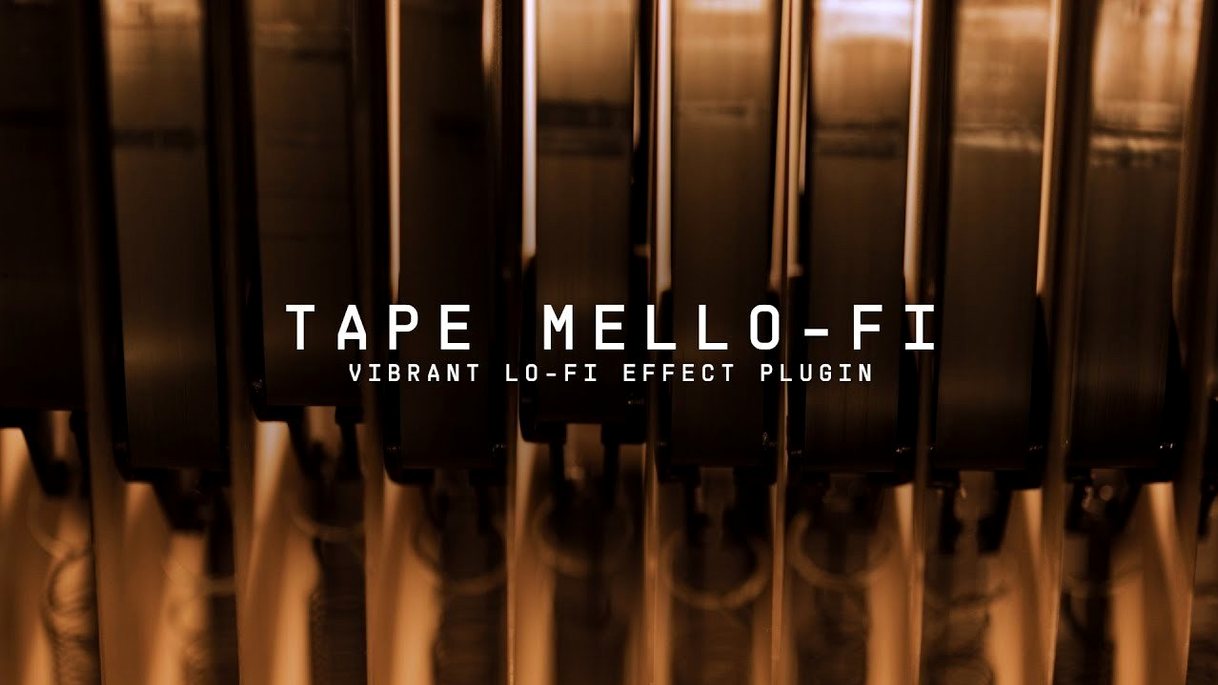
Drop it onto a clean digital synth line, and straight away the top end softens and the pitch drifts gently, as if the part had been printed to a well-loved quarter-inch machine thirty years ago.
Wow — slow, cyclical pitch wobble caused by uneven tape transport. The control here lets you dial in anything from a barely-there warble to the seasick lurch of a failing capstan motor.
Flutter — faster, more jittery pitch variation, the fingerprint of a pinch roller that has seen better days. Mixed with a little wow, it gives static pads a handheld, human fragility.
Saturation — the soft clipping that happens when magnetic tape is pushed past its ideal operating level. It rounds off transient spikes and adds low-order harmonics, thickening a bassline or gluing a drum bus without harshness.
Noise — the cumulative hiss and mechanical rumble of the tape path. Blend in just enough to give a silent passage some physical presence, or push it up for a fog of lo-fi atmosphere.
The plugin is an effect, not a virtual instrument, though its character is derived from Arturia’s Mellotron V. Because the controls are few and clearly labelled, the sound of distressed tape is never more than a couple of moves away.
I usually start a session by placing Tape MELLO-FI on a return track rather than an insert, so I can feed several sources into the same deteriorating tape path and have them feel like they exist in the same physical room — or the same dusty archive. Last week I had a clean, slightly sterile fingerpicked acoustic guitar that needed to sit behind a vocal without fighting for attention. I routed it to a send, pulled the Wow up to about ten o’clock, nudged Flutter to just past nine, and brought the Saturation knob up until the transient of each pluck felt rounded rather than plucked. Then I cracked the Noise control open a sliver, just enough that the quiet tail at the end of each phrase had something breathing underneath it. The whole process took maybe ninety seconds, and the guitar settled into the mix like it had been there all along.
From there, a typical chain might look like this: a gentle high-cut EQ before the plugin to stop the saturation from grabbing too much fret squeak, then a subtle room reverb after it so the added hiss doesn’t sit in dead air. If I’m working with a drum bus, I’ll often automate the Wow depth to increase during a breakdown and snap back to near-flat for the chorus — it’s a small move that makes the verse feel momentarily unglued, and the return to stability hits harder than any compressor could manage on its own.
What surprises people is how light the plugin is on resources. On an Apple Silicon machine I can run twenty-plus instances in a moderately heavy session without the CPU meter twitching above a few percent. That isn’t hyperbolic — the processing model is deliberately lean, which means you can afford to use it on individual channels rather than rationing it to a single bus. Intel machines handle it nearly as well, though the usual fan curves kick in a little sooner when the track count climbs above forty. Memory use is negligible. I’ve yet to see it cause a dropout or a sudden spike during playback, even when whipping the controls around with automation written across half a dozen lanes.
Stability has been consistently uneventful, which is what you want from a plugin that deals in chaos. It survives Logic’s most aggressive track-freezing workflows and has never once caused a validation hiccup in Ableton Live — the AU and VST3 versions both load first time, every time. I’ve thrown tempo changes, odd time signatures and rapid bypass toggling at it without provoking so much as a click. That quiet reliability makes it one of those rare tools you stop thinking about technically and just reach for musically.
A handful of small conveniences are easy to overlook. Double-clicking any knob returns it to its default value, which saves you from squinting at parameter readouts when you want to reset the noise floor in a hurry. The output gain compensates automatically for the perceived level drop that comes with heavy saturation, so you aren’t constantly chasing your meters. If you hold Shift while dragging the Wow depth, the increments snap to finer resolutions — useful when you’re trying to find the exact speed where a pad starts to feel seasick but hasn’t yet lost its pitch centre.
Another detail: the noise circuit isn’t just a blanket hiss layered on top. It responds to the input signal’s envelope, swelling subtly during louder passages and receding when the source goes quiet, which feels more like genuine tape print-through than an effects pedal. I’ve also noticed that the saturation stage introduces a gentle high-frequency roll-off even at lower settings, so you can use it as a rudimentary tone-shaping tool without touching the Wow or Flutter at all — useful for taming brittle cymbal spill on a snare close mic or smoothing out an over-bright vocal de-esser.
Version 1.4.1.6566 is the current build listed on Arturia’s resources page, confirming compatibility with macOS 11.0 and later.
- macOS 11.0 or later
- Apple Silicon or Intel processor
- English interface
Questions I keep hearing
Does Tape MELLO-FI work on its own, or do I need another Arturia product?
It works as an effect in any compatible DAW. The tape character comes from Mellotron V technology, but you don't need that instrument to use the plugin.
Questions from the class 0
Sign in or join the class to ask a question.
Nobody has asked anything yet. If you have used it on a real job, say what the file did.
Also on the VST Plugins shelf
The whole VST Plugins shelf Arturia Pigments
Rewards sound designers with a deep, semi-modular engine for building patches from scratch.
Arturia Pigments
Rewards sound designers with a deep, semi-modular engine for building patches from scratch.
 Arturia Mellotron V
Summons the breathing, unstable tape textures of the original Mellotron without the maintenance.
Arturia Mellotron V
Summons the breathing, unstable tape textures of the original Mellotron without the maintenance.
 Arturia FX Collection
Bundles over thirty precise modelled processors, from studio classics to creative oddities.
Arturia FX Collection
Bundles over thirty precise modelled processors, from studio classics to creative oddities.
 Arturia Emulator II V
Recreates the crunchy, grainy character of an early 8-bit sampling keyboard.
Arturia Emulator II V
Recreates the crunchy, grainy character of an early 8-bit sampling keyboard.
 Arturia Efx AMBIENT
Generates evolving, three-dimensional backgrounds from any static input signal.
Arturia Efx AMBIENT
Generates evolving, three-dimensional backgrounds from any static input signal.
 Arturia Analog Lab V
Gives you thousands of production-ready presets you can shape with simple macro controls.
Arturia Analog Lab V
Gives you thousands of production-ready presets you can shape with simple macro controls.
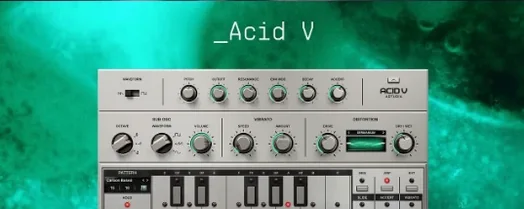 Arturia Acid V
Builds squelchy, sequenced basslines from a single init patch and a handful of knob turns.
Arturia Acid V
Builds squelchy, sequenced basslines from a single init patch and a handful of knob turns.
 Ample Sound Ample Guitar LP III
Recreates the sound of a classic electric guitar with built-in amps and effects.
Ample Sound Ample Guitar LP III
Recreates the sound of a classic electric guitar with built-in amps and effects.