 ASPNetWorld
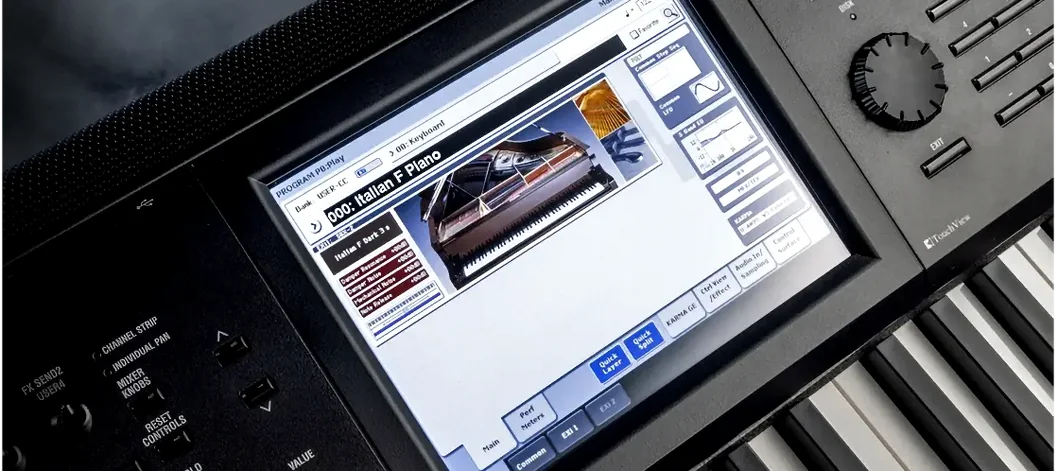
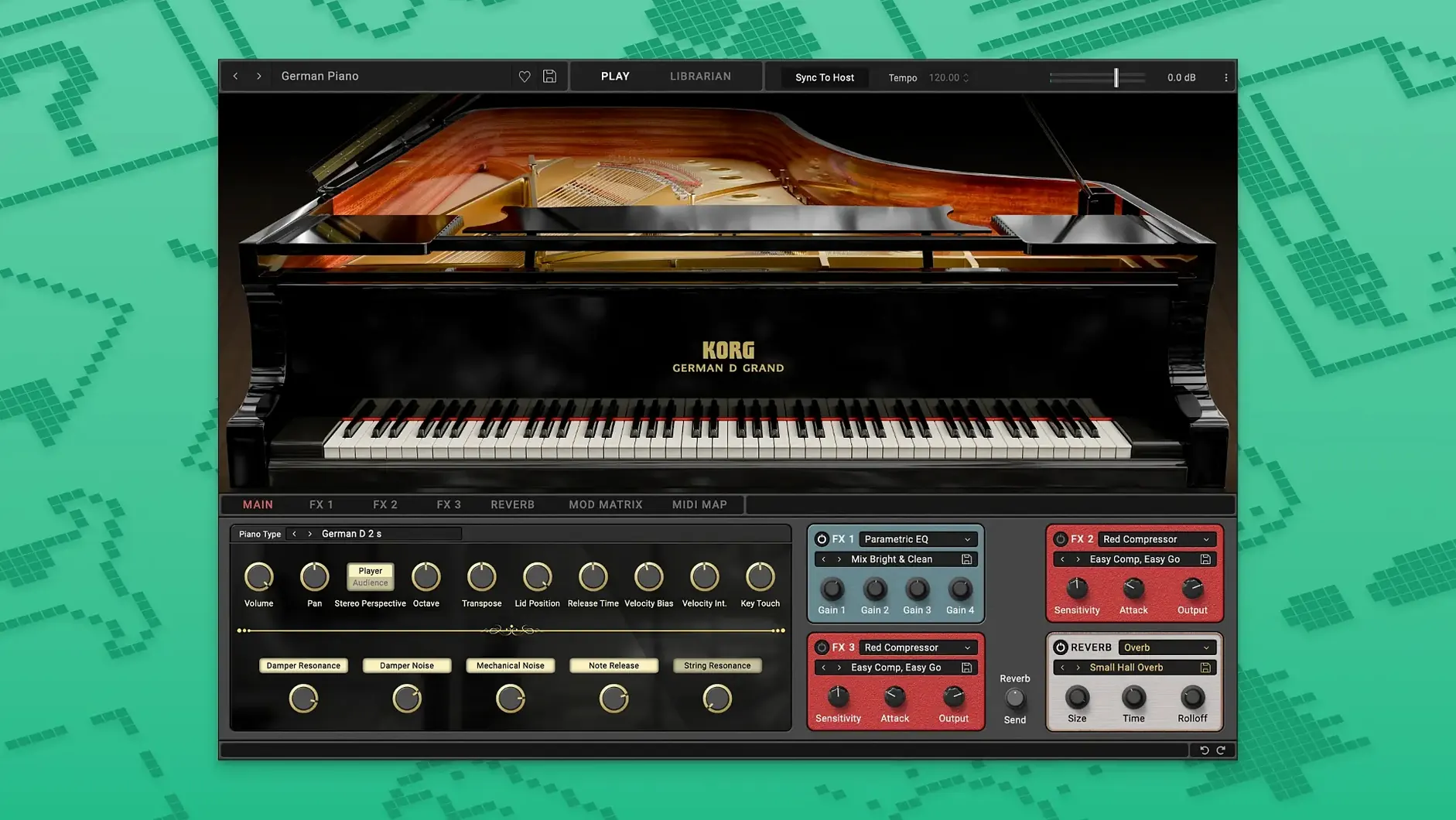
The 2026 update to the KORG Collection feels less like a version bump and more like a studio expansion. It brings in TRINITY, PS-3300, SGX-2, and Filter Ark — a wave of new textures that push the suite well beyond its classic analogue remit into detailed PCM, semi-modular weirdness and dedicated filtering. If your template has been looking for a fresh injection of tone, this is where those new colours slot in.
Natural decays make melodic lines breathe
Instrument tracks that need to speak. The natural note decay and soft pedaling behaviour in the piano engines make melodic lines breathe. You get the kind of expressive drop-off that normally only comes from carefully mic'd hardware, so lead lines and chord beds feel connected rather than static.
Buses that shape character. Filter Ark is the wildcard here. Placed on a drum bus or a synth subgroup, its sculpting goes well beyond a simple low-pass sweep. It adds a layer of hardware-style movement that glues disparate elements together without fighting the source material.
Reverb and response tweaking. The per-instrument controls for brightness, softness, reverb and keyboard response aren't just afterthoughts. They let you voice an instrument to the space it needs to occupy — darken a pad so it sits behind a vocal, or tighten the response for a percussive pluck part.
Detailed models expect a considered approach, not a rompler mindset
This is a suite of detailed models, not a lightweight rompler. Each instrument recreates the sound and behaviour of specific KORG synthesizers, so it expects a considered approach. If you drop a PS-3300 instance onto every track, your CPU will notice.
Native Apple Silicon support means you stay in one architecture
The plug-ins speak AU, VST and AAX — Logic Pro, Ableton Live, Cubase and Pro Tools all recognise them the moment you scan. Because the suite supports both Intel and Apple Silicon natively, you can stay inside a single architecture without Rosetta, which matters when a session already carries a dozen instrument tracks and a chain of convolution reverbs. The individual instruments also appear as separate components, so you can pick just the MS-20 for a bass line without loading the full catalogue into memory.
On the macOS side, Audio Unit hosting is tight. MIDI 2.0 isn't yet something KORG have baked into every engine, but the keyboard response per instrument means velocity curves already feel tailored, especially when you pair the suite with a controller that sends high-resolution velocity. If you use MainStage, the SGX-2 piano becomes a stage-ready grand that sits alongside the stock sampled pianos without flattening the front-of-house mix — the brightness and softness sliders become quick sound-check allies.
Integration with the Finder and file system is old-fashioned but reliable. Presets save as standard .aupreset or plug-in format files, so they follow your normal backup routines. There is no cloud-authorisation daemon running in the background, just a one-time activation that lives on your machine, which keeps launch times predictable and your menu bar uncluttered.
Build a template with one inactive instance of each instrument
After installation, you will find activation instructions in the package. Once that step is done, the real settling-in begins. Start by creating a template that loads just one instance of each new instrument on inactive tracks. This gives you a palette you can audition with a single mouse click, bypassing the browser until you know which flavours live where.
Spend twenty minutes with the keyboard response controls on the SGX-2. The default curve is sensibly weighted for an all-rounder, but if your controller has a lighter action — common on semi-weighted boards — dialling the response one notch firmer stops medium-velocity notes jumping out. Save that tweaked setting as a user preset named after your controller, and every future session starts from a place you already trust.
Filter Ark deserves a dedicated exploration session. Insert it on a drum loop and work through the modes while watching a spectrum analyser. The shapes it carves are more aggressive than a typical channel EQ, and knowing where the resonant peaks sit by eye will save you from chasing rogue frequencies later. Bookmark two or three settings as starting points for drum bus, synth group and vocal parallel chain.
A soundtrack cue in three stages
Imagine you need a two-minute cue that moves from a sparse piano figure into a warm, analogue swell. Open Logic Pro and set your tempo to 72 bpm. Create three instrument tracks.
Load the SGX-2 on track one and bring the brightness down to around 10 o'clock while nudging the reverb level to 30% wet. Play the core melodic phrase softly, letting the natural note decay carry the tail of each phrase. The soft pedaling behaviour means half-pedal flutters translate into genuine dampening shifts, so ride the sustain pedal rather than holding it flat — the resulting blur feels organic, not synthetic.
On track two, pick the PS-3300. Initialise a patch and build a slow-attack pad by extending the envelope generator's attack time to around 1.2 seconds. Route its output to a bus with Filter Ark inserted, and set Filter Ark to a band-pass mode with moderate resonance. Automate the filter cutoff to open slowly across eight bars, so the pad rises like a curtain behind the piano. The semi-modular architecture of the PS-3300 lets you patch a little oscillator cross-modulation that adds a subtle, evolving grit without muddying the midrange.
Track three is the TRINITY for a high, glassy texture. Load a bell-like PCM waveform, tighten the keyboard response so it speaks only above velocity 80, and sprinkle a handful of notes in the last sixteen bars. The brightness control here sharpens the attack just enough to cut through the pad without overpowering the piano, which is still the emotional centre of the cue.
KORG stays in-house, modelling only its own synthesiser lineage
Set the KORG Collection beside Arturia's V Collection and the picture sharpens quickly. Arturia offers a broader historical sweep — it pulls from Roland, Yamaha, Oberheim and others — while KORG stays in-house, modelling its own synthesiser lineage. That narrow focus means the KORG instruments often carry a more cohesive, familial sonic signature across the suite. If you already own hardware KORG synths, the software equivalents slot into a mix with less tonal translation work.
Spectrasonics Omnisphere is another frequent comparison, though the overlap is looser. Omnisphere is a sound-design universe built around a massive sample library and deep synthesis, whereas the KORG Collection recreates specific circuit behaviours and signal paths. For a player who thinks in terms of oscillator sync, filter resonance and envelope shapes inherited from physical instruments, KORG feels more like a workshop than a library. The SGX-2 piano, for instance, gives you a grand piano experience that Omnisphere's sampled pianos approach differently — more textural, less concerned with the precise mechanical interplay of hammer and damper.
Then there is Native Instruments Komplete. That bundle covers sampling, synthesis and effects across a vast catalogue, but its classic synth emulations — Monark, for example — tend to reach for universal analogue ideals rather than the idiosyncratic personality of a specific manufacturer's back catalogue. The KORG Collection 6 adds the PS-3300 and Filter Ark, which have no direct equivalent in Komplete, making the suite attractive if semi-modular unpredictability and dedicated hardware-flavoured filtering are gaps in your current toolkit.
The download brings the whole set onto your drive — versions appear online that match the korg collection mac torrent filename pattern, and the current 1.0.3 build is what you will typically find alongside the korg collection 6 torrent searches. The activation steps are self-contained, so once the instruments are authorised you can treat them like any other plug-in, no internet connection required.
It requires macOS 10.13 or later and runs natively on both Intel and Apple Silicon Macs, which keeps the session running smoothly on modern machines.
The 2026 update introduces four new instruments to the suite. TRINITY adds multi-timbral PCM depth, PS-3300 brings a semi-modular analogue personality, SGX-2 expands the piano engine with richer resonance, and Filter Ark provides a dedicated character filter for creative sound shaping.
- macOS 10.13 or later
- Intel or Apple Silicon Mac
Questions I keep hearing
What is the KORG Collection exactly?
It's a suite of software synthesizers for Mac and PC that recreates the sound and behaviour of KORG's hardware instruments, designed to run inside a music application.
What did the 2026 update add?
The update introduced four new instruments: TRINITY, PS-3300, SGX-2, and Filter Ark.
Questions from the class 0
Sign in or join the class to ask a question.
Nobody has asked anything yet. If you have used it on a real job, say what the file did.
Also on the VST Plugins shelf
The whole VST Plugins shelf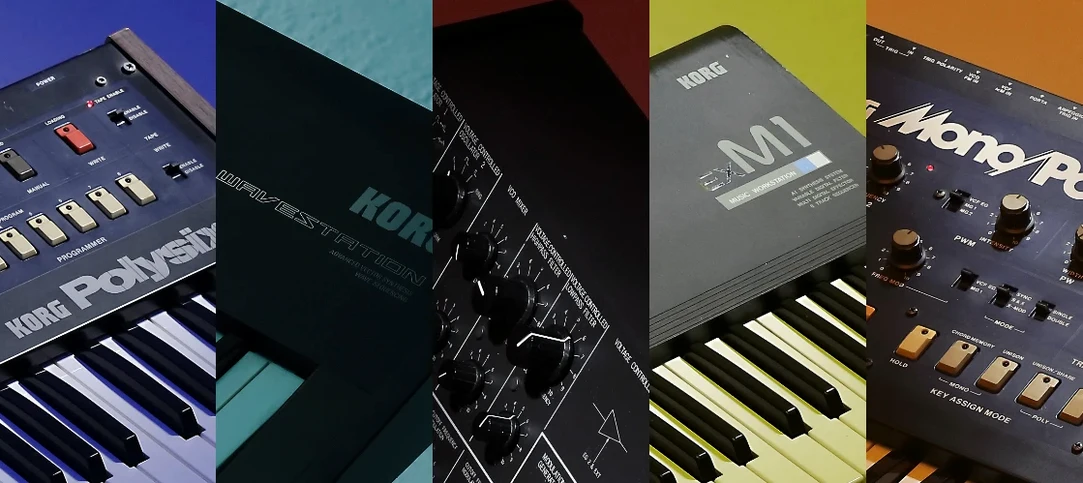 KORG TRITON
Recreates the exact synthesis engine of a legendary 1999 keyboard workstation inside a DAW.
KORG TRITON
Recreates the exact synthesis engine of a legendary 1999 keyboard workstation inside a DAW.
 Komplete Kontrol
Organises all your instruments and effects into one keyboard-controlled browsing library.
Komplete Kontrol
Organises all your instruments and effects into one keyboard-controlled browsing library.
 LANDR Mastering Plugin PRO
Applies adaptive mastering to a mix in real time as you make changes.
LANDR Mastering Plugin PRO
Applies adaptive mastering to a mix in real time as you make changes.
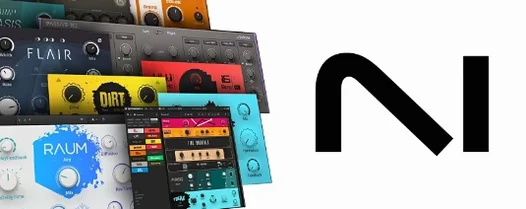 Komplete FX Bundle
Collects six processor packs that model studio compressors, EQs, reverbs and delays.
Komplete FX Bundle
Collects six processor packs that model studio compressors, EQs, reverbs and delays.
 LANDR Vocal Bundle
Sculpts a vocal through a single channel strip that layers EQ, compression, and saturation intelligently.
LANDR Vocal Bundle
Sculpts a vocal through a single channel strip that layers EQ, compression, and saturation intelligently.
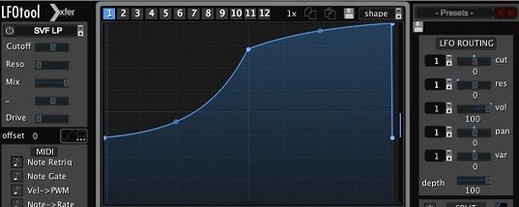 LFOTool
Shapes volume, pan, filter, or MIDI CC data with tempo-synced drawn curves.
LFOTool
Shapes volume, pan, filter, or MIDI CC data with tempo-synced drawn curves.
 Kalifornia Dynamic KD Alkane
Adds four flavours of analogue-style drive and saturation to any sound source.
Kalifornia Dynamic KD Alkane
Adds four flavours of analogue-style drive and saturation to any sound source.
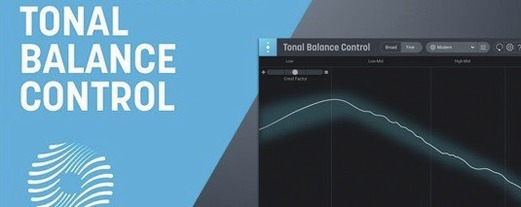 iZotope Tonal Balance Control
Shows whether your mix sits within typical genre curves for low, mid and high energy.
iZotope Tonal Balance Control
Shows whether your mix sits within typical genre curves for low, mid and high energy.