 ASPNetWorld

Beatmakers and sound designers reach for Life when a conventional drum machine feels too stiff. It is a rhythm engine that builds patterns from any audio you feed it — a tap on a mug, a snatch of dialogue, a synth stab from another track. Rather than replacing your sampler, it lives on an insert or an aux track, generating endless variations from a single source while the rest of your session carries on around it.
- On a drum bus — layer it beneath a kick and snare for organic top-end chatter and subtle ghost notes that shift over time.
- As a texture lane — feed it a sustained pad or field recording and let it slice out a syncopated, ever-changing percussive pattern.
- Sidechain pumping — version 1.2 added a Duck feature that lets you key sequencer lanes to the kick, so the rhythm breathes in time with the low end.
- DAW capture — the companion Life DAW Recorder grabs audio straight from your session, so you can rework a bassline or vocal phrase as rhythmic ammunition without leaving the box.
- Mobile capture — Life Field Recorder (iOS and Android) brings found sounds from the outside world into the engine. A slamming door becomes a hi-hat pattern a few clicks later.
It works like a self-generating percussionist that listens to your mix. On an aux channel, a little wet signal can glue a dry programmed beat to the rest of the arrangement. On an insert, it can completely reimagine a melodic loop as a stuttering, drum-like counterpart. Because the rhythms are procedurally generated from the source audio, no two passes sound identical, which makes it a useful tool for breaking out of loop fatigue without stacking up additional plugins.
The real moment of understanding with Life comes about twenty minutes into your first proper session with it. You have probably spent the first ten dropping a cafe recording onto a track, flicking through presets, and grinning at the happy accidents. Then you settle in and start shaping something deliberate.
Step one is feeding it. Drop a short audio clip onto the waveform display — a chime, a finger snap, a four-bar guitar loop — and Life analyses the transients and tonal shape immediately. The waveform view updates with markers showing where it is finding rhythmic events. Step two, pick a lane. Each of the eight sequencer lanes can pull from a different slice of that source, so you might assign the transient click of a spoon-on-mug to lane one, the resonant ring that follows to lane two, and the room noise tail to lane three. Step three, set the behaviour. Click the dice icon above a lane and Life generates a pattern; spin the density knob clockwise to fill the bar, counter-clockwise to leave breathing room. Step four, introduce variation. The mutation slider — a small percentage dial that sits unassumingly in the corner — nudges the pattern with each cycle, so the rhythm evolves rather than looping stiffly. By step five you are likely automating the Duck amount on lane two, listening to how the sidechain shapes the stereo field when the kick hits. That is usually the point where you stop thinking about the tool and start hearing music.
A sound designer working on an animated short once told me they used Life in a way that had nothing to do with beats. They had recorded a creaking wooden door over about ninety seconds — a slow, groaning hinge with a metallic rattle at the end. Into Life it went, with three lanes set to different tension points along the recording. Lane one triggered the initial crack of wood splitting; lane two grabbed the sustained groan; lane three caught the final metal shudder. By setting each lane to a different rhythmic division and running the output through a long reverb, they ended up with an uneasy, breathing texture that played under a chase sequence. Because the mutation slider was at about twelve percent, no two bars sounded identical, which kept the scene feeling restless. That sort of off-label use — treating Life as a texture generator rather than a percussion device — is where it quietly excels.
A couple of practical hurdles tend to surface early on. The most common one is a lane that refuses to trigger audibly even though the waveform shows activity. Nine times out of ten this is the slice point sitting on a near-silent portion of the sample. Zooming into the waveform and dragging the slice marker to a genuine transient fixes it instantly. Another frequent frustration is the mobile app sync. Life Field Recorder works brilliantly once it is set up, but the first transfer can trip people up because they expect a live wireless link. The app records and saves locally; you then share the file to your Mac via AirDrop or a cloud folder. There is no real-time streaming from phone to plugin, and assuming there is one leads to a few minutes of puzzled button-pressing. Once you treat the app as a capture tool rather than a live remote, the workflow clicks.
Beginners often make the mistake of flooding all eight lanes from the same source slice. The result is a cluttered, phasey mess where every element sounds like a ghost of the original and nothing punches through. A better approach is to use two or three lanes at most for your main rhythmic story, and only pull in extra slices for ear candy — a reversed grain here, a pitched-down tail there. The other classic early error is leaving the mutation slider at fifty percent and wondering why the groove keeps wandering off into chaos. Start low, around eight to fifteen percent, and only push it higher once you have a solid pattern you are happy to let Life gently dismantle over time. Used with a light touch, mutation is the secret ingredient; used heavily from the start, it can make a promising beat sound lost.
- macOS 10.13 or later
- Apple Silicon and Intel 64-bit support
Questions I keep hearing
Does Life run natively on Apple Silicon?
Yes, it supports both Apple Silicon and Intel 64-bit Macs, with macOS 10.13 as the minimum system requirement.
Can I record audio directly from my DAW into Life?
Yes, the Life DAW Recorder companion application is designed specifically for capturing audio from your DAW to feed into the plugin.
Questions from the class 0
Sign in or join the class to ask a question.
Nobody has asked anything yet. If you have used it on a real job, say what the file did.
Also on the VST Plugins shelf
The whole VST Plugins shelf XLN Audio XO
Sorts thousands of drum samples into a map and builds beats from them.
XLN Audio XO
Sorts thousands of drum samples into a map and builds beats from them.
 Xpand!2
Lets you build rich sounds by layering up to four independent instrument parts within a single patch.
Xpand!2
Lets you build rich sounds by layering up to four independent instrument parts within a single patch.
 WaveLab Pro
Provides a dedicated mastering workspace with sample-accurate editing and analysis tools.
WaveLab Pro
Provides a dedicated mastering workspace with sample-accurate editing and analysis tools.
 VocalSynth 2
Thickens a vocal with vocoder and polyvox layers while keeping its core identity intact.
VocalSynth 2
Thickens a vocal with vocoder and polyvox layers while keeping its core identity intact.
 VocalNet
Morphs a lead vocal with breathy samples to create an airier double without a second take.
VocalNet
Morphs a lead vocal with breathy samples to create an airier double without a second take.
 Valhalla DSP Bundle
Offers nine plugins of reverb, delay, and modulation built on deep acoustic models.
Valhalla DSP Bundle
Offers nine plugins of reverb, delay, and modulation built on deep acoustic models.
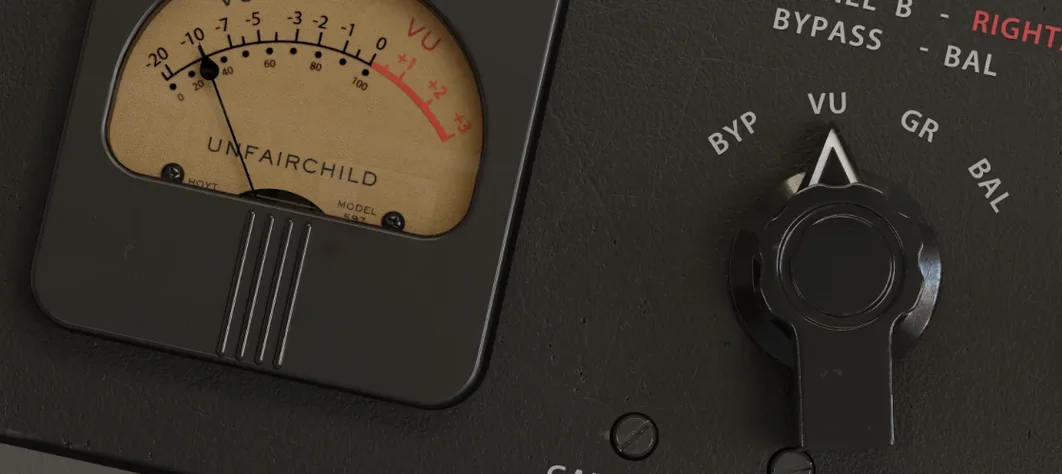 UnderTone Audio UnFairchild
Adds valve-style harmonic saturation you can season independently of the compression.
UnderTone Audio UnFairchild
Adds valve-style harmonic saturation you can season independently of the compression.
 Ultra Audio Ultra
Puts a wavetable synthesiser with simple controls onto your instrument track.
Ultra Audio Ultra
Puts a wavetable synthesiser with simple controls onto your instrument track.