 ASPNetWorld

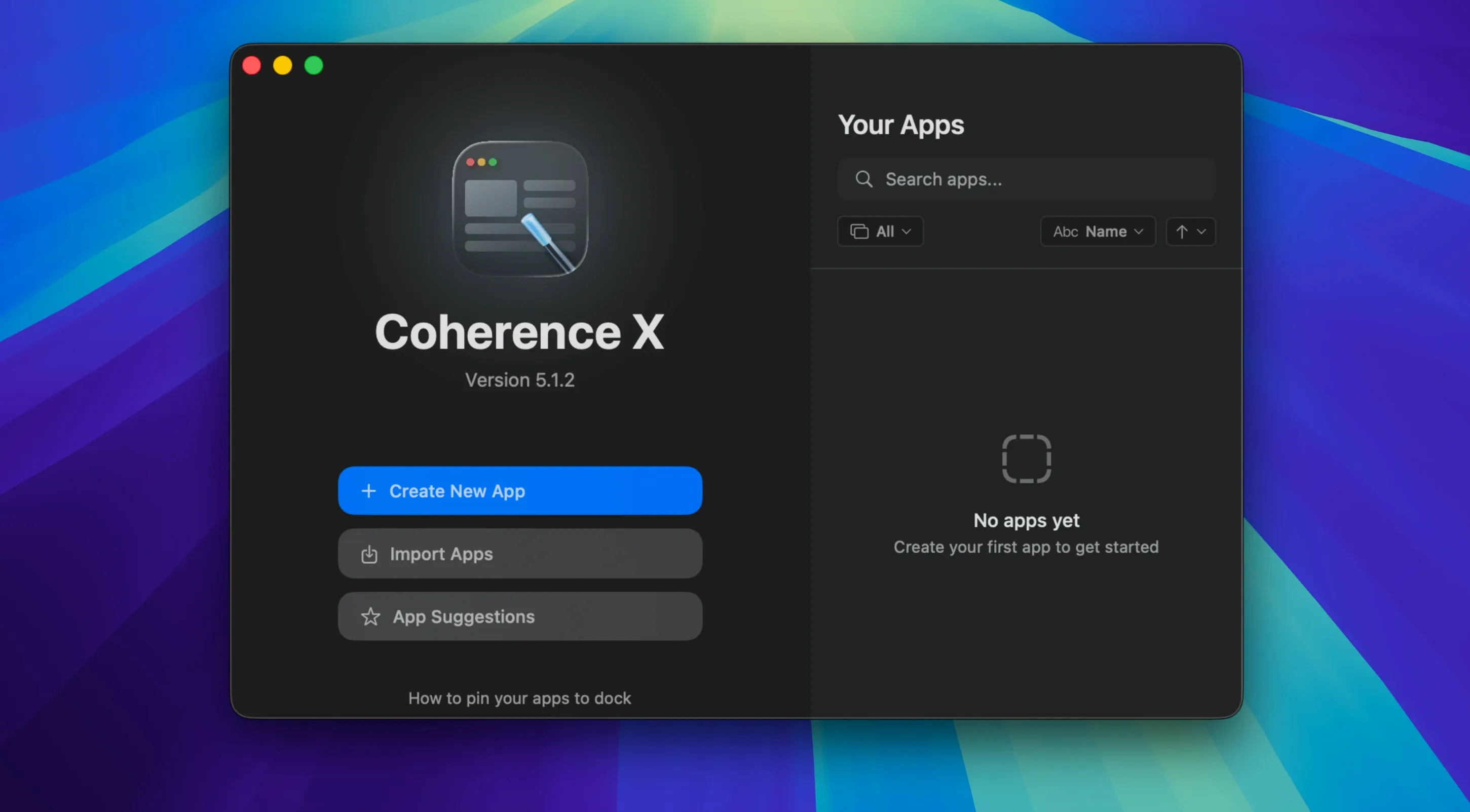
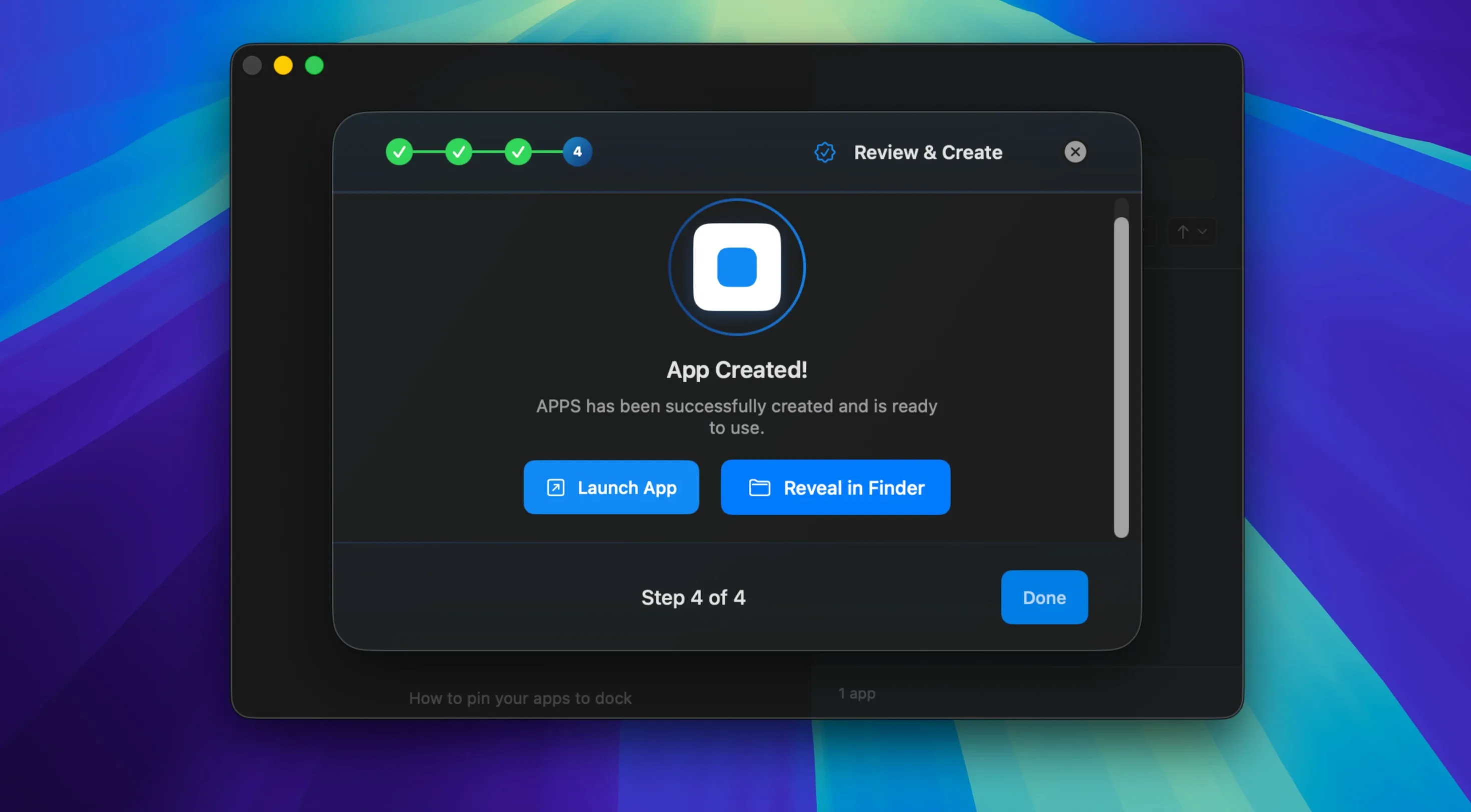
Five separate login profiles for Gmail, each with its own Dock icon and cookie jar, all running from the same machine. That’s the sort of quiet superpower a coherence download torrent unlocks once you stop thinking of it as a simple site-wrapper.
What does version 6.1 do that earlier releases couldn’t?
It removes the rebuild step for link routing and appearance tweaks. You can now throw multiple domains into a single routing rule and the app will suggest a sensible destination, so changes take hold without waiting for a recompile.
Why would I want a website as a separate app?
Because an app gets its own Dock presence, keyboard shortcut, and isolation from the rest of your browsing mess. A coherence torrent setup lets you run the same web service under different profiles —personal, work, client— without incognito-window gymnastics.
Does it actually behave like a real browser?
It is Chrome under the hood, so you can install extensions straight from the Chrome Web Store, use incognito mode, and even restore tabs after a restart. The only thing missing is the address bar and the temptation to drift off onto Twitter.
Tabbed apps, per-app Dock icons, and extension management all carry over
Tabbed apps, per-app Dock icons, and full extension management all carry over. The core workflow —drag a site in, generate an app— remains exactly as direct as it was, just with fewer interruptions when you tweak the rules afterwards.
Name Chrome profiles by purpose and assign distinct colours before creating apps
Before you create a dozen apps, spend an afternoon setting up the profiles you’ll actually reuse. Open the Chrome profile manager, name each one after a clear purpose —Work, Music, Shopping, Dev— and assign them distinct colours. Coherence X picks these up immediately, so every app you build afterwards inherits a ready-made cookie jar and extension set. It saves you the quiet frustration of realising your Slack app is still logged into your personal Gmail a week later.
Next, pin the Uninstaller and the Link Router to your menu bar thinking. You won’t need them daily, but when a routing rule goes slightly wrong —and one always does— having them a click away stops a minor annoyance becoming a full rebuild. The uninstaller is also the cleanest way to remove an app that’s outlived its use, because it catches the support folders a standard drag-to-Trash leaves behind.
Tick “Restore tabs on restart” so unexpected quits don’t clear your workspace
Open the main app’s preferences and tick “Restore tabs on restart”. It’s off by default, and without it every unexpected quit —or macOS update restart— clears your workspace inside tabbed apps. If you rely on a tabbed Notion or Figma setup, this one checkbox saves your morning.
Next, switch the default mode for new apps from Standard to Tabbed if your workflow tends toward multi-page services. A Standard app for YouTube makes sense; a Standard app for Jira or a documentation site usually doesn’t. Setting the default early means you stop fighting the mode picker on every creation.
The third setting is less obvious: in the Link Router, enable “Suggest destinations for new rules”. Version 6.1 added this, and it turns link routing from a manual mapping chore into something closer to an assistant. When you click a link from an email client app and Coherence asks where it should open, the suggestion list is surprisingly well-predicted if you’ve given your apps clear names.
A worked example: building a client-facing portal
Say you run a small design studio and a client wants a self-contained app for their project board, shared drive, and brand guidelines — three different URLs, one coherent workspace. Here’s the flow from blank screen to finished app.
- Create the profile. In Chrome, add a new profile called “Studio — ClientName” and give it a distinctive colour. This profile will hold the client’s logins and nothing else.
- Build the Tabbed app. In Coherence X, choose Tabbed mode, paste the project board URL as the home tab, and name the app after the client. Drag a clean icon from their brand assets folder — Coherence accepts PNGs and ICNS files without complaint.
- Add secondary tabs. Open the created app, hit
⌘Tto add a tab, and load the shared drive. Repeat for the brand guidelines page. These tabs persist across restarts if you enabled the preference earlier. - Set up link routing. Back in Coherence, open the Link Router for this app. Add a rule that catches their domain and, for any external links, sends them to your main browser. This keeps the client app hermetically sealed — no drifting into your own bookmarks.
- Install the one extension they need. If the client’s brand guidelines live in a Figma file, install the Figma Chrome extension into this app’s profile. It loads a real-time renderer that the bare web version can’t match.
- Export and share. Use the export function to package the app, then send it. The client drags it to Applications and launches it — no configuration on their side necessary.
The whole sequence takes under ten minutes once you know the rhythm, and the client ends up with something that feels purpose-built rather than a collection of bookmarks.
Each web tool gets its own ⌘Tab slot and its own mental space
If you spend your day inside a coherence download torrent of web-based tools — project management software, cloud IDEs, CRM dashboards— the app model changes how your brain allocates attention. Each service gets its own ⌘Tab slot and its own notification badge on the Dock, which for many people is the difference between a task feeling like a tab they can ignore and a tool they’re meant to use.
Multiple-profile users benefit most immediately. Running three Google Workspaces or two Microsoft 365 tenants in a single browser is a constant logout-login negotiation; Coherence X makes each identity a separate app with no cross-contamination. The same logic applies if you manage social media accounts for several brands — each app holds its own session, and none of them can see the others.
Extensible-web-app users get a quieter advantage. Services that are genuinely better with a Chrome extension — password managers, grammar checkers, screen readers— often feel compromised in Electron wrappers that don’t support the full extension API. Because Coherence X taps Chrome’s engine directly, the extension ecosystem works without compromise, which makes the wrapper feel less like a wrapper and more like the real thing.
Musicians and producers are an unexpected third group. Web-based DAWs, sample library managers, and collaborative mixing platforms often run into audio routing issues inside a regular browser tab, especially when macOS’s media key handling gets confused about which tab owns the audio focus. A dedicated app isolates the audio stream, and because you can assign it a custom Dock icon, it sits alongside Logic or Ableton in your ⌘Tab rotation rather than lost in a sea of browser tabs.
Version 6.1 smooths the roughest edge in an otherwise transparent workflow: settings that previously demanded a full app rebuild now save on the spot. Routing rules also got smarter.
- Link-routing and appearance changes no longer require rebuilding the app.
- New routing rules start with a suggested destination instead of a blank space.
- You can add several domains at once when setting up a routing rule.
- macOS 13 or later
- Apple Silicon and Intel Macs supported
- Interface languages: English, German, Spanish
Questions I keep hearing
Can I save link-routing changes without rebuilding the app?
Yes — that’s the headline change in version 6.1. Multiple domains can be added to a single rule, and the app suggests a destination so changes save immediately.
Questions from the class 0
Sign in or join the class to ask a question.
Nobody has asked anything yet. If you have used it on a real job, say what the file did.
Also on the Mac Apps shelf
The whole Mac Apps shelf coconutBattery Plus
Charts the invisible decline of your MacBook battery so you can replace it before it fails.
coconutBattery Plus
Charts the invisible decline of your MacBook battery so you can replace it before it fails.
 Color Finale
Lets you colour-grade video directly inside Final Cut Pro without leaving the timeline.
Color Finale
Lets you colour-grade video directly inside Final Cut Pro without leaving the timeline.
 Cocktail Sequoia Edition
Clears cached files, repairs permissions and sweeps away the digital clutter that slows a Mac.
Cocktail Sequoia Edition
Clears cached files, repairs permissions and sweeps away the digital clutter that slows a Mac.
 Commander One PRO
Puts two folder views side by side for dragging, copying and comparing files without flipping windows.
Commander One PRO
Puts two folder views side by side for dragging, copying and comparing files without flipping windows.
 CloudMounter
Mounts cloud storage and remote servers as local drives in your Finder sidebar.
CloudMounter
Mounts cloud storage and remote servers as local drives in your Finder sidebar.
 Compressor
Acts as a background rendering engine that other Apple pro apps hand off their export jobs to.
Compressor
Acts as a background rendering engine that other Apple pro apps hand off their export jobs to.
 Clip Studio Paint
Gives animators a traditional light-table view to reference previous frames while drawing.
Clip Studio Paint
Gives animators a traditional light-table view to reference previous frames while drawing.
 CLion
Maps a C or C++ codebase into a living structure you can refactor and navigate with confidence.
CLion
Maps a C or C++ codebase into a living structure you can refactor and navigate with confidence.