 ASPNetWorld
DxO PhotoLab 9 runs on any Mac with macOS 14.7 (Sonoma) or later, on both Intel and Apple Silicon processors. If you have been searching for a DxO PhotoLab torrent to see what the software can do, it helps to know where a newcomer should actually begin. The interface can feel dense at first, but a few deliberate first moves reveal why this is DxO Labs' flagship RAW editor.
Lens corrections and PRIME denoising run automatically on import
- Photographers who want lens-specific optical corrections applied automatically on import—DxO’s lab-measured profiles tackle sharpness, distortion, vignetting and chromatic aberration without any manual sliders.
- Anyone working in high-ISO situations. DxO PRIME denoising analyses the whole image to separate detail from noise, and the results on RAW files are genuinely impressive.
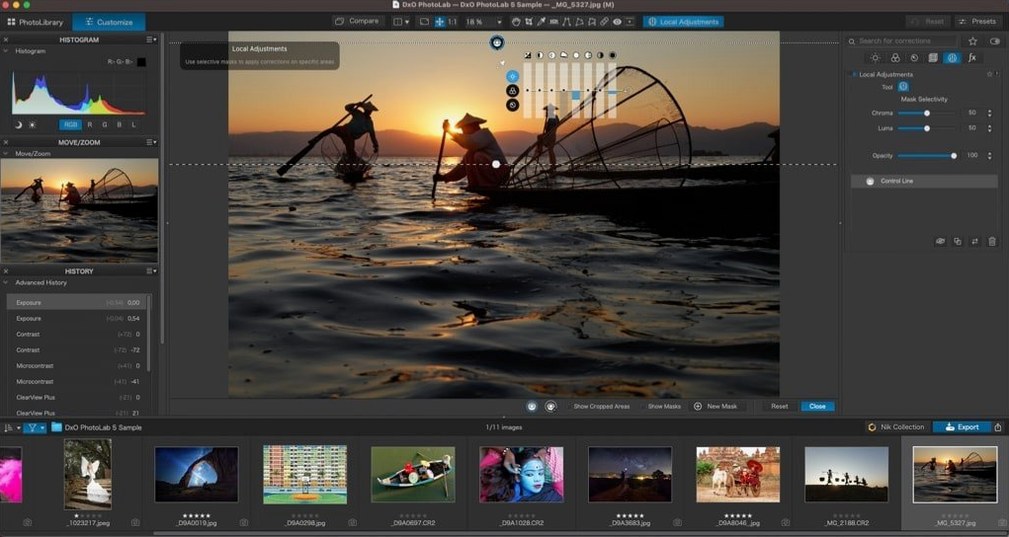
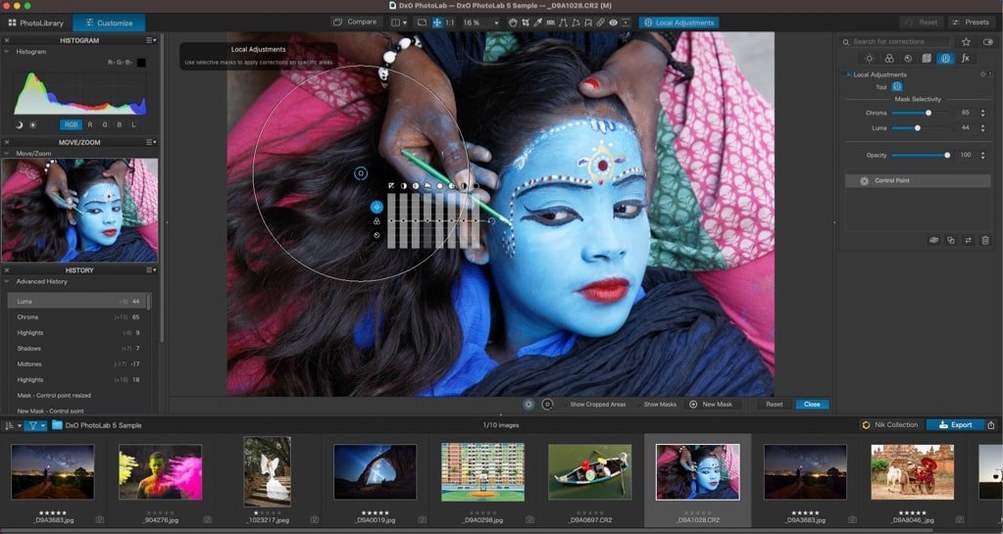
- Making local adjustments with AI assistance. The AI Masks can isolate skies, people, backgrounds or animals in a click, and you can then copy those local adjustments between images that share the same subject type.
- Cutting through atmospheric haze with DxO ClearView, a single-slider fix that restores contrast and clarity in landscapes.
Formerly DxO Optics Pro, and HEIC support skips the lab profiles
- The software was formerly known as DxO Optics Pro, so older tutorials you find may use that name for the same core tools.
- While it supports Apple’s HEIC, HEIF and ProRAW formats, the full strength of the optical corrections relies on the specific camera-and-lens combination being in DxO’s database.
- Edit synchronisation between images uses quick-select Subject Types, which is fast but rewards a bit of organisation in your folder structure from the start.
Experienced RAW shooters who value lab-measured, non-destructive edits
Experienced RAW shooters who already have an established folder structure and a clear idea of their output tend to click with PhotoLab fastest. They recognise the value of a non-destructive workflow that leans heavily on lab measurements rather than subjective presets, and they know exactly how much time automatic lens corrections save across a wedding or a landscape trip.
Less obvious is how well it suits the photographer who prints. The soft-proofing mode, combined with the per-lens sharpening that accounts for diffraction and corner fall-off, means what you see on screen translates to paper with fewer surprises. If your Mac is connected to a calibrated display, the match is even tighter.
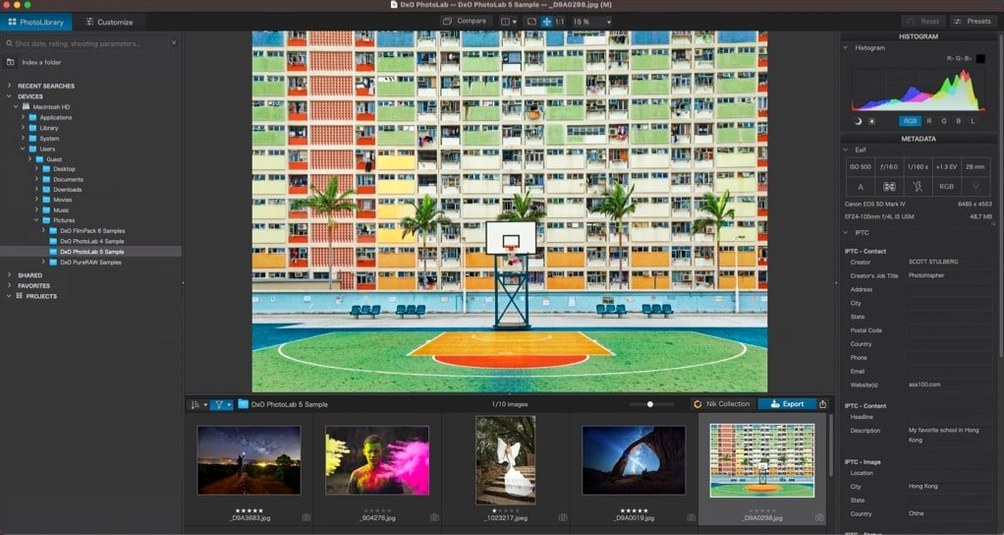
Mac users who value a clean, single-purchase tool over a subscription ecosystem also find a natural home here. PhotoLab does not demand a catalogue; it reads your existing folder tree. That design philosophy appeals to people who already use Finder tags, a clear date-based folder hierarchy, or a referenced library in another application, and who dislike the idea of importing everything into a proprietary database.
Perhaps the most satisfied group is the high-ISO specialist. Shooting dimly lit events, indoor sports, or nocturnal wildlife pushes sensors into territory where chroma noise eats colour fidelity. DeepPRIME XD3, particularly on Bayer-sensor files, delivers a level of grain separation that makes ISO 12,800 images look closer to ISO 3,200. That is not marketing talk: the processing time is noticeably longer than standard denoising, but the trade-off is a file you can actually crop into without the noise structure falling apart.
If you came across a dxo labs reference and wondered whether the software feels like a laboratory tool or a creative editor, the answer is both. The corrections engine is the laboratory; U Point and the AI Masks are the creative bridge. That balance defines who stays with it long-term: people who want precision first, but still need to dodge, burn and colour-grade without round-tripping to another application.
A wedding photographer’s late-night rescue
Consider a wedding photographer back at her desk at 11pm, facing a ceremony shot in a 14th-century chapel where flash was forbidden. The only light came from three small stained-glass windows and a handful of candles. She shot at ISO 10,000 on a full-frame body, and the previews on the camera’s rear screen looked promising. On the Mac, the RAW files tell a different story: luminance noise has eaten the texture of the bride’s lace veil, and the tungsten-biased white balance has turned the stone walls a sickly orange.
She drags the folder onto PhotoLab. DxO’s module for her camera and 50mm lens loads instantly, correcting the slight barrel distortion and the vignette that would otherwise darken the corners where the bride and groom stand. She applies DeepPRIME XD3 and sets the luminance slider to 40. The preview rebuilds: the lace pattern returns, the skin tones hold together, and the grain in the shadow areas behind the altar becomes a fine, film-like texture rather than a blocky mess.
A single AI Mask on the bride and groom lets her lift exposure by two-thirds of a stop on just the couple, while a second mask on the background walls drops the orange saturation via a white-balance local adjustment. She copies those two local adjustments to the other 40 ceremony shots using the Subject Type sync. Within twenty minutes she has a set of images that look as though they were shot at ISO 1,600 under controlled light. She exports 16-bit TIFFs for the album designer and goes to bed.
DeepPRIME XD3 exports saturate all M-series performance cores for minutes
PhotoLab 9.10.0 runs natively on Apple Silicon, and the difference on an M-series chip is most obvious during DeepPRIME exports. A batch of fifty 24-megapixel RAW files with DeepPRIME XD3 enabled will saturate all performance cores for several minutes. The Mac stays responsive for other tasks—browsing, email, even light Photoshop work—but you will hear the fans on a MacBook Pro if you push a large queue through. On Intel Macs the same batch takes roughly two to three times longer, though the software remains stable throughout; I have yet to see a crash mid-export on either architecture.
RAM usage is moderate by modern standards. With a dozen 45-megapixel files open and adjustments stacking up, PhotoLab hovers around 4–6GB of memory. That leaves comfortable headroom on a 16GB machine for a browser and a music stream. The customisation panel rebuilds previews on the fly as you drag sliders, and on Apple Silicon this feels immediate—there is no beachball, no half-second lag between moving the DxO Smart Lighting slider and seeing the result snap into place.
One quirk worth knowing: if you keep the file browser pointed at a network-attached storage volume with thousands of images, the initial thumbnail crawl can feel sluggish. Working from a fast internal SSD or a Thunderbolt external drive removes that bottleneck entirely. The software caches previews aggressively once they are built, so a second visit to the same folder is snappy.
Forty coastal RAW files with shifting light, corrected step by step
Imagine a Saturday morning. You have returned from a walk along the coast with forty RAW files from a mirrorless camera—a mix of wide seascapes and close-ups of rock pools. The light changed constantly, so exposures and white balance are all over the place. You plug in the external drive, pour a coffee, and open PhotoLab.
You navigate to the folder in the Source Browser. Thumbnails pop in quickly; the software has remembered this drive from last weekend, so the preview cache is already warm. You click the first image—a wide shot with a pale sky and a grey sea—and PhotoLab applies the automatic lens correction for your wide zoom. The horizon straightens itself, the corners brighten, and the slight cyan fringing along the cliff edge vanishes without any input from you.
You switch to the DxO Smart Lighting panel and push the slider to 30. The foreground rocks, which were nearly silhouettes, lift into a readable mid-tone without blowing the sky. A quick check of the histogram confirms nothing is clipping. You then open ClearView and nudge it to 25; the distant headland, which was lost in a thin sea haze, sharpens up and gains genuine depth. The slider does in three seconds what a curves-and-clarity combination in another editor would take two minutes to approximate.
On the next image—a close-up of a crab half-hidden in a rock pool—you decide to try an AI Mask. You select the subject mask option, and within a couple of seconds PhotoLab has outlined the crab against the wet stone. You pull the micro-contrast up on just the crab, making the carapace texture pop, and then invert the mask to gently darken the surrounding water. The adjustment feels surgical rather than painted-on.
Halfway through the set you realise the white balance on eight consecutive shots is too cool. You correct the first one, select the other seven, and use the synchronisation panel to copy only the white balance and Smart Lighting settings across. No catalogue, no import step, no waiting—just a right-click and a confirmation. You then select all forty files, choose your export preset for full-resolution JPEGs with a watermark, and let the queue run while you refill your coffee.
The export finishes in under three minutes on an M2 MacBook Air. You open the folder in Preview, flick through the results, and spot one image where the Smart Lighting pushed a cloud a little too far. Back in PhotoLab, you dial that single slider back by ten points, re-export just that file in four seconds,
- macOS 14.7 or later
- Works on both Intel and Apple Silicon Macs
- Available in English, German, Simplified Chinese, French and Japanese
Questions I keep hearing
Does DxO PhotoLab 9 open Apple ProRAW files?
Yes, it supports Apple’s ProRAW format alongside HEIC and HEIF, so you can edit images from recent iPhones directly in the application.
What is DxO PRIME?
DxO PRIME is an advanced denoising method that analyses the whole image to distinguish fine detail from noise, and it is particularly effective on high-ISO RAW files.
Can I copy adjustments from one photo to another?
You can. DxO PhotoLab 9 lets you copy and paste local adjustments between images, and it also offers synchronisation of edits based on the AI-detected subject type.
Questions from the class 0
Sign in or join the class to ask a question.
Nobody has asked anything yet. If you have used it on a real job, say what the file did.
Also on the Mac Apps shelf
The whole Mac Apps shelf DVDFab
Copies a DVD-9 film onto two standard DVD-5 discs while keeping the original menus.
DVDFab
Copies a DVD-9 film onto two standard DVD-5 discs while keeping the original menus.
 DxO ViewPoint
Corrects distorted perspective and volume deformation in wide-angle architectural shots.
DxO ViewPoint
Corrects distorted perspective and volume deformation in wide-angle architectural shots.
 DynamicLake Pro
Puts a slim pill-shaped panel near your Mac’s notch for music, calendar, and system toggles.
DynamicLake Pro
Puts a slim pill-shaped panel near your Mac’s notch for music, calendar, and system toggles.
 Duplicate File Finder Pro
Scans folders for duplicate files and helps you merge similar folders into one tidy library.
Duplicate File Finder Pro
Scans folders for duplicate files and helps you merge similar folders into one tidy library.
 Dropover
Holds dragged files on a floating shelf so you can gather items before dropping them elsewhere.
Dropover
Holds dragged files on a floating shelf so you can gather items before dropping them elsewhere.
 DriveDx
Warns you while a drive is still in the failing stage, before it dies completely.
DriveDx
Warns you while a drive is still in the failing stage, before it dies completely.
 Element 3D
Imports true 3D models into After Effects so you can light and animate them on the timeline.
Element 3D
Imports true 3D models into After Effects so you can light and animate them on the timeline.
 Elmedia Player Pro
Plays almost any video or audio file format without needing extra codecs.
Elmedia Player Pro
Plays almost any video or audio file format without needing extra codecs.