 ASPNetWorld

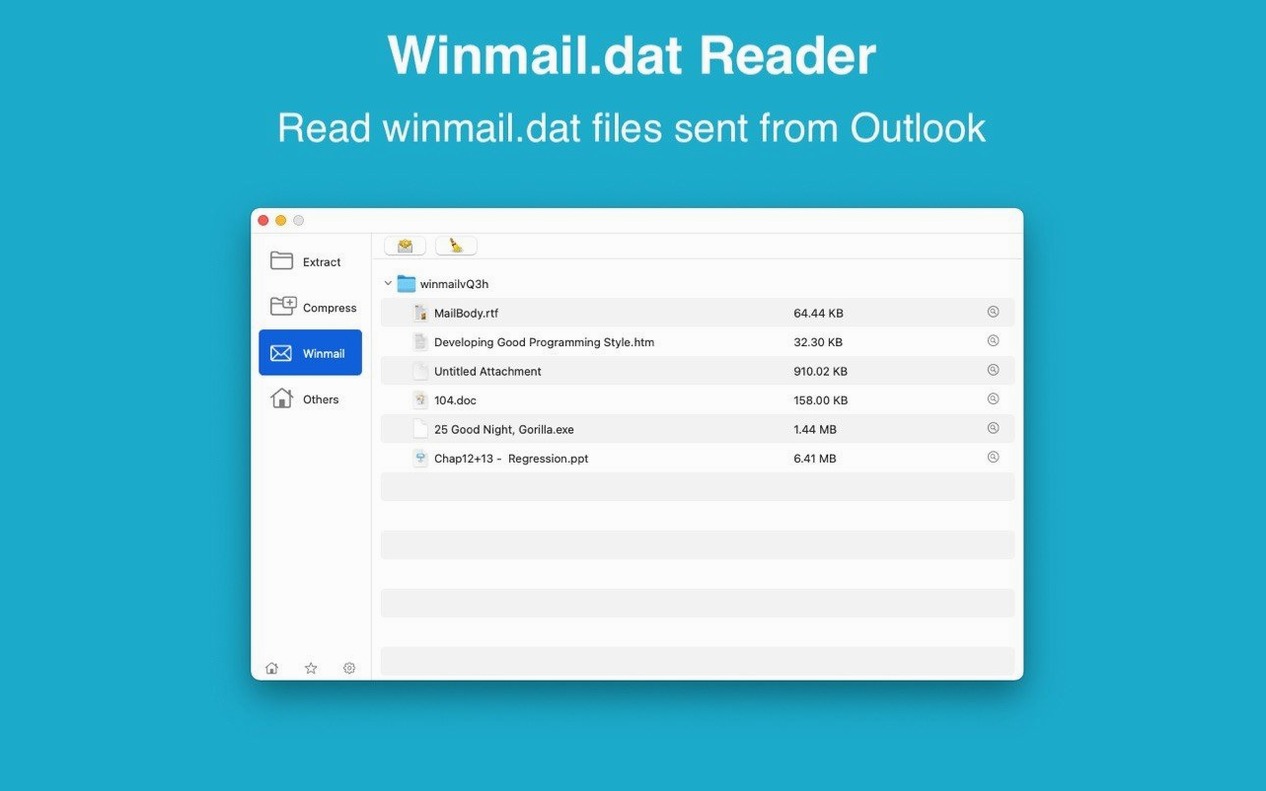
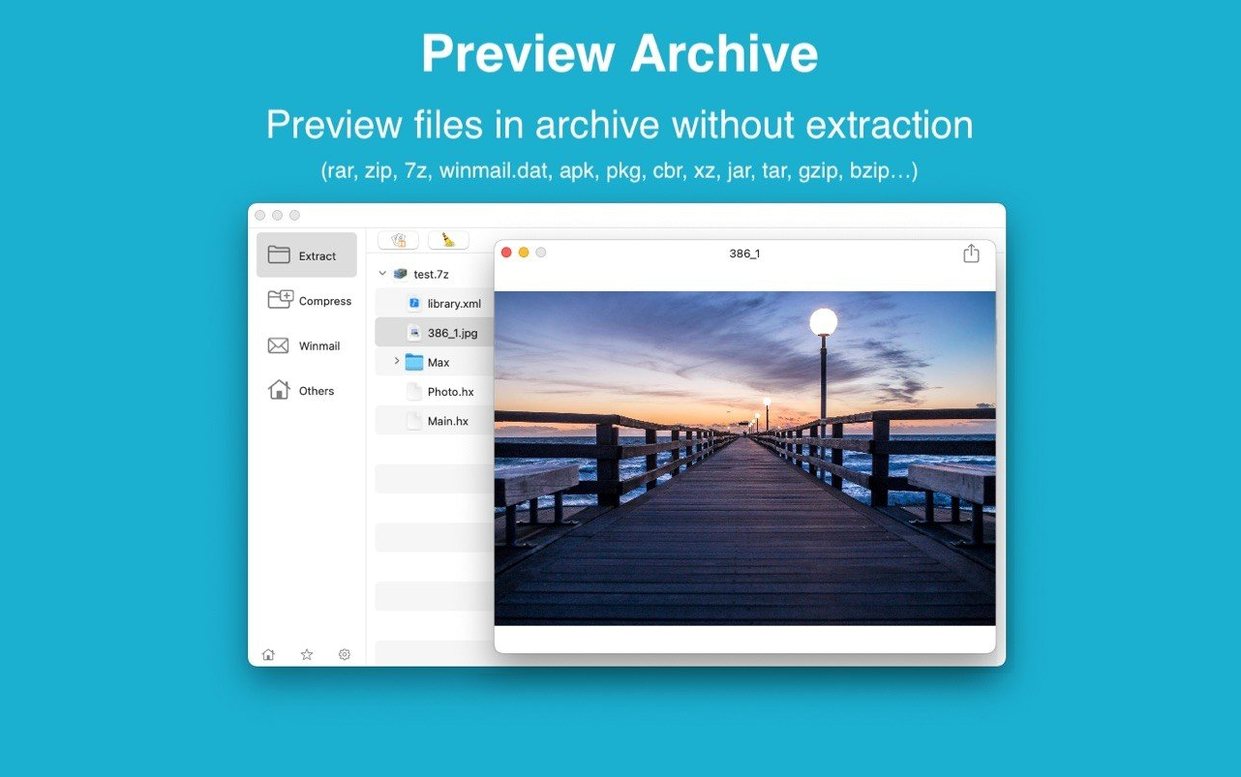
A fast preview pane is often the feature that turns a utility into a daily driver. In RAR Extractor, you can inspect the contents of an archive in a clear file list before committing to a full extraction, so you are never left guessing what sits inside a downloaded zip or a colleague's 7Z bundle. That same window also lets you pull out a single file or folder, which is surprisingly handy when an archive contains a hundred assets and you only need the final mix.
Its real edge over the built-in Archive Utility
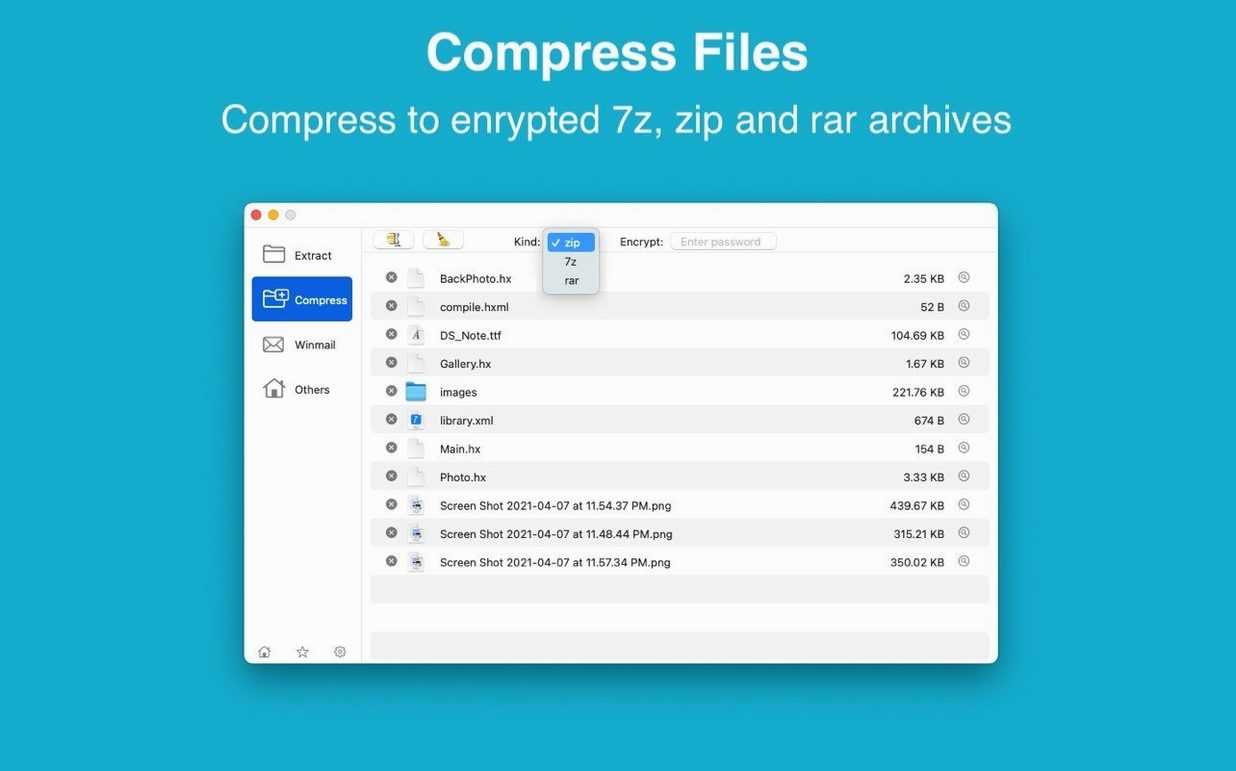
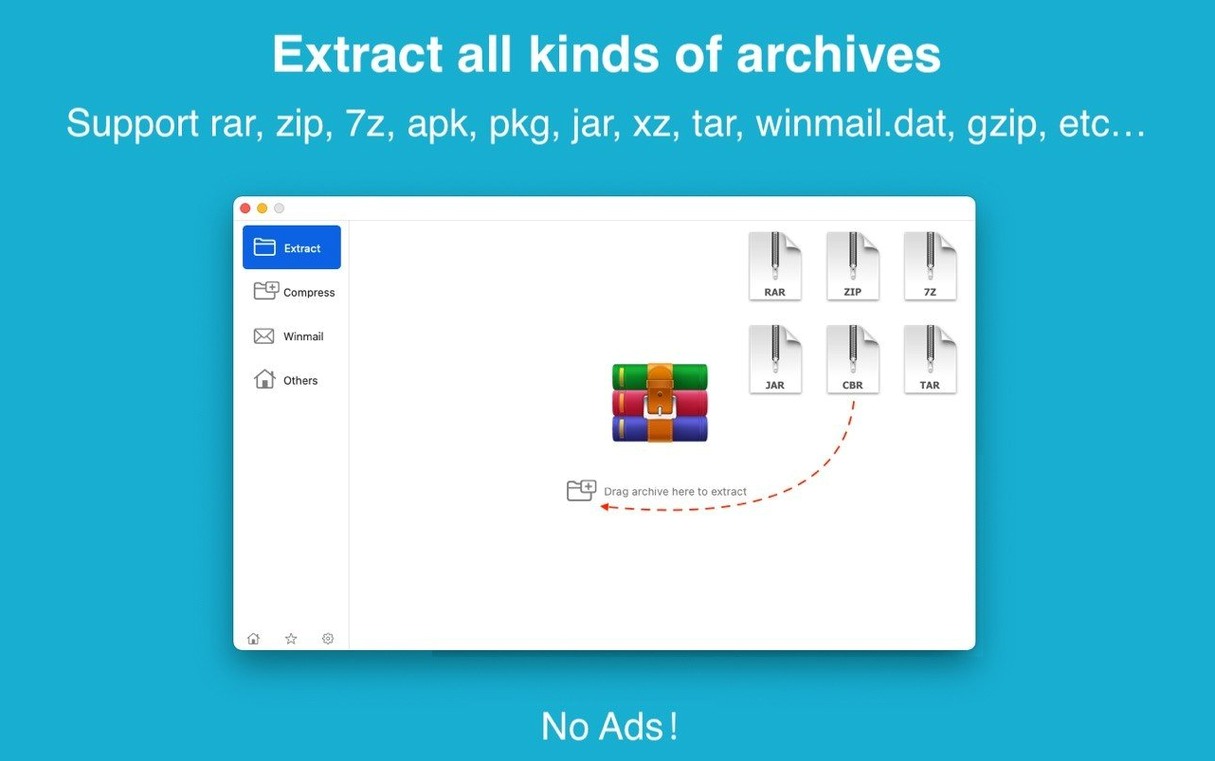
The Mac already knows how to unzip a basic archive, and macOS 11.5 onwards gives this app a stable foundation to build on. What RAR Extractor adds is a broader appetite for formats and a few thoughtful workflows. Dragging an archive straight to the Dock icon opens it for viewing, which means you can bypass Finder gymnastics entirely. If the archive is password-protected, the app will prompt you for the key, so encrypted files slide into your existing download routine without a detour. And when you are making archives rather than opening them, the AES-256 encryption for ZIP and 7Z formats gives you a level of privacy that the built-in macOS compression tools simply do not offer.
Two windows, two languages
The dual-window display splits browsing and extraction into separate panes, a design choice that keeps source and destination clear in your mind. It is a small touch, but it stops you from accidentally unarchiving a folder into the wrong project directory. The interface speaks English and Simplified Chinese, and the current version, RAR Extractor Max, is based on an earlier RAR Extractor release with a redesigned look and expanded functionality. It feels less like a port of a Windows utility and more like a native Mac citizen that happens to understand a lot of archive dialects.
The safety worry my evening students always raise first
A rar extractor unarchiver pro mac free search tends to surface a handful of the same worries, so let’s walk through the ones I hear most in my evening classes. The first is always about safety: can opening a RAR or 7Z file put your Mac at risk? The app itself is a straightforward reader — it does not execute code inside archives, so simply viewing a file list is benign. The sensible caution, as with any downloaded content, is to know the source of what you are unpacking.
Another recurring question is whether the app handles split archives — those multi-part RAR files labelled .part1.rar, .part2.rar and so on. Yes, it does, and it reassembles them automatically when all parts sit in the same folder. People also ask if setting it as the default archive opener will break the built-in macOS Archive Utility. It simply takes over the association for the formats it supports; the system tool is still there, quietly minding its own business in the background. Compatibility with Apple Silicon is a frequent concern too. The app runs natively on both ARM and Intel 64-bit Macs, so there is no Rosetta layer to worry about on an M1 or M2 machine.
Everyday feel: speed, stability and what it asks of your Mac
In daily use, RAR Extractor sits lightly. Launching it cold takes under two seconds on a modern Apple Silicon Mac, and the memory footprint hovers around 45 MB when browsing an archive — about the same as a couple of Finder tabs. Extraction speed depends more on your drive than on the app itself; a 1.2 GB RAR full of video clips unpacks to an external SSD in roughly the time it takes to make a cup of tea. The progress bar is honest and the time estimates are refreshingly unambitious, so you are not staring at a “two seconds remaining” message for a full minute.
Stability has been solid across the months I have used it for class prep. I have thrown deliberately broken archives at it, archives with Unicode filenames that confuse older tools, and a 9 GB 7Z full of nested folders. It has not crashed once, though with severely corrupted files it will simply tell you it cannot read them rather than hanging. CPU usage during extraction stays reasonable — you can keep mixing in Logic Pro or editing in DaVinci Resolve without hearing your fans spin up. That alone makes it a better neighbour than some cross-platform archive tools I have tried.
Switching to the dual-window default before you extract
Out of the box, the app works, but three tweaks make it feel like yours. First, head into preferences and tick the option to use the dual-window display by default. The single-window view is fine for quick peeks, but once you start pulling selected files into specific project folders, seeing source and destination side by side cuts down on mistakes. Second, enable the “extract to a folder named after the archive” setting. Without it, unpacking a zip called field-recording-edit-03.zip can scatter twenty-four WAV files across your desktop. With it, they all land in a tidy folder of the same name.
The third is less obvious: set the temporary extraction folder to a location on your fastest drive. By default it uses the system temp directory, but if you are working with large archives — ISOs, disk images, multi-gigabyte 7Z bundles — pointing it to a folder on an external Thunderbolt drive keeps your main disk clean and often speeds up the final copy step. None of these changes require a restart; they take effect the moment you close the preferences window.
A real task: unpacking a password-protected project archive
Here is a workflow I used just last week, preparing stems for a student’s mix project. A collaborator sent over a winmail.dat attachment — Outlook’s way of bundling files — which I previewed directly in RAR Extractor without needing to install anything Microsoft-related. Inside were two password-protected 7Z archives and a text file with the passwords. The sequence from there was straightforward:
- Dragged the first 7Z file to the Dock icon. The file list appeared, showing twenty-four audio tracks, a session file and a PDF of mix notes.
- Selected only the session file and the PDF, clicked extract, and entered the password when prompted. Those two files appeared on my desktop in seconds.
- Dragged the second 7Z archive into the dual-window pane, entered its password, and this time extracted all stems into a folder I had already created on the project drive.
The whole process, from receiving the email to having the stems in Pro Tools, took under five minutes. The batch unpacking option would have handled both archives in one go if I had not needed to cherry-pick files from the first one. That kind of flexibility — preview, selective extraction, password handling and format support all in one window — is what turns a search for a winrar for mac free download from a hopeful query into a settled decision.
What people wonder aloud
Does it handle RAR archives created on Windows with unusual password characters?
Yes, but stick to passwords you can type on a standard keyboard. Emoji and certain high-Unicode characters can cause mismatches between the archive creator’s encoding and the Mac’s interpretation. Letters, numbers and standard symbols work reliably.
Can I use it to create archives that Windows users can open without extra software?
If you create a password-protected ZIP rather than a 7Z, any modern version of Windows can open it natively. The AES-256 encryption is supported in Windows 10 and 11’s built-in zip handler, so your recipient does not need to install anything.
What about archives inside archives — nested zips or RARs?
The app handles one layer at a time. Extract the outer archive, then open the inner one as a separate step. It keeps the process predictable and avoids accidentally unpacking a whole tree of files you did not know were there.
- macOS 11.5 or later
- Works natively on both Apple Silicon and 64‑bit Intel Macs
Questions from the class 0
Sign in or join the class to ask a question.
Nobody has asked anything yet. If you have used it on a real job, say what the file did.
Also on the Mac Apps shelf
The whole Mac Apps shelf RAR Extractor - unzip
Extracts files from compressed archives like RAR and ZIP.
RAR Extractor - unzip
Extracts files from compressed archives like RAR and ZIP.
 Raycast Pro
Launches apps and commands from a keyboard palette.
Raycast Pro
Launches apps and commands from a keyboard palette.
 Radio Silence
Blocks background network chatter from selected apps.
Radio Silence
Blocks background network chatter from selected apps.
 Remove-It
Uninstalls apps and removes their leftover files.
Remove-It
Uninstalls apps and removes their leftover files.
 QuarkXPress
Designs precise layouts for print and digital publishing.
QuarkXPress
Designs precise layouts for print and digital publishing.
 PyCharm
Provides coding tools for Python development and debugging.
PyCharm
Provides coding tools for Python development and debugging.
 Rhino
Models precise 3D forms for design and manufacturing.
Rhino
Models precise 3D forms for design and manufacturing.
 Rider
Builds .NET and Unity projects in a cross-platform IDE.
Rider
Builds .NET and Unity projects in a cross-platform IDE.