 ASPNetWorld
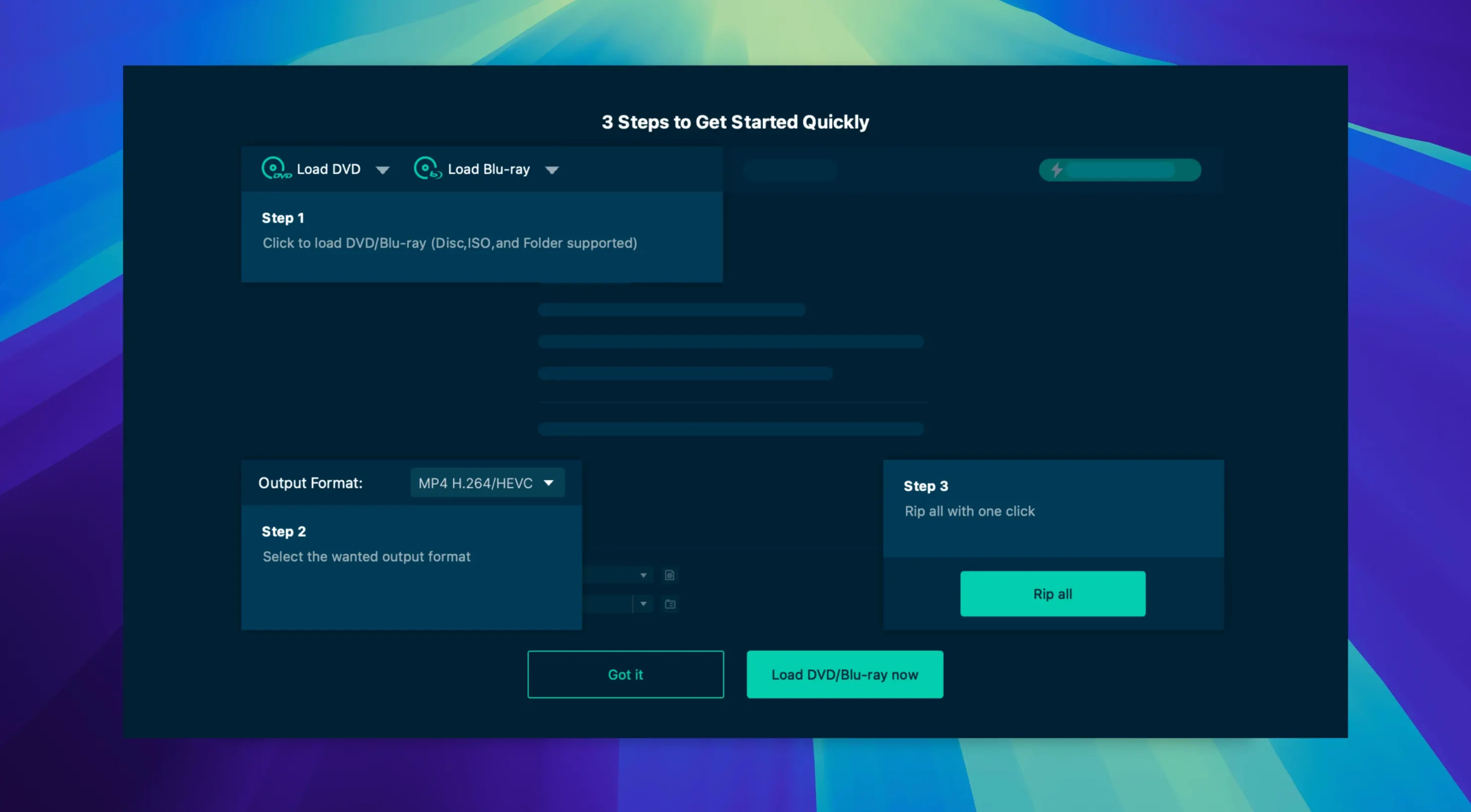
Shelves full of films and TV box sets pose a practical problem: how do you watch them on a phone, tablet or media server without the original disc? A dedicated ripper bridges that gap, and VideoByte BD-DVD Ripper tackles the job with straightforward controls that feel native to the Mac. It takes a disc, a BDMV folder or an ISO image and turns it into a playable digital file while keeping the original audio tracks and subtitles intact.
Imagine a well-loved Blu-ray box set you want available on an iPad for a long journey. You load the disc, let the app scan the titles and pick a format suited to the destination device — perhaps an MP4 with the main feature and the English audio track. A videobyte crack search might surface in forums, and once you have the software in hand, the official build includes hardware acceleration from Intel, NVIDIA and AMD silicon, so ripping speeds are genuinely brisk. Once the format is chosen, the preview window lets you trim the opening studio logos or crop black bars before the conversion starts. A few minutes later the file lands on the desktop, ready to drag into a media library.
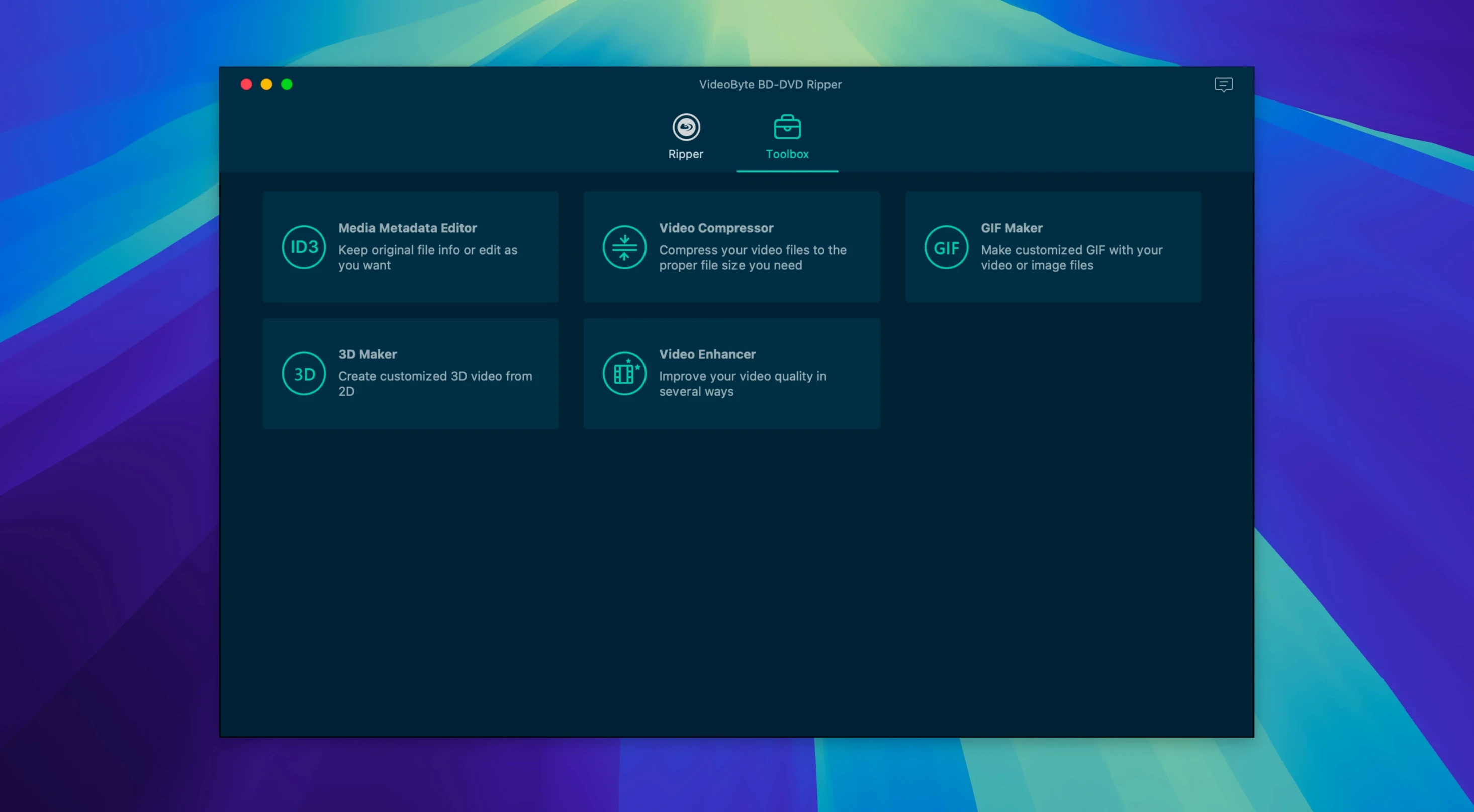
Beyond the core rip, small editing touches add value without pulling you into a separate editor: rotate a home movie disc, add a subtle watermark, or apply a gentle sharpening filter. The tool stays focused on the task, and because it handles both Blu-ray and DVD in one interface, there is no need to juggle separate utilities.
Feeds your Plex library from discs you already own
VideoByte BD-DVD Ripper is not trying to be the only app you ever open. It works best as a supply line, feeding files into the tools you already use. The most natural pairing is with a media server like Plex or Infuse. Rip a disc to a high-bitrate MKV, drop it into a watched folder, and the server scrapes the artwork and metadata while you make a cup of tea. The app’s habit of preserving original audio tracks and subtitles means the server sees a complete package rather than a stripped-down file that needs extra fiddling.
Another quiet integration sits in the preset list. The Apple device profiles — covering iPads, iPhones and Apple TV — hand off files that iTunes (or the TV app on newer macOS releases) accepts without complaint. Dragging the resulting MP4 into the library triggers the usual iCloud sync, so a film ripped at lunchtime appears on an iPad by the evening. Final Cut Pro and iMovie users will also recognise the MOV and MP4 output as edit-friendly; drop a converted home-video DVD straight onto a timeline and the transcoding step is already done.
On a system level, the app plays nicely with the macOS Open With menu. Right-click a ripped file in Finder, choose QuickTime Player for a quick check, or send it to Compressor if further format gymnastics are needed. Because the output lands as a plain file on the desktop or in a folder of your choosing, Spotlight indexes it like any other media. A videobyte bd-dvd ripper crack query often leads people here, and the real convenience is how the resulting files behave like citizens of the Mac ecosystem rather than proprietary lock-ins.
The app also respects the Mac’s multi-volume workflow. If an external drive holds your BDMV folder backups or ISO archives, pointing VideoByte at that drive works without fuss. The hardware acceleration hooks tap into whatever GPU the Mac has available — Intel Quick Sync on older machines, AMD on later Intel iMacs — so the encoding load spreads sensibly across the system rather than pinning the CPU fan at full tilt.
Archivists with box sets value the batch-by-batch design
Three groups tend to get the most from this app, and for quite different reasons.
Home-media archivists — the people with shelves of Doctor Who box sets and Criterion Collection spines — value the batch-friendly design. Loading disc after disc into the same interface builds a rhythm, and the preset system means settings are dialled in once, then reused. The trimming tool earns its keep here: lopping off piracy warnings and trailers before the rip saves drive space and keeps the library tidy. For a collector working through a hundred discs over a wet winter, those few clicks per disc add up to hours saved.
Families with mixed devices form the second group. Parents might want a Blu-ray on an iPad for the back seat, on a Samsung TV in the living room, and on an old MacBook for a cabin trip. The device presets remove the guesswork — pick the Samsung profile for the TV, Apple for the tablet — and the app remembers the last few format choices so the pattern becomes automatic. The dvd ripper torrent route occasionally tempts people hunting for older disc software, but having one app that reads both DVD and Blu-ray simplifies the household tech-support role considerably.
The third group is video editors dealing with legacy source material. Wedding videos burned to DVD a decade ago, corporate training discs, or short films distributed on Blu-ray at festivals all need to become editable files. The app’s ability to pull a straight MP4 or MOV from a disc — without recompressing the picture more than necessary — makes it a quiet workhorse in a post-production corner. The cropping and rotation tools handle discs authored in the wrong aspect ratio, a surprisingly common problem with early DVD burners.
Trim handles snap to chapters inside the preview player
A few features sit just below the surface and are easy to walk past on first launch. The preview player, for instance, is not just for checking the source. Click through to a specific chapter and the trim handles automatically jump to that point, which is faster than scrubbing through a two-hour film. The chapter markers also appear in the output file if the format supports them — MKV and MP4 both do — so the finished video retains scene navigation.
In the audio settings panel, holding the Option key while clicking a track name selects only that track and deselects all others. It is a small thing, but on discs with half a dozen commentary tracks and language dubs, it saves a flurry of checkbox clicking. The subtitle handling has a similar hidden trick: dragging a subtitle track above the video track in the list forces it to burn into the picture, while leaving it in the subtitle section keeps it as a soft track that can be toggled on and off during playback. The interface does not shout about this; it is simply how the ordering logic works.
The watermark tool deserves a mention because it operates at the rip stage, not as a post-processing step. If you are sending a screener to a colleague and need a semi-transparent copyright notice or timecode burn, adding it before encoding avoids a second pass through an editor. The watermark stays crisp because the encoder handles the overlay, rather than compressing the image twice.
A quick keyboard shortcut: pressing the Space bar on a loaded disc title plays or pauses the preview, matching the macOS Quick Look convention. It feels native and cuts down on mouse trips during a long ripping session.
Garbled titles usually mean the protection scan needs a nudge
Every disc-ripping app hits edge cases, and knowing the likely ones saves frustration. The most frequent issue is a disc that loads but shows garbled or missing titles. This usually means the protection scan needs a nudge. Eject the disc, quit the app completely, reinsert the disc and let macOS mount it before launching VideoByte. On heavily protected Blu-rays — particularly newer cinema releases — the initial scan can take upwards of a minute, and trying to select a title before it finishes produces the scrambled result. Patience here is the genuine fix.
Another recurring snag: the rip completes but the audio is silent on playback. Nine times out of ten this is a codec mismatch in the chosen output container. The app lets you wrap DTS-HD Master Audio inside an MP4, for example, but most media players and Apple devices cannot decode it. The solution is to switch the audio setting to a more portable codec — AAC or standard AC3 — or to pick the MKV container, which is more forgiving of exotic audio formats. The videobyte torrent crowd sometimes swaps tips about container choices, but the rule of thumb is simple: MP4 for Apple hardware, MKV for everything else.
Some users report the app refusing to recognise a disc at all, showing an empty title list. This often traces back to external Blu-ray drives with outdated firmware. Check the drive manufacturer’s website for a firmware updater — many USB-powered slim drives shipped with firmware that predates certain AACS keys. A five-minute firmware flash typically resolves the issue and costs nothing.
On older Intel Macs with integrated graphics, the hardware acceleration checkbox can occasionally cause a failed encode rather than speeding things up. If a rip crashes midway or produces a zero-byte file, disable hardware acceleration in the preferences, restart the app and try again. The encode will run on the CPU and take longer, but it will finish. This is most common on Macs from the 2012–2015 era where the Intel HD Graphics driver and the app’s encoder do not quite see eye to eye on certain frame sizes.
Finally, if the Gatekeeper bypass during installation seems to have failed, the surest route is to right-click the launcher and choose Open from the context menu rather than double-clicking. The right-click method presents a slightly different security dialogue that includes an explicit Open button, and it tends to stick more reliably across macOS updates.
- macOS 10.10 or later
- Intel processor (64-bit)
Questions from the class 0
Sign in or join the class to ask a question.
Nobody has asked anything yet. If you have used it on a real job, say what the file did.
Also on the Mac Apps shelf
The whole Mac Apps shelf VideoProc Converter AI
Bundles video conversion, AI upscaling, compression, and downloading into one toolkit.
VideoProc Converter AI
Bundles video conversion, AI upscaling, compression, and downloading into one toolkit.
 VideoProc Converter
Converts, compresses, trims, and records video with hardware-accelerated speed.
VideoProc Converter
Converts, compresses, trims, and records video with hardware-accelerated speed.
 Vivid
Unlocks a second brightness ceiling your MacBook screen can already reach.
Vivid
Unlocks a second brightness ceiling your MacBook screen can already reach.
 Vector Magic
Converts bitmap images into clean vector graphics you can scale forever.
Vector Magic
Converts bitmap images into clean vector graphics you can scale forever.
 ViWizard Spotify Music Converter
Saves your Spotify tracks as clean local audio files for offline listening.
ViWizard Spotify Music Converter
Saves your Spotify tracks as clean local audio files for offline listening.
 VMware Fusion Pro
Runs Windows and Linux virtual machines directly on your Mac desktop.
VMware Fusion Pro
Runs Windows and Linux virtual machines directly on your Mac desktop.
 Unclutter
Collects your clipboard history, recent files, and quick notes in one swipe-down panel.
Unclutter
Collects your clipboard history, recent files, and quick notes in one swipe-down panel.
 WALTR PRO
Converts and transfers any media file onto your iPhone or iPad with a single drag.
WALTR PRO
Converts and transfers any media file onto your iPhone or iPad with a single drag.