 ASPNetWorld
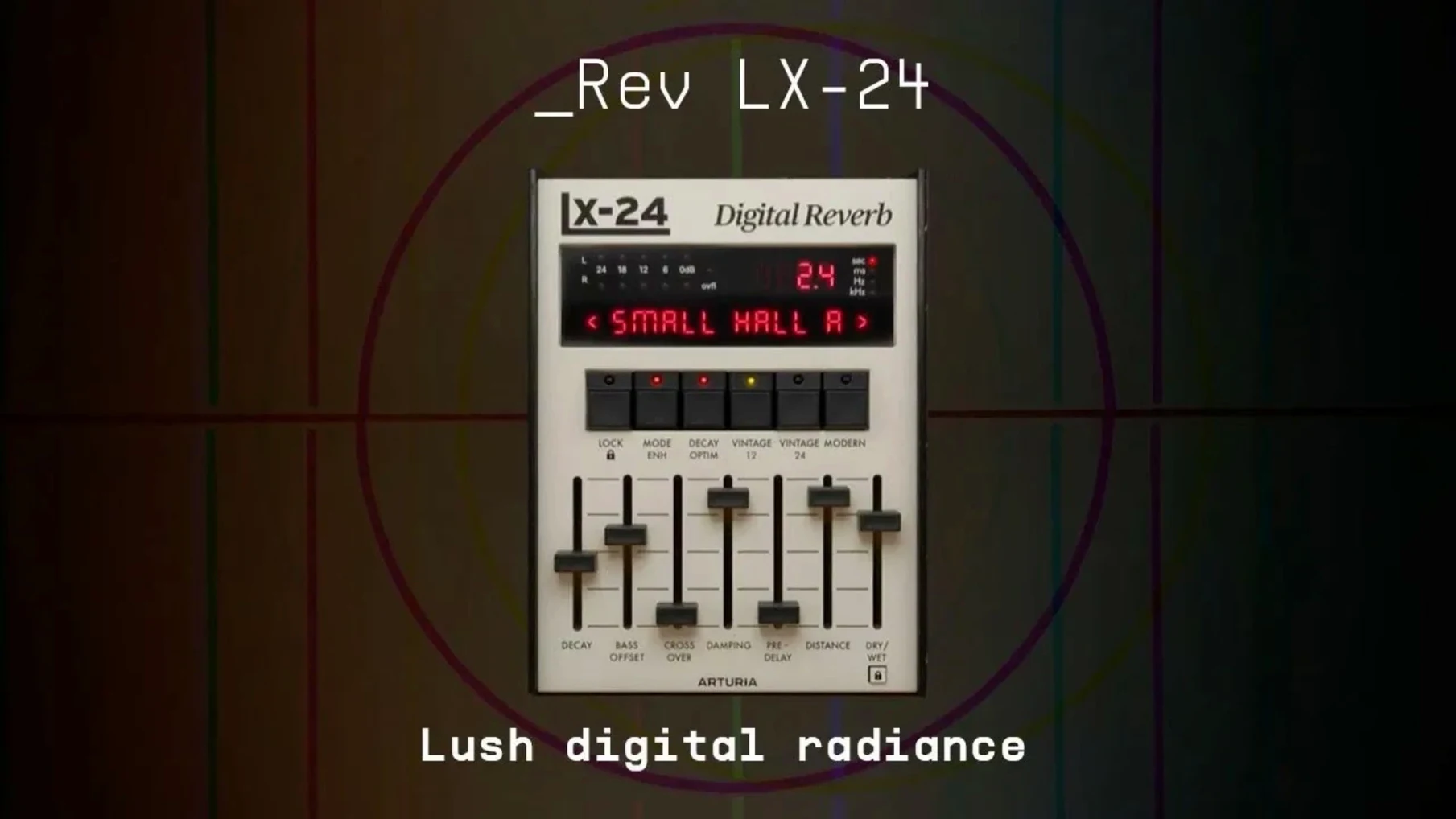
Version 1.2.1-6567 refreshes the macOS build with no change to the effect itself — the update is about keeping the plugin comfortable on current Apple hardware, both ARM and x86 64-bit.
VST, AAX, AU and NKS — four plug-in formats covering Cubase, Pro Tools, Logic Pro, Ableton Live, Studio One and most other 64-bit DAWs. One installer, four ways in.
macOS 11.0 or later — the oldest operating system the plugin will install on, so older Macs stuck on Catalina or earlier need to sit this one out.
Apple Silicon and Intel — the build runs natively on both architectures, so no Rosetta translation layer is required on M-series machines.
English interface — the only language offered, with all labels and tooltips in plain English.
Sound-wise, this is Arturia's enhanced take on a retro ambience box. The plugin listens to the incoming signal, gauges its level and character, and adjusts the decay time to suit — a quiet guitar note rings out longer than a snappy snare hit without you touching a single knob. An interactive visualizer lets you click and drag the reverb tail itself, reshaping the space as if you were pulling taffy.
Catching side-information makes it unusually good on an aux send
The Rev LX-24 slides into a signal chain like any other plug-in, but the way it catches side-information from a track makes it unusually good at living on an aux send. Route a handful of channels through it and the built-in level-sensing keeps the wash from turning into soup — quieter sources hold their tails while louder ones push through drier, almost as if you had a finger on the fader. That same sensing feeds the ducking effect: the reverb pulls back when the dry signal speaks, then swells in the gaps. In a busy mix, that is the difference between a vocal that floats and one that drowns.
On the macOS side, the plug-in behaves like a well-mannered citizen. It exposes parameters to Logic Pro’s Smart Controls and to Ableton Live’s Configure mode without any coaxing, so you can map decay, damping and the gate threshold to hardware knobs or a control surface in seconds. If you use Komplete Kontrol or Maschine, the NKS mapping means the hundred presets show up as tagged, previewable sounds straight from the browser — no mouse required.
One often-overlooked trick: the plugin’s modern converter mode. Switch it on and the top end cleans up noticeably, losing the grainy 12-bit crust of the original hardware while keeping the dense, modulated tail intact. That makes it pair brilliantly with a tape emulation earlier in the chain — the Rev LX-24 supplies the space, the tape supplies the warmth, and together they do a convincing impression of a mix printed in a very expensive late-eighties control room.
Turning a warehouse door slam into a sci-fi atmosphere with the Plate algorithm
Imagine a sound designer working on a sci-fi game. She has a recording of a metal door slamming in a warehouse — great attack, zero atmosphere. She drops Rev LX-24 onto the track and pulls up the Plate algorithm. The visualiser shows a tight, bright bloom that she can click and stretch sideways, lengthening the tail without touching the decay knob. She drags it out to nearly four seconds, then engages the tremolo module, syncing it to quarter-note triplets. The result is a metallic ring that pulses and breathes, turning an industrial thud into the sound of a bulkhead closing on a spaceship that has seen better days. She bounces the stem, pulls it into the game engine, and moves on to the next cue. Total time: about three minutes.
Switch the algorithm early to escape the forgettable small-hall preset
Out of the box, the plugin loads a small-hall preset that is polite to the point of being forgettable. Two quick moves get it into more interesting territory.
Switch the algorithm early. The eight models are not subtle variations on a theme — the Concert Hall blooms slowly and hangs in the air, while Chamber is tighter and more forward, and the Nonlinear setting can stop a sound dead with almost no tail at all. Pick the algorithm before you start turning the decay knob, because a two-second decay on a plate sounds nothing like a two-second decay on a room. It is the single biggest character decision you will make.
Explore the gate. Most people reach for decay and damping and leave the gate untouched. That is a missed opportunity. A gentle gate — threshold set just above the noise floor, release around 200 ms — turns a sprawling cathedral into a controlled, 1980s drum ambience without making it sound chopped. Push the release shorter, below 100 ms, and you get that tight, explosive snare verb that defined a thousand gated-reverb hits. The visualiser shows exactly where the gate clamps down, so you can shape the envelope by eye as well as by ear.
The current update keeps the plugin aligned with modern Macs. Version 1.2.1.6567 refreshes the macOS build — same sound, same controls, but packaged for current Apple hardware and operating systems.
- macOS build updated to 1.2.1.6567.
- macOS 11.0 or later
- Apple Silicon or Intel 64-bit processor
- 64-bit DAW supporting VST, AAX, Audio Unit or NKS
- Interface language: English
Questions from the class 0
Sign in or join the class to ask a question.
Nobody has asked anything yet. If you have used it on a real job, say what the file did.
Also on the VST Plugins shelf
The whole VST Plugins shelf Arturia Pigments
Rewards sound designers with a deep, semi-modular engine for building patches from scratch.
 Arturia Tape MELLO-FI
Degrades a clean signal into a wobbling, softened, tape-aged version of itself.
 Arturia Mellotron V
Summons the breathing, unstable tape textures of the original Mellotron without the maintenance.
 Arturia FX Collection
Bundles over thirty precise modelled processors, from studio classics to creative oddities.
 Arturia Emulator II V
Recreates the crunchy, grainy character of an early 8-bit sampling keyboard.
 Arturia Efx AMBIENT
Generates evolving, three-dimensional backgrounds from any static input signal.
 Arturia Augmented Voices
 Arturia Analog Lab V
Gives you thousands of production-ready presets you can shape with simple macro controls.