 ASPNetWorld

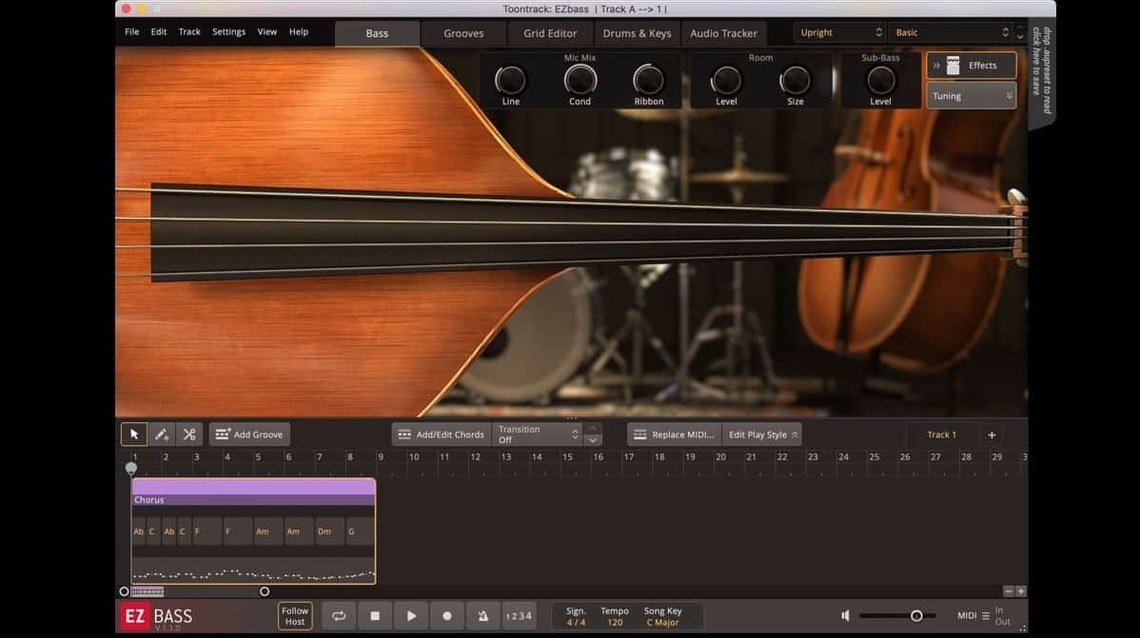
Every producer knows the moment: the drums are punching, the chords have movement, but the low end just sits there like an unmade bed. A static MIDI bass patch can anchor a track, but it rarely gives you the fingerstyle detail, the ghost notes, or the slight push-and-pull a real player brings. EZbass is built around the idea that a bass part should feel like a performance, even when it starts life as a slice of audio or a handful of keyboard chords.
The heart of the instrument is a pair of deeply sampled bass guitars — one vintage, one modern — each captured with the sort of detail that lets you choose between fingerstyle and pick, move your hand position along the string, and dial in just the right amount of fret rattle. That matters the moment you push a bass up against a dense mix: a note played closer to the bridge cuts through differently than one played near the neck, and having that choice inside a plug-in keeps you from reaching for yet another EQ.
What sets it apart from a conventional sampler is the audio-to-MIDI engine. Drop in a guitar riff, a hummed bassline, or even a drum loop, and EZbass traces its pitch and timing, turning the audio into a MIDI performance that slots straight onto its virtual fretboard. From there the real fun starts: you can swap in a completely different instrument, shift the articulation, or let it generate a fresh bassline from a drum or keyboard MIDI part. It is a songwriting tool as much as a mixing one, and the workflow feels less like programming and more like auditioning ideas with a session player who never gets tired.
Version 1.3.3 fills in a few practical gaps. The Mac icon now sits comfortably in the macOS Tahoe visual style, some keyboard shortcuts are finally reassignable in Settings, and the right-hand mute articulation — a tight, percussive sound that keeps rock basslines clean — is supported when you use the Rock Legend EBX expansion. Small changes, but they nudge the experience closer to feeling like a real instrument under your hands.
Mistakes worth sidestepping
Most people open EZbass, drop a MIDI groove into their DAW, and expect magic on the first bar. The result is often a bassline that plays every note at the same velocity, dead on the grid, with the default fingerstyle articulation. It is not wrong — it just sounds like a machine. The first habit worth building is spending sixty seconds inside the Grid Editor, nudging a few downbeats slightly ahead of the beat and pulling back the velocity on ghost notes. Bass lives in the cracks between perfectly quantised time, and the software gives you the tools; it just does not force you to use them.
Another common stumble is ignoring hand position. The same F-sharp played at the third fret of the D string has a thicker, rounder bloom than the one at the ninth fret of the A string, and if your bass part never moves beyond the default position you are leaving a lot of tonal shaping on the table. A quick rule of thumb: for verses, try moving the hand toward the neck for warmth; for choruses, shift toward the bridge to let the attack poke through a busier arrangement. The difference is not subtle.
Finally, the audio-to-MIDI engine is clever but not clairvoyant. Feed it a muddy full mix and it will chase harmonics that do not belong to any bass note. The cleaner the source, the cleaner the conversion — isolate the bass region with a high-pass filter around 80 Hz and a low-pass around 5 kHz before you bounce, and you will spend far less time deleting stray MIDI notes afterwards. Many people exploring an EZbass torrent find the conversion works beautifully once they learn to feed it a well-prepared, focused signal.
Three friction points that 1.3.3 quietly removes
Version 1.3.3 is not a headline-grabbing overhaul, but three changes quietly smooth out friction that regular users had learned to tolerate. The macOS Tahoe-style icons are a small visual refresh, yet they stop the standalone app and project file from looking like relics from a previous operating system — a detail that matters more than it should when you are scanning a crowded Dock at two in the morning. The fix for menu click responsiveness inside newer Apple hosts is the sort of invisible correction you only notice by its absence: previously, a rapid click through a context menu in Logic Pro might miss, and now it does not.
The keyboard shortcut reassignment, tucked into Settings, finally lets you match the software to muscle memory rather than the other way around. If you have spent years hitting a particular key combination for quantise or playback in another Toontrack instrument, you can now bring that consistency across. And the right-hand mute articulation support for the Rock Legend EBX expansion means the tight, choked eighth notes that define a driving rock verse no longer require workarounds — the articulation slots in as a playable technique, not a programmed afterthought. Anyone who has grabbed a Toontrack EZbass torrent specifically to build rock tracks will find that single addition changes how much manual editing a part needs.
The philosophical split when you place it next to Scarbee Rickenbacker
Placed next to Native Instruments Scarbee Rickenbacker Bass, the philosophical split is clear. Scarbee gives you one bass, sampled with almost obsessive focus on its particular voice — the growl, the clank, the finger noise of a specific instrument recorded in a specific room. EZbass gives you two core basses and an entire generation engine that can suggest parts you had not thought of. If you already know exactly the bassline you want and just need that Rickenbacker tone, Scarbee delivers. If you are still shaping the arrangement, EZbass acts more like a co-writer.
IK Multimedia MODO BASS 2 takes a different route again, modelling the physical behaviour of strings, pickups, and body resonance rather than relying purely on samples. The upside is extraordinary tweakability — string gauge, action height, even the player’s plucking style — but the learning curve is steeper, and the results can sound a little clinical until you warm them with external processing. EZbass trades some of that microscopic control for immediacy. Its samples carry the room and the preamp baked in, so the sound arrives already coloured in a musically useful way. For a songwriter who wants a bass part that sits in a mix within minutes rather than hours, that baked-in character is often the smarter shortcut. It is one reason people searching for an ez bass torrent tend to keep it installed even after trying the alternatives: the time-to-music ratio is genuinely hard to beat.
Version 1.3.3 is a tidy maintenance update that refines the playing and the interface.
- Right-hand mute articulation is now supported, letting you use the tight, percussive palm-muted tones from the Rock Legend EBX expansion.
- Several keyboard shortcuts can be changed inside Settings, so you can adapt the workflow to your own muscle memory.
- The standalone app icon and project icon on Mac have been updated to match the macOS Tahoe visual style.
- macOS 10.15 or later
- Intel or Apple Silicon Mac
- Interface language: English
Questions from the class 0
Sign in or join the class to ask a question.
Nobody has asked anything yet. If you have used it on a real job, say what the file did.
Also on the VST Plugins shelf
The whole VST Plugins shelf EZdrummer
Builds full drum tracks from your ideas when no drummer is available.
EZdrummer
Builds full drum tracks from your ideas when no drummer is available.
 FabFilter Total Bundle
Brings together a suite of tools to shape and polish your mixes.
FabFilter Total Bundle
Brings together a suite of tools to shape and polish your mixes.
 elastiquePitch
Shifts the pitch and formant of a recording independently without changing its length.
elastiquePitch
Shifts the pitch and formant of a recording independently without changing its length.
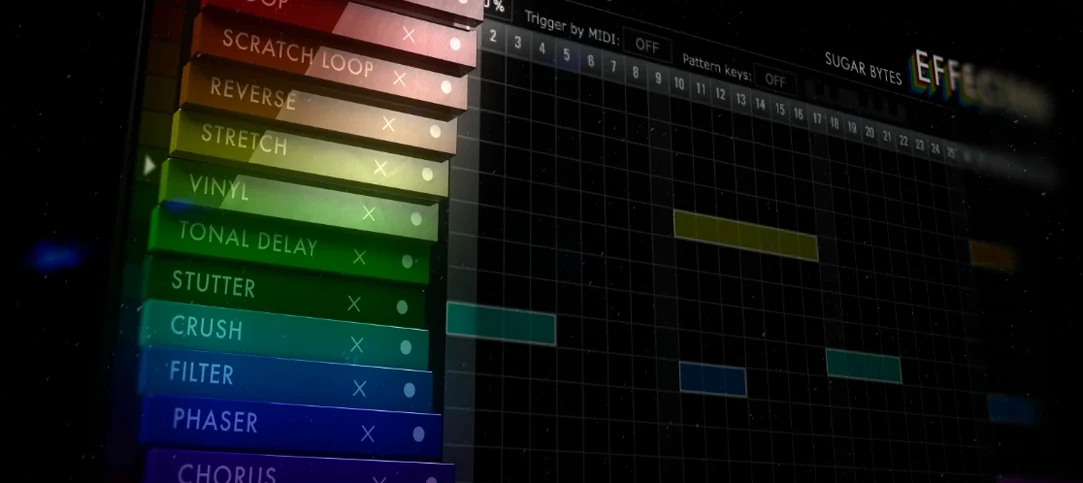 Effectrix
Paints sequenced audio effects across a step grid to transform a loop over time.
Effectrix
Paints sequenced audio effects across a step grid to transform a loop over time.
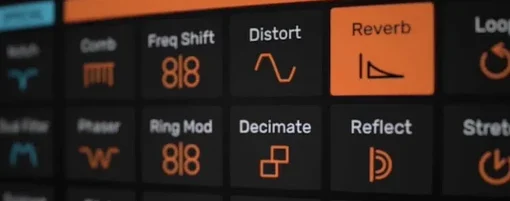 Devious Machines Infiltrator
Sequences a chain of audio effects step by step from a single MIDI note.
Devious Machines Infiltrator
Sequences a chain of audio effects step by step from a single MIDI note.
 Cymatics VOXITY
Puts a lead vocal's EQ, compression and spatial sweetening inside a single plug-in.
Cymatics VOXITY
Puts a lead vocal's EQ, compression and spatial sweetening inside a single plug-in.
 Cymatics QUAKE
Synthesises weighty 808 bass sounds from scratch with built-in saturation circuits.
Cymatics QUAKE
Synthesises weighty 808 bass sounds from scratch with built-in saturation circuits.
 iZotope Insight
Displays detailed visual readings of loudness, spectrum and stereo spread while you mix.
iZotope Insight
Displays detailed visual readings of loudness, spectrum and stereo spread while you mix.