 ASPNetWorld


Turning the Overlord monosynth’s Shape dial doesn’t just filter the tone — it re-sculpts the waveform itself, pushing what you’d expect from a guitar plugin into genuinely synth-like territory. That sense of a ground-up design runs through the whole signal chain. The amplifier and effects are original Neural DSP creations, not digital clones of existing hardware, so the gain structures and modulation feel less like a familiar tribute and more like a dedicated modern toolkit.
- The Overlord monosynth tracks your playing and offers continuous waveform morphing, from a pure triangle swell to a sawtooth bite, all before it hits an amp.
- A dedicated three-band EQ and a tight, punchy compressor sit before the amp stage, letting you shape the transient and weight of the synth or your dry guitar separately.
- The amplifier section’s response is immediate but not harsh — think of it as a platform that stays articulate even when the octave fuzz or a cavernous reverb is piled on afterward.
- Time-based effects, including a richly modulated delay and a reverb that can stretch into a freeze function, let you build pads that drift far from the initial pick attack.
What ties it together is how the routing encourages you to treat the guitar less as a traditional instrument and more as a continuous sound source, blending playing dynamics with synthesis in a single window.
A monophonic synth engine, not a modular playground
Put Archetype Rabea X next to something like Native Instruments Guitar Rig 7 and the philosophical difference becomes clear within five minutes. Guitar Rig is a sprawling ecosystem of modelled amps, cabs and effects — a Swiss Army knife that covers everything from clean jazz to industrial noise. It includes synths too, but they live in separate containers. Rabea X takes the opposite approach: the Overlord monosynth isn’t a bolted-on extra, it’s the heart of the signal flow. You don’t patch a synth in; you play it, directly, with the guitar feeding oscillators before a single tube stage gets involved. For generating pads that swell out of a palm-muted chug or leads that morph mid-phrase, Guitar Rig can approximate the result with more routing work, but it doesn’t bake the behaviour into one responsive block.
Another frequent comparison is Line 6 Helix Native. Helix Native is a workhorse built on decades of modelled classics — its polyphonic pitch effects and harmonisers are genuinely outstanding. Yet the synth engines inside Helix are sample-based or modelled after vintage keyboard units, triggered by pitch detection rather than continuous waveform manipulation. Rabea X’s Overlord gives you two oscillators with real-time shape control that starts before the amp; Helix Native gives you a broader palette of tried-and-tested tones but less of that one-instrument, hands-on synthesis immediacy. If your sessions revolve around re-amping and building complex chains with snapshots, Helix Native wins on flexibility. If you want a single instance to feel like a new instrument rather than a processed guitar, Rabea X carves out its own niche.
Shoehorned into the same conversation — largely because of the neural dsp bundle mac searches — is Archetype Gojira X. Even when someone types neural dsp gojira mac torrent or neural dsp gojira x torrent, the intent often reveals a guitarist torn between crushing modern metal rhythm tones and the more textural, synth-laden playground Rabea X offers. Gojira X is tighter, angrier, with a pitch-shifting section that excels at downtuned, percussive riffs. It doesn’t include a monosynth. So the overlap exists mainly in the Archetype family’s shared quality-of-life features — the same preset management, the same clean window scaling, the same low-latency standalone mode — while the creative paths diverge sharply after the input jack.
Overlord chokes on chords because it tracks single notes
The first stumble is treating Overlord like a traditional octave pedal. A player plugs in, dials up a saw wave, strums a full six-note chord and gets a garbled mess. Overlord is monophonic — it tracks one note at a time, and while the manual confirms it can trigger up to two oscillators simultaneously, those oscillators follow a single pitch source. Chords confuse the tracking engine. The fix is simple: play single-note lines, double-stops at most, and let the amp and reverb create the width instead.
Another common misstep is feeding the plugin a signal that’s already been heavily compressed or gained-up from external pedals. The internal compressor before the amp stage is fast and tuned to work with a direct, unprocessed guitar signal. Stacking an external compressor on top pushes the transients into a flat, lifeless zone where the synth tracking becomes sluggish. Back off any hardware compression, set your interface’s input gain conservatively, and let the plugin’s own dynamics handling do the sculpting.
The third trap sits in the effects section. Because the delay and reverb can get so expansive — the freeze function practically begs you to hold a drone forever — beginners often drench everything in wash before dialling in the dry tone underneath. The result is a blur that disappears in a mix. A more productive habit: build the core amp-and-synth sound until it stands firmly on its own, then add ambience until it feels like a space you could walk into, not a fog you can’t see through.
Patch switching between sessions no longer glitches
Version 1.0.1 arrived as a maintenance release, but a few of its fixes quietly improved everyday workflow. Before the update, some users reported occasional preset-loading hiccups when switching rapidly between sessions — a minor but persistent friction when you’re auditioning tones during a writing sprint. The update smoothed that out, and the preset browser now feels snappier on both Intel and Apple Silicon Macs running macOS 10.15 or later.
Several graphical quirks were addressed too. On certain display scaling settings, the Overlord waveform preview could stutter or fail to redraw after waking a Mac from sleep. Post-update, the interface repaints reliably, which matters more than it sounds: when you’re tweaking the Shape control and watching the waveform morph in real time, a frozen display breaks the mental connection between hand and ear. The fix keeps that small but satisfying visual feedback loop intact.
Under the hood, the update also tightened the plugin’s behaviour when loaded inside hosts that run multiple instances side by side — think of a production template with separate instances for verse, chorus and ambient layers. Memory handling improved, and the chance of a dropout when arming several tracks at once dropped noticeably. None of this rewrites what the plugin does, but it makes the doing smoother when you’re deep in a session and haven’t got patience for troubleshooting.
Building a breathing pad that sits beneath a vocal
Imagine a producer opening a blank project late in the evening, not to track a song but to chase a texture. The brief is simple: build a pad that breathes, something that moves under a vocal without stealing attention. An electric guitar — a basic dual-humbucker model — is plugged straight into the interface. No pedals, no outboard. The input gain sits at a modest -8dB.
First, she inserts Archetype Rabea X on a stereo aux track. The standalone window pops up with the Overlord section front and centre. She ignores the amp for now and sets the first oscillator to a triangle wave at a medium blend, then nudges the second oscillator toward a square wave sitting an octave below. The Shape control gets a slow clockwise turn while she plays a lazy three-note melody on the bass strings — she watches the waveform preview transform from a gentle curve into something sharper, listening for the point where the tone loses its cushion and bites instead. She settles just before that threshold.
With the synth voice roughed in, she moves to the compressor. The threshold drops until the needle nudges on every note, ratio kept low — more glue than squash. The three-band EQ follows: a gentle low-mid cut to stop the triangle wave from muddying the space a piano will later occupy, and a slight high-shelf lift to give the square wave’s upper harmonics a sliver of air.
The amp arrives next. She chooses a clean setting with the gain barely cracking, pushing the master volume until the tone feels full but not driven. The amp’s natural compression blends with the earlier stage so the whole chain breathes together. A touch of octave fuzz gets blended in at maybe fifteen percent, just enough to add a faint granular edge when she digs in harder.
Now the time effects. The delay is set to a dotted eighth with moderate feedback and a high-pass filter
- macOS 10.15 or later
- Apple Silicon or Intel processor
Questions I keep hearing
Does Archetype Rabea X work natively on Apple Silicon Macs?
Yes, the plugin includes native Apple Silicon support alongside Intel compatibility, and runs on macOS 10.15 and later.
Questions from the class 0
Sign in or join the class to ask a question.
Nobody has asked anything yet. If you have used it on a real job, say what the file did.
Also on the VST Plugins shelf
The whole VST Plugins shelf Neural DSP Archetype Petrucci
Recreates the signature amplifier and effects rig of a progressive-metal guitarist.
Neural DSP Archetype Petrucci
Recreates the signature amplifier and effects rig of a progressive-metal guitarist.
 Neural DSP Mantra
Processes a vocal track with pitch correction, compression, saturation, and spatial effects inside your DAW.
Neural DSP Mantra
Processes a vocal track with pitch correction, compression, saturation, and spatial effects inside your DAW.
 Neural DSP Parallax X
Shapes the low-end of a bass guitar with a multi-band processor for clarity and weight.
Neural DSP Parallax X
Shapes the low-end of a bass guitar with a multi-band processor for clarity and weight.
 Neural DSP Soldano SLO-100 X
Recreates a classic high-gain valve amplifier head and its matching speaker cabinet.
Neural DSP Soldano SLO-100 X
Recreates a classic high-gain valve amplifier head and its matching speaker cabinet.
 Native Instruments Massive X
Generates deep, moving bass and lead sounds through a polyphonic wavetable synthesis engine.
Native Instruments Massive X
Generates deep, moving bass and lead sounds through a polyphonic wavetable synthesis engine.
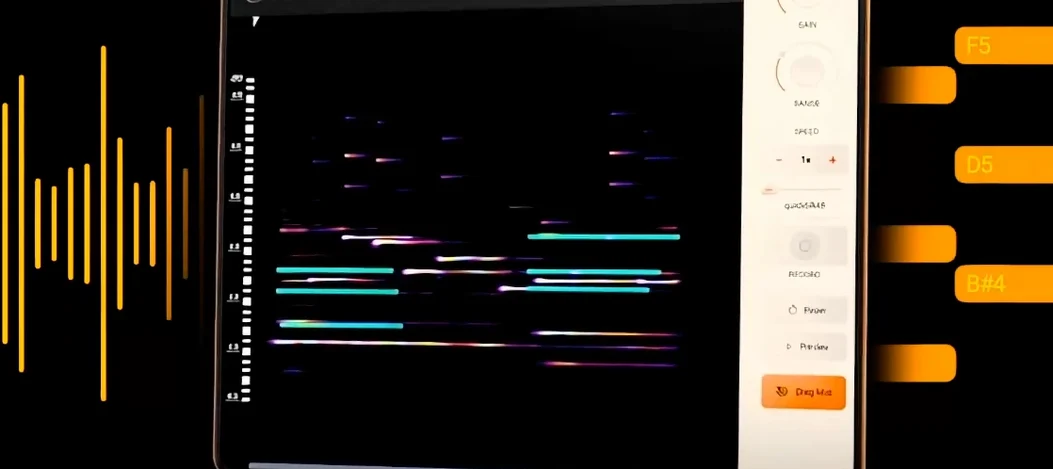 noteGRABBER
Converts the pitch and timing of one audio track into MIDI notes that drive a synth you choose.
noteGRABBER
Converts the pitch and timing of one audio track into MIDI notes that drive a synth you choose.
 Nudist Audio Nudistort
Shreds audio with aggressive wavefolding, bit-crushing, and resonant filter destruction.
Nudist Audio Nudistort
Shreds audio with aggressive wavefolding, bit-crushing, and resonant filter destruction.
 oeksound soothe2
Tames harsh resonances in a recording automatically, like a spectral finger smoothing out rough edges.
oeksound soothe2
Tames harsh resonances in a recording automatically, like a spectral finger smoothing out rough edges.