 ASPNetWorld

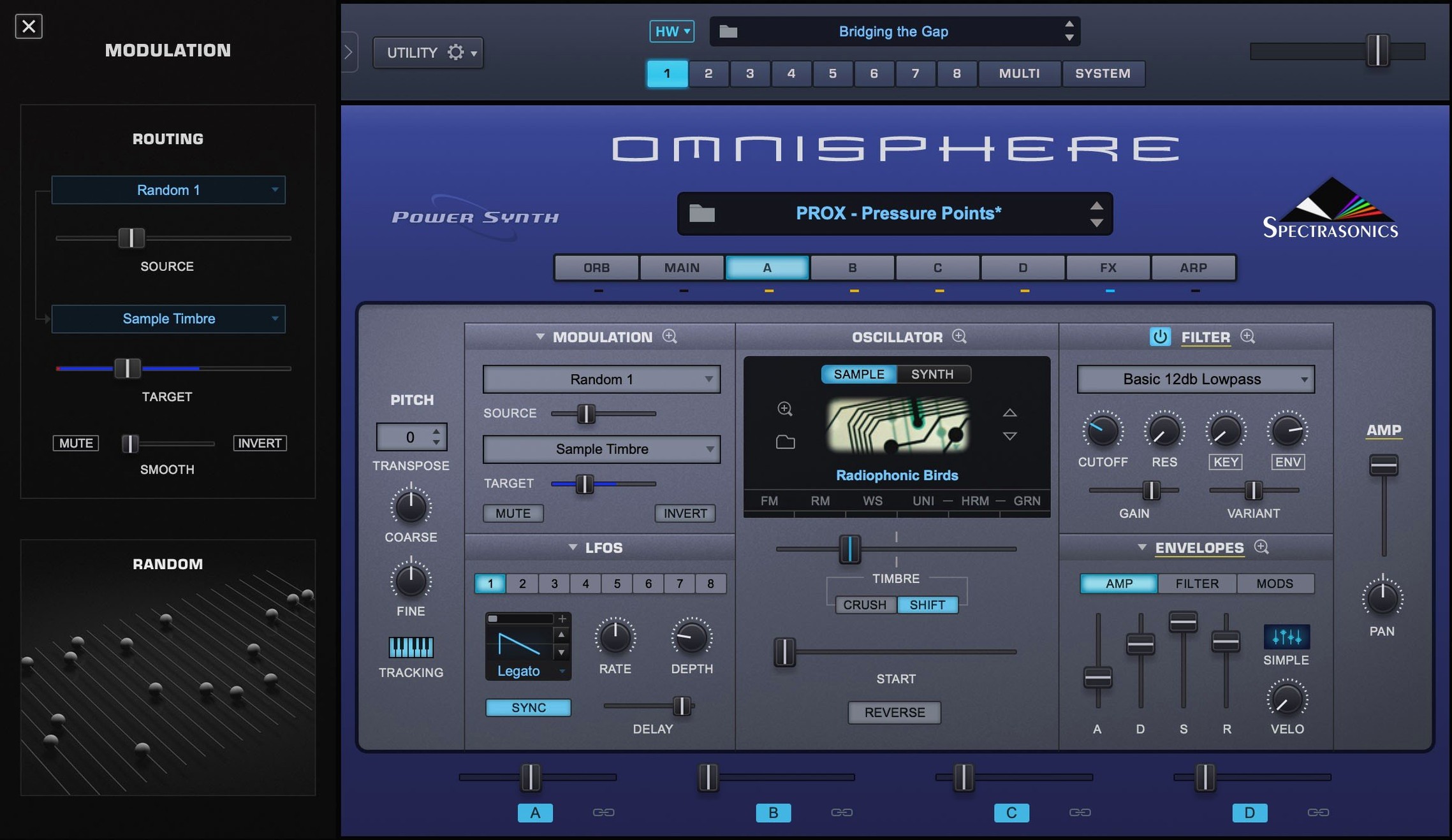
The STEAM folder alone, holding the factory library, can easily exceed 60 GB of samples, wavetables and patches — a figure that tells you how obsessed Spectrasonics is with detail before you even play a note.
What makes the signal flow feel so open-ended?
A single patch can layer up to four sounds, each with its own synthesis engine. You might feed a wavetable oscillator into a granular engine's input, then run that through a sampled resonator, so the whole thing behaves less like a preset and more like a miniature modular chain that just happens to live inside one plug-in window.
How does the modulation system shape the tone?
Rather than routing one LFO to one destination, Omnisphere encourages you to think in webs. A slow-moving envelope can gently nudge the wavetable position while an audio-rate modulator adds grit; the Orb controller then lets you morph between collections of these routings with a single circular gesture, pushing a pad from glassy to snarling without jumping between snapshots.
What role does the hardware integration play in the sound?
When you connect a supported hardware synth, the plug-in maps its own architecture to the physical knobs, but it also pulls in the synth’s character. A filter sweep on a real analogue board translates into a response curve that feels tighter and more reactive than a mouse-drawn automation lane, letting you play the software like an instrument rather than programming it.
Straightforward fixes for the odd early stumble
Omnisphere's depth means the odd stumble is almost part of the learning curve. The good news is that most of these have straightforward fixes once you know where to look.
The STEAM folder isn't found on launch
This is the one that catches people fresh from an omnisphere 3 download mac installation. The plug-in boots, flashes a warning about missing soundsources, and you're staring at an empty browser. The STEAM folder — that hefty 60 GB-plus library — needs to sit in a specific location, typically /Users/username/Library/Application Support/Spectrasonics/STEAM. If you've moved it to an external drive to save space, you'll need to create a macOS alias or a symbolic link at that exact path pointing to the real folder. Just dragging a shortcut won't do it; the alias file has to sit where Omnisphere expects to find its factory content.
Patch loading feels sluggish
Even on a fast Apple Silicon machine, a patch that pulls in multiple large samples can pause for a second or two. A spinning external hard drive is the usual culprit — the STEAM folder wants a solid-state drive, ideally the internal one or a Thunderbolt enclosure. Inside the plug-in's System pane, you can also tick Lite Version for particular parts within a multi, which loads truncated samples and dramatically speeds up browsing while you're hunting for the right starting point.
CPU spikes with dense multis
Four layers, each with its own granular or unison stack, can chew through a surprising amount of processing headroom. Rather than thinning out a sound you love, try the Sample Thinning control tucked into the advanced tab of each layer — it intelligently reduces voice density without gutting the timbre. Freezing or bouncing the track in your DAW is the blunt instrument, but for live jamming, lowering the global voice count in the System menu often reclaims enough cycles to keep playback clean.
Hardware synth integration won't handshake
The profile system can occasionally be stubborn. First, check that your hardware synth is transmitting and receiving on the correct MIDI port — Omnisphere listens on whatever port you've assigned in the standalone app's audio/MIDI preferences or via your DAW's routing. The Hardware Profile page under the System menu needs the exact make and model selected; if your board isn't listed, Spectrasonics maintains a growing roster of profiles that a patch update might add. A forgotten MIDI channel mismatch between the synth and the plug-in is behind a surprising number of "my knobs aren't doing anything" moments.
How Omnisphere fits with other apps and macOS features
Omnisphere isn't an island. It slots into a wider ecosystem of tools and system capabilities, and understanding those connections opens up workflows that go far beyond loading a plug-in in your DAW.
The AUv3 format isn't supported here — this is an AU, VST and AAX instrument — but macOS's system-wide Audio MIDI Setup utility is still relevant. When you run the standalone application, Omnisphere registers as a Core MIDI destination, meaning you can pipe MIDI from a utility like MidiPipe or a Max patch directly into it without a DAW acting as middleman. That standalone app also respects the system's aggregate device settings, so routing its output into a separate recording app such as Audio Hijack for quick idea capture is trivial.
Inside a DAW, Omnisphere's plug-in instances can be loaded across multiple tracks while all pointing at the same STEAM folder, but the truly tidy workflow comes from treating a single instance as a multi-timbral instrument. You can set up eight channels, each with its own patch, and feed them from separate MIDI tracks in Logic, Ableton Live or Cubase. The multi-out routing option then lets you split those channels to individual mixer strips for independent effects processing — your kick drum sound from Omnisphere hits one channel strip, your pad hits another, and neither is at the mercy of a single reverb send.
macOS's Spotlight search won't index individual patches or soundsources by default, but you can add the STEAM folder to the Privacy tab's exclusion list and then remove it again to force a re-index if you want to hunt for sounds by filename from the menu bar. More usefully, the plug-in respects macOS accessibility zoom — hold Control and scroll with a trackpad or mouse to magnify a busy modulation pane, which makes fine-tuning the Orb or a complex envelope that much easier on the eyes.
A hybrid that defies direct ROMpler or modular comparisons
Omnisphere occupies a peculiar spot on the synthesis map. It's not quite a pure workhorse ROMpler, nor is it a deep modular environment — it's both, and that makes direct comparisons with other instruments a matter of picking which angle you're viewing from.
Spectrasonics Omnisphere versus Arturia Pigments. Pigments is a beautifully visual, dual-engine synth that wears its signal flow on its sleeve — wavetable and virtual analogue oscillators, clean filters, and a modulation system where you drag colourful dots from source to destination. It's immediate, and the graphical feedback shortens the gap between intention and result. Omnisphere's modulation web is deeper but less instantly legible; where Pigments gives you a tidy row of envelope shapes, Omnisphere gives you the Orb. For a sound designer who wants to sculpt a patch in fifteen minutes, Pigments often feels faster. For someone who layers sampled acoustic textures with wavetable grit and then morphs the whole stack with a hardware knob, Omnisphere pulls ahead. Pigments also lacks anything resembling the granular engine or the hardware integration, which puts it in a different category once you lean on those features.
Spectrasonics Omnisphere versus Native Instruments Kontakt. Kontakt is a sampler first and a synthesiser second, though its scripting engine has grown so powerful that developers build remarkably sophisticated instruments inside it. The factory library alone spans pianos, orchestral sections and world instruments, often recorded with a degree of realism that Omnisphere's sound design roots don't try to chase. But Kontakt won't give you four polyphonic synthesis engines per patch, audio-rate modulation, or a circular morphing controller — it plays back samples and processes them, whereas Omnisphere treats samples as just one ingredient in a much broader synthesis soup. Many composers run both side by side, pulling realistic strings and brass from Kontakt while Omnisphere handles the evolving, hybrid textures that sit underneath.
Spectrasonics Omnisphere versus u-he Diva. Diva does one thing and does it with an almost obsessive devotion to analogue modelling — its filters and oscillators are widely regarded as some of the finest emulations in software. It doesn't do samples, granular, wavetables or hardware mapping. What it does is sound like an expensive rack of vintage synths. If a track needs a punchy, sawtooth bass that sits in the mix with weight and warmth, Diva is a strong contender. If that bass then needs to be layered with a metallic wavetable shimmer and a sampled waterphone, you're back in Omnisphere. The two complement each other rather than competing directly.
Covering lonely piano to granular drone in a single session
Film and game composers form one natural audience. When a scene needs to shift from a quiet, lonely piano felt to a tense, granular drone, Omnisphere can cover that ground inside a single project session, often without loading another plug-in. The library's breadth — acoustic, electronic, hybrid, textural — means a composer can sketch a cue quickly and then dig into sound design only as much as the deadline allows.
Sound designers working on sample packs and preset banks find the architecture rewarding because of how far a single patch can travel. One sound sources folder, four layers, and the Orb can generate dozens of variations, each exportable as a distinct snapshot. The tagging system in the browser also means a well-organised user library is searchable by mood, timbre and category long after the initial burst of creative work.
Keyboardists who own a supported hardware synth often describe the integration as the feature that finally blurs the line between hardware and software. Rather than feeling like they're playing a computer, they turn physical knobs and hear immediate, musically useful changes — the laptop becomes the sound engine for a familiar, beloved instrument.
Casual beat-makers and someone who just grabbed an Omnisphere VST torrent out of curiosity may feel a little swamped at first. The browser's star-rating system and the sheer number of factory patches help — browsing by category and mood, rather than trying to understand the synthesis engine on day one, is a perfectly valid way in. A producer who only ever loads presets is still tapping into a library that's been curated with serious attention to musicality, and there's no rule that says you have to build from scratch to get a good sound.
Scoring slow aerial footage of tidal mudflats
Maya is scoring a short documentary about tidal estuaries. The director has sent over a rough cut that opens with a minute of slow aerial footage — no dialogue, just water moving across mudflats under grey sky. She needs something that feels organic but not sentimental, with a sense of slow, inevitable motion.
She opens the Omnisphere browser and types "tide" into the search bar. Nothing. She tries "water" and gets a handful of glassy patches that are close but too bright. The "Submerged" sound source from the library feels right — it's a murky, rumbling texture that already has the weight of deep water. She drags it into Layer A and pulls the filter cutoff down until the sound is more felt than heard.
Layer B gets a wavetable oscillator set to a slow, morphing cycle, with an LFO nudging the wavetable position in time with the lap of the waves she can see on screen. She maps the Orb to control filter resonance and wavetable position together, so a gentle circular movement with her hardware synth's touch pad adds a shimmer that rises and falls
Version 3.0.2c is a maintenance update that keeps the instrument stable on current macOS releases while the core synthesis and library remain the same vast playground Spectrasonics has built over the years.
- macOS 11 or newer
- Apple Silicon (ARM) or Intel 64-bit processor
- English interface
Questions I keep hearing
Does Omnisphere work as a standalone instrument on a Mac?
Yes, it includes a standalone application alongside the usual AU, VST and AAX plug-in formats, so you can open it directly without a DAW.
Questions from the class 0
Sign in or join the class to ask a question.
Nobody has asked anything yet. If you have used it on a real job, say what the file did.
Also on the VST Plugins shelf
The whole VST Plugins shelf Output Portal
Freezes a sliver of sound in time and re-synthesises it into a shifting, ambient texture.
Output Portal
Freezes a sliver of sound in time and re-synthesises it into a shifting, ambient texture.
 oeksound soothe2
Tames harsh resonances in a recording automatically, like a spectral finger smoothing out rough edges.
oeksound soothe2
Tames harsh resonances in a recording automatically, like a spectral finger smoothing out rough edges.
 Nudist Audio Nudistort
Shreds audio with aggressive wavefolding, bit-crushing, and resonant filter destruction.
Nudist Audio Nudistort
Shreds audio with aggressive wavefolding, bit-crushing, and resonant filter destruction.
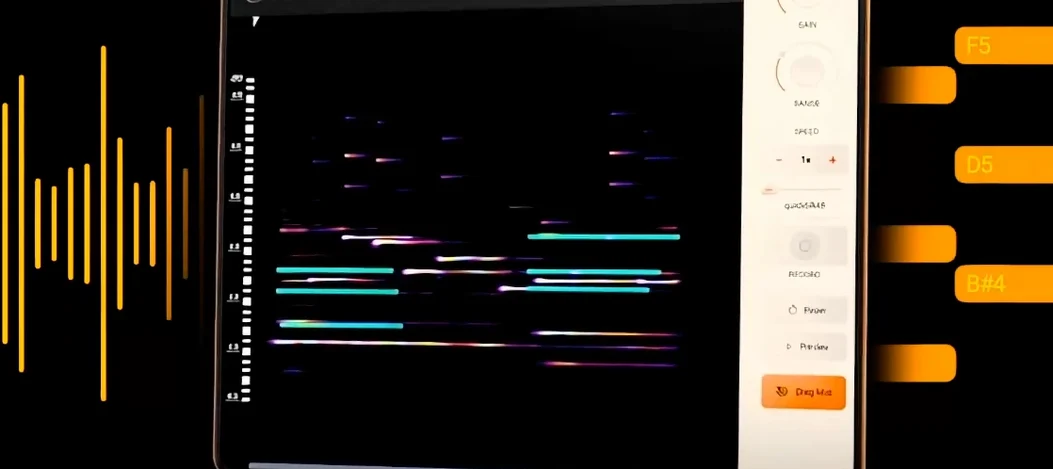 noteGRABBER
Converts the pitch and timing of one audio track into MIDI notes that drive a synth you choose.
noteGRABBER
Converts the pitch and timing of one audio track into MIDI notes that drive a synth you choose.
 Neural DSP Soldano SLO-100 X
Recreates a classic high-gain valve amplifier head and its matching speaker cabinet.
Neural DSP Soldano SLO-100 X
Recreates a classic high-gain valve amplifier head and its matching speaker cabinet.
 Neural DSP Parallax X
Shapes the low-end of a bass guitar with a multi-band processor for clarity and weight.
Neural DSP Parallax X
Shapes the low-end of a bass guitar with a multi-band processor for clarity and weight.
 Neural DSP Mantra
Processes a vocal track with pitch correction, compression, saturation, and spatial effects inside your DAW.
Neural DSP Mantra
Processes a vocal track with pitch correction, compression, saturation, and spatial effects inside your DAW.
 Neural DSP Archetype Rabea X
Recreates a versatile guitar amplifier and a built-in analogue-style monosynth in one plugin.
Neural DSP Archetype Rabea X
Recreates a versatile guitar amplifier and a built-in analogue-style monosynth in one plugin.