 ASPNetWorld

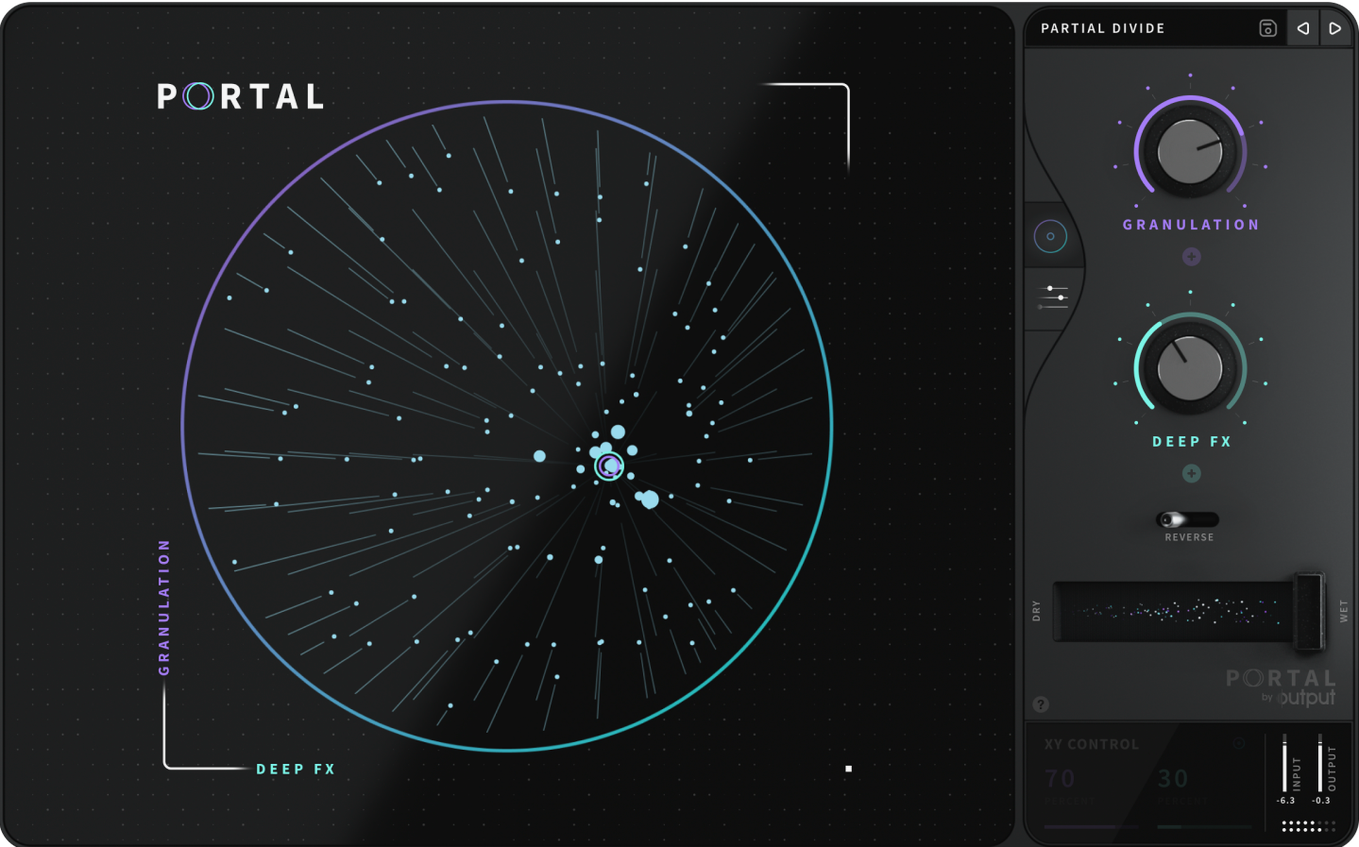
Portal takes a single grain of sound — measured in milliseconds — and builds a new performance around it. Two parallel granular engines let you stretch a transient into a pad or slow a vocal phrase to a crawl without losing the tonal centre. The re-synthesis stage pulls everything back toward the dry signal, so the result stays musical rather than dissolving into dust.
How does the time-stretching stay clean?
Rather than simply looping tiny fragments, Portal resynthesizes the grain stream against the original input. You can drag a sound out to ten times its length and still recognise the source underneath.
Can I keep the output in key?
Yes. A built-in scale lock snaps the pitch-shifted grains to a chosen scale, so even wild interval jumps sit neatly in a chord progression.
Does it handle rhythmic material well?
Natural variation in the grain envelope keeps percussive hits from sounding machine-gunned. The attacks breathe slightly, which helps drum loops and transient-heavy sources feel alive rather than quantised.
It runs as an effect on a track, return, or instrument output
The most common question I get in class is whether Portal works as an instrument or an insert. It is an effect — you place it on an audio track, a return channel or an instrument output, and it processes whatever you feed it. The plug-in does not generate sound on its own. Formats are VST3, AU and AAX, so it slots into Logic, Ableton Live, Pro Tools, Cubase and pretty much any modern host. One student asked me if the portal mac torrent version floating around behaves identically to the full release, and the truth is any build labelled 1.2.1 with both ARM and Intel slices installed correctly will load the same features — the only thing that matters is a clean installation.
Another worry is CPU load. Portal is not a lightweight plug-in; two parallel granular engines running real-time re-synthesis will push older machines. On an M1 or M2 Mac you can run several instances before the buffer complains. If you hear crackles, bump your audio buffer to 512 or 1024 samples — the processing is not latency-critical unless you are tracking through it live, which most people are not.
Settings that pay off straight away
Open the plug-in and the first thing worth adjusting is the Grain Size range. The default window is broad enough to cover everything from shimmer to sludge, but narrowing it to, say, 20–80 ms gives you tighter, more rhythmic grains that lock to drum transients. The opposite move — a wider range — suits pad and texture work where you want the grain cloud to wander.
Next, visit the Envelope Variation dial. It is easy to miss, tucked to the right of the grain controls, but a small nudge here stops the attack phase from sounding robotic. I set it around 15–25% on drum loops and around 10% on vocals. Too high and the transient softens into mush, but just a touch makes the repetition feel performed rather than copied.
The Scale Lock is off by default. Turn it on, pick a scale that matches your project, and the pitch-shifted grains quantise to those notes. Even random modulation sounds deliberate after that. If you are processing a full mix stem, set the scale to chromatic and lower the pitch range to ±3 semitones — you get subtle harmonic movement without clashing with the original key.
Option-click a grain engine fader to solo it instantly
The two grain engines are labelled simply A and B, but you can solo either one by option-clicking its level fader. That shortcut saves you from muting the other engine in the mixer section, which is useful when you want to audition one texture before blending them.
Holding Shift while dragging any parameter slows the movement to fine-tune resolution. Holding Command returns a control to its default value. Neither shortcut is labelled on the interface, and they apply across most Output plug-ins, but new users rarely discover them until someone points them out.
The Tempo Sync toggle lives near the grain rate controls, and it does more than match the host BPM. With sync engaged, the grain rate snaps to musical divisions — dotted eighths, triplets, sixteenths — so rhythmic stutter effects land on the grid without manual timing. Switch sync off and the rate becomes a free-running frequency in hertz, which suits ambient washes and sound-design patches where you want the grains to drift against the beat.
One last hidden gem: the dry/wet crossfader supports automation, but the plug-in also reads aftertouch and mod wheel data if your controller sends it. Assigning grain density to the mod wheel turns Portal into a performance tool — you can thin out the grains in a verse and thicken them into a chorus just by pushing the wheel forward.
How a sound designer might use it in practice
Imagine a sound designer working on a science-fiction project who needs a creature vocalisation that shifts from a recognisable animal call into something unearthly. She starts with a short howler monkey recording — two seconds of a guttural bark — loaded onto an audio track with Portal inserted.
She sets Grain Size to a tight 30–60 ms range on engine A, keeping the pitch flat and the envelope variation low, so the original bark repeats with a metallic, stutter-like quality. Engine B gets a wider grain window of 100–300 ms, pitched down a fifth, with the scale lock set to a minor pentatonic to keep the harmonics eerie but musical. She offsets engine B by 40 milliseconds so the two grain streams do not stack identically, then maps grain density to an expression pedal.
As the scene builds, she rides the pedal to increase density on both engines while slowly automating the dry/wet mix from 30% to full wet. The bark disintegrates into a shimmering, pitched-down drone that still carries the formant shape of the original animal — recognisable enough to feel organic, but processed enough to sound alien. The whole patch took under ten minutes to dial in, and the re-synthesis stage kept the output from turning into the kind of indistinct granular hiss that cheaper processors produce.
Some producers grab an Output Portal torrent or an Output Portal Mac torrent just to test whether granular processing fits their workflow before committing long-term, and a scenario like this is exactly the sort of patch that sells the idea within a single session.
- Works on Intel and Apple Silicon Macs
- Compatible with AU, VST and AAX formats
- Interface language: English
Questions from the class 0
Sign in or join the class to ask a question.
Nobody has asked anything yet. If you have used it on a real job, say what the file did.
Also on the VST Plugins shelf
The whole VST Plugins shelf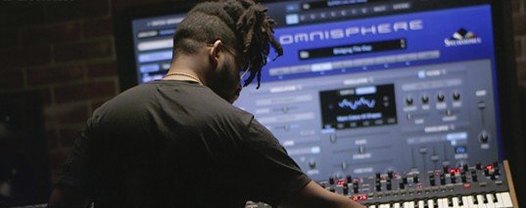 Omnisphere
Synthesises otherworldly pads and textures by combining over 60 GB of samples with deep sound-design tools.
Omnisphere
Synthesises otherworldly pads and textures by combining over 60 GB of samples with deep sound-design tools.
 oeksound soothe2
Tames harsh resonances in a recording automatically, like a spectral finger smoothing out rough edges.
oeksound soothe2
Tames harsh resonances in a recording automatically, like a spectral finger smoothing out rough edges.
 Nudist Audio Nudistort
Shreds audio with aggressive wavefolding, bit-crushing, and resonant filter destruction.
Nudist Audio Nudistort
Shreds audio with aggressive wavefolding, bit-crushing, and resonant filter destruction.
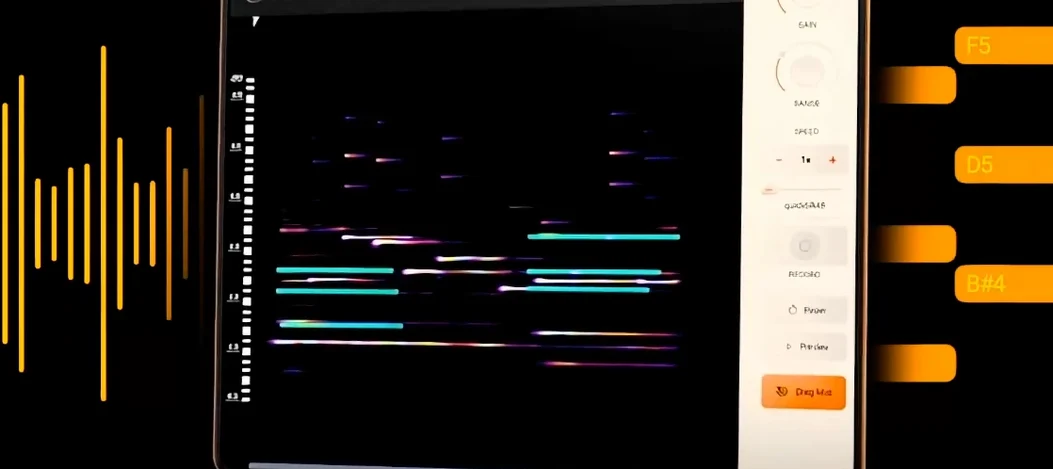 noteGRABBER
Converts the pitch and timing of one audio track into MIDI notes that drive a synth you choose.
noteGRABBER
Converts the pitch and timing of one audio track into MIDI notes that drive a synth you choose.
 Neural DSP Soldano SLO-100 X
Recreates a classic high-gain valve amplifier head and its matching speaker cabinet.
Neural DSP Soldano SLO-100 X
Recreates a classic high-gain valve amplifier head and its matching speaker cabinet.
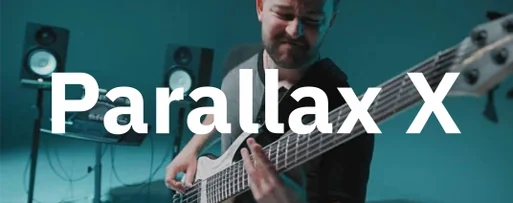 Neural DSP Parallax X
Shapes the low-end of a bass guitar with a multi-band processor for clarity and weight.
Neural DSP Parallax X
Shapes the low-end of a bass guitar with a multi-band processor for clarity and weight.
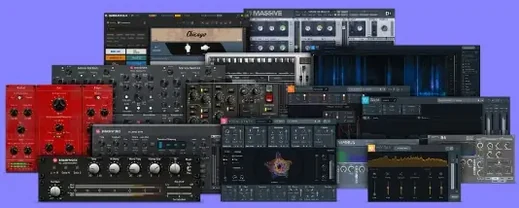 Plugin Alliance Brainworx Bundle
Collects a curated rack of Brainworx console emulations and mixing tools in one bundle.
Plugin Alliance Brainworx Bundle
Collects a curated rack of Brainworx console emulations and mixing tools in one bundle.
 Neural DSP Mantra
Processes a vocal track with pitch correction, compression, saturation, and spatial effects inside your DAW.
Neural DSP Mantra
Processes a vocal track with pitch correction, compression, saturation, and spatial effects inside your DAW.